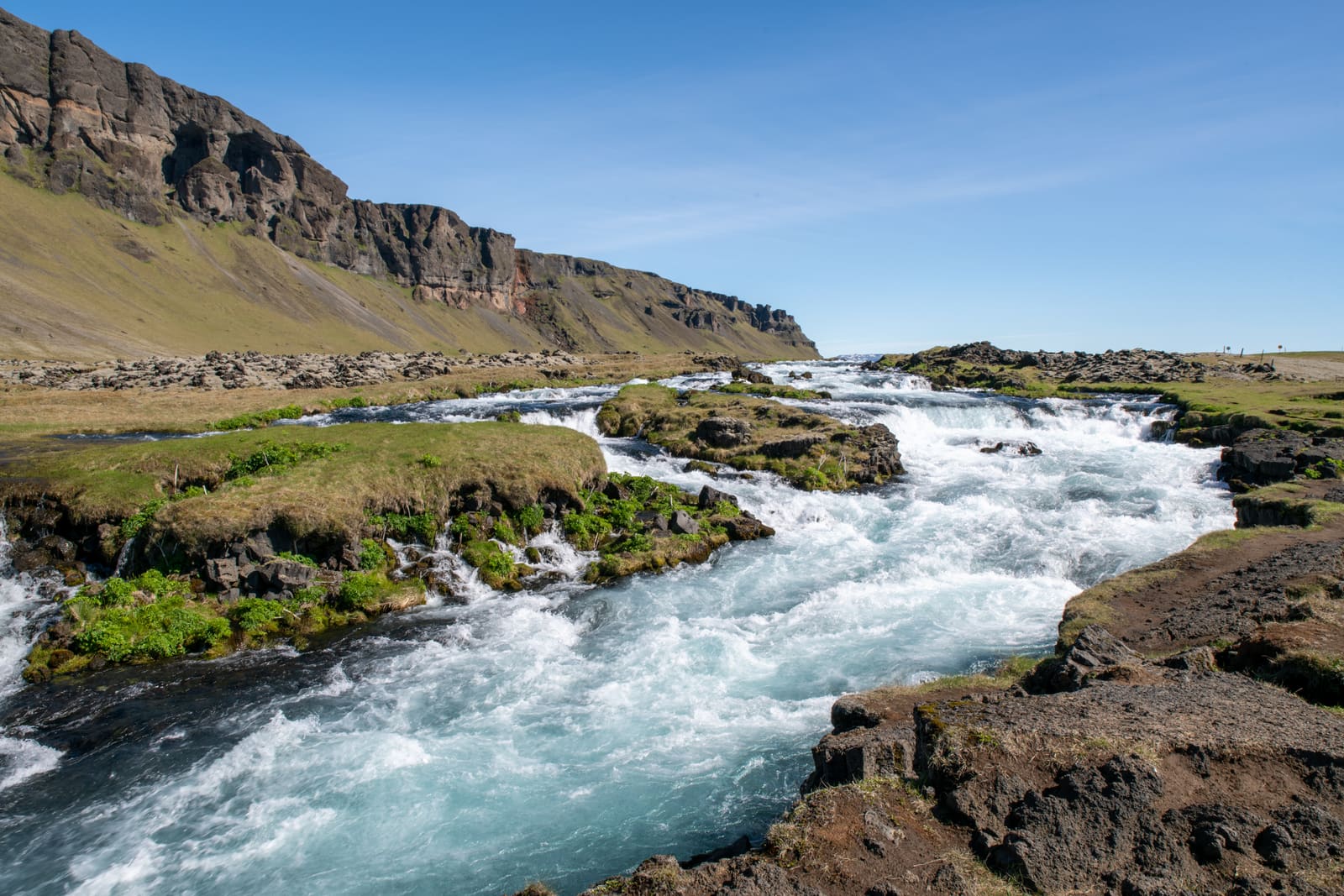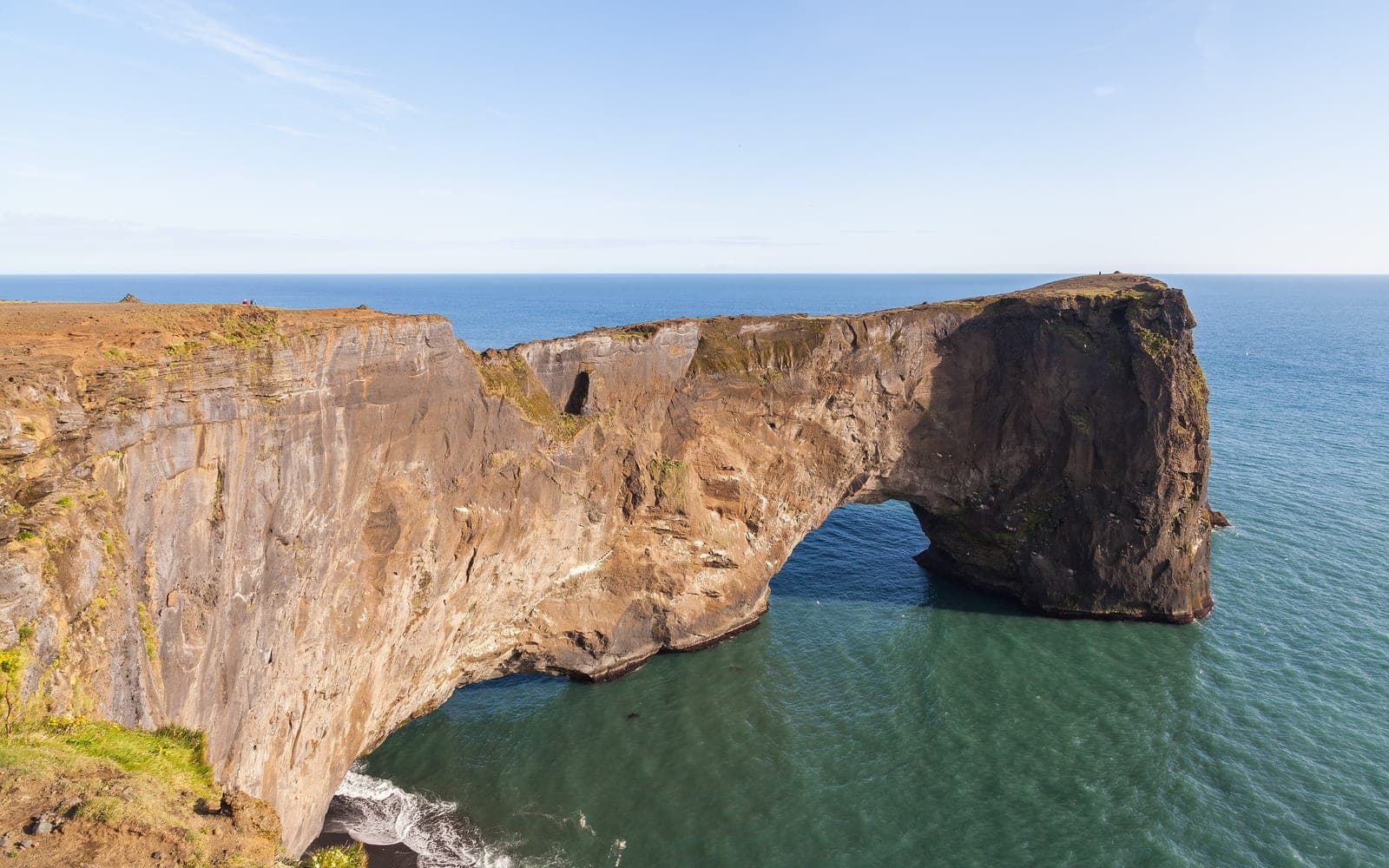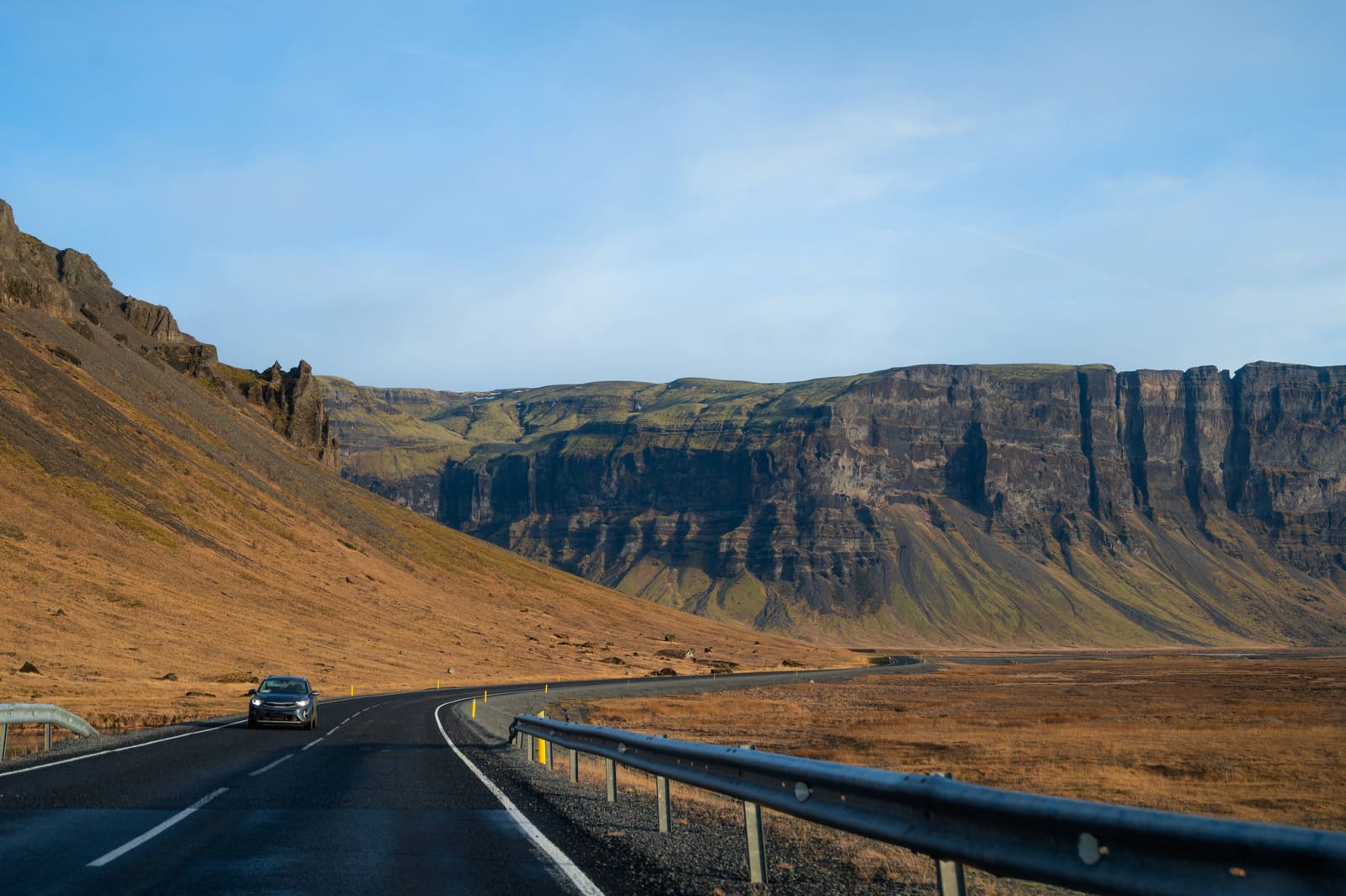
Coast snapshot
- Type
- Protected basalt-column cliffs
- Area
- East of Foss á Síðu
- Best for
- Quick South Coast geology stop
- Time
- About 20 to 45 minutes
- Access
- Short paths from Route 1
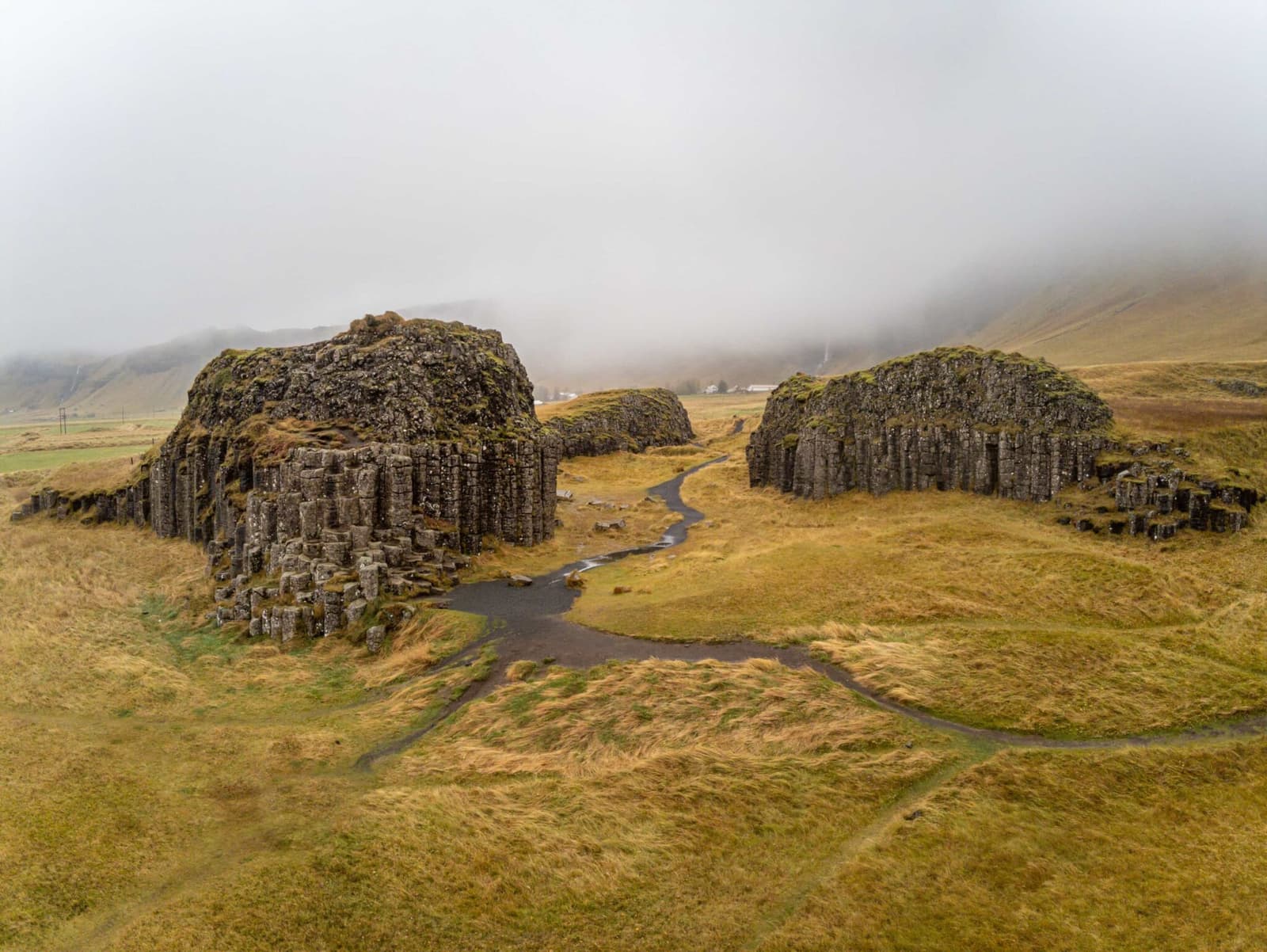
Dverghamrar is a compact protected basalt-column formation beside Route 1 east of Foss á Síðu, useful for travelers who want a quick geology stop near Kirkjubæjarklaustur without turning the day into a long detour.
Coast snapshot
Yes, Dverghamrar is worth a short pause when you are already driving the South Coast near Foss á Síðu. It is strongest as a compact geology stop, not as a day-shaping destination.
The stop works because the rock is easy to read. Two low basalt outcrops rise beside the route, with clean vertical columns, blockier upper rock, grass paths, and the farm-and-cliff landscape around Síða close behind them.
That makes Dverghamrar a useful middle stop between bigger South Coast decisions. It gives the day texture without asking for the time commitment of Fjaðrárgljúfur, Skaftafell, or the glacier-lagoon stretch.
Photo guide
The two-rock layout is clear from the lower approach to Dverghamrar.
Dverghamrar is small, but the details are unusually legible: column faces, broken caps, grass pockets, and a shallow hollow that makes the rocks feel like a miniature basalt amphitheater.
Visit South Iceland describes columnar basalt with cube-jointed basalt above it, and the Environment Agency explains the cooling and contraction process behind those shapes. For a traveler, the practical value is that you can see both the tidy columns and the rougher upper texture in one short walk.
The setting also gives the stop a quiet folklore layer. Local sources connect the Dwarf Rocks name with stories of hidden inhabitants, but the page should not oversell that angle: the main reason to stop is still the unusually clear basalt formation.
Dverghamrar belongs in the Kirkjubæjarklaustur-area cluster. The easiest pairing is Foss á Síðu, with Stjórnarfoss, Fjaðrárgljúfur, Eldhraun, or Lakagígar added only when the day has enough space.
For a short stop pair, start with Foss á Síðu and Dverghamrar. The waterfall gives the cliff-and-farm backdrop; the rocks give the close basalt detail. Together they make a better pause than either stop does alone.
If you have more time, Stjórnarfoss Waterfall adds an easy waterfall detour near Klaustur, while Fjaðrárgljúfur is the stronger choice when the day can hold a more substantial canyon stop.
| Trip shape | Best use | Better choice if |
|---|---|---|
| Fast South Coast transfer | Short geology pause near Route 1 | You need daylight for Skaftafell or Jökulsárlón |
| Klaustur-area slow segment | Pair with Foss á Síðu and Stjórnarfoss | You want a longer canyon or lava-field walk |
| Volcanic landscape day | Use as an easy basalt primer | Lakagígar is already the main commitment |
Dverghamrar is useful because it shows more than one basalt texture in a very small space.
The protected-area source explains that the columns formed as cooling lava contracted and split, while the upper hackly rock cooled faster. Regional sources also connect the present shape to higher sea level and wave erosion near the end of the Ice Age.
That secondary geology angle is the reason Dverghamrar can be more useful than its size suggests. It helps travelers understand the basalt language that appears again at places such as Kirkjugólf, Skógafoss-area cliffs, and Reynisfjara.
Keep Dverghamrar flexible when the day is already full. The stop is quick, but the surrounding South Coast often tempts travelers into too many small additions.
Skip the stop when the day still needs unhurried time at Eldhraun, Skaftafell, or Jökulsárlón. Dverghamrar is better as a rewarding pause than as another item squeezed into a tired drive.
Dverghamrar is straightforward by South Coast standards, but official checks still matter when weather, road timing, or footing could change the day.
Use regional visitor information for place context, the protected-area source for conservation background, and Iceland's road, weather, and safety sources before making a tight self-drive plan depend on this pause.
Use for regional visitor context, location, and nearby South Coast pairings.
Use for geology and protected natural monument context.
Use before fixing Route 1 timing into the day.
Use for weather-sensitive outdoor travel decisions.
Most travelers need about 20 to 45 minutes. That gives enough time to walk the paths, study the basalt columns, and decide whether nearby Foss á Síðu also fits.
No. It is a compact, worthwhile geology pause for travelers already near Kirkjubæjarklaustur, but it should not crowd out larger route anchors.
Do not treat the columns as climbing features. Use paths, respect protected-area care, and keep extra caution when rock or grass is wet.
By ThorPublished Updated
Map
Use nearby places and useful bases before opening directions.
Interactive planning map for Dverghamrar
Interactive map
Place context and external map links remain available without loading it.
Nearby coast
Use nearby places to balance scenery, safety, wildlife seasons, and how much time the coast deserves.
Planning context
Open the region or practical guide that resolves the next planning decision.
Next step
Use the next page that helps turn this stop into a practical route decision.