Coast snapshot
- Type
- Coastal peninsula and town
- Region
- Garðabær, beside Reykjavík
- Best for
- Calm city-edge coast time
- Time
- About 45 minutes to 2 hours
- Access
- Easy by car, bus needs planning
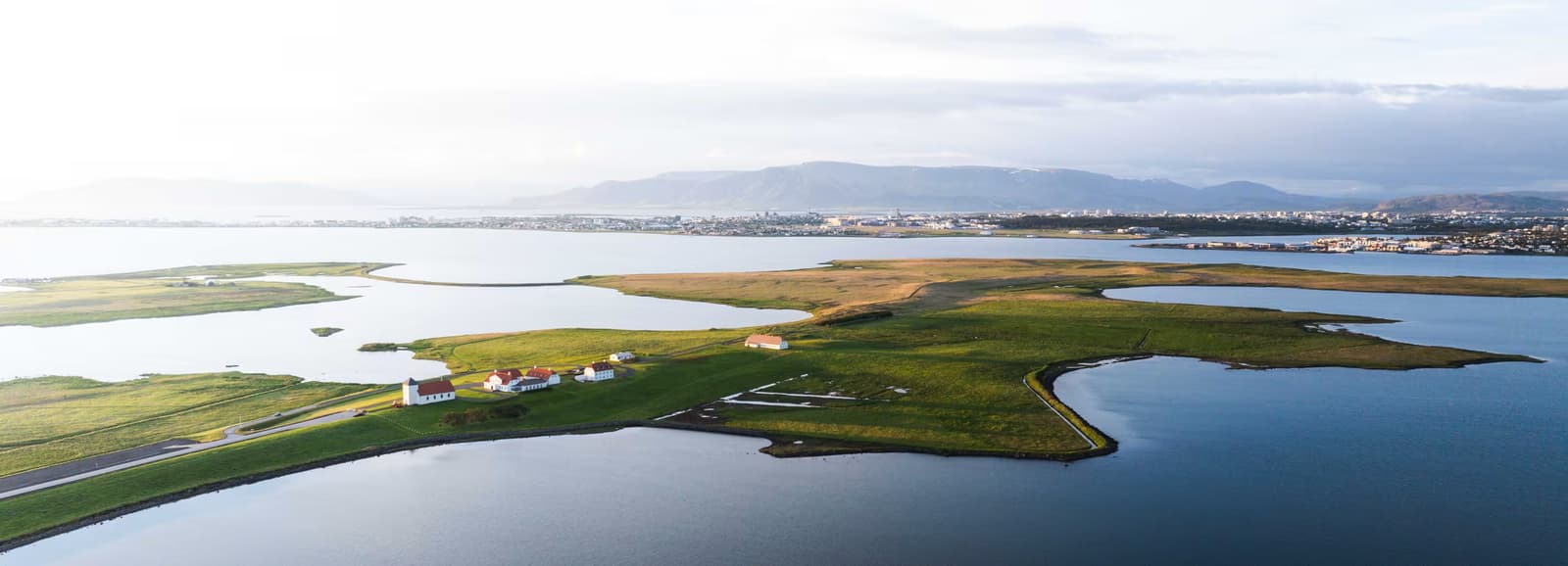
Álftanes is a low coastal peninsula beside Reykjavík for travelers who want Bessastaðir context, birdlife, Garðakirkja, Gálgahraun, and a calm edge-of-city drive without turning it into a major sightseeing day.
Coast snapshot
It should, but only when your plan has room for a calm coastal edge rather than another major landmark.
Álftanes sits just outside the densest Reykjavík sightseeing rhythm, low against the water between Garðabær, Hafnarfjörður, and the capital. The useful visit is a small peninsula loop: coast, ponds, birds, local buildings, and the historic pull of Bessastaðir.
It works best after the obvious city anchors are already handled, or when the day needs open water more than another museum or shopping street. If your Reykjavík time is still tight, protect Hallgrímskirkja, Perlan, or the city centre before adding Álftanes.
The peninsula feels different from central Reykjavík because the view opens sideways: ponds, grass, road, church rooflines, and water.
The most useful version is unhurried. Around Bessastaðatjörn and the nearby shore, the stop is about watching weather move across the water, looking back toward the capital area, and letting the open landscape slow down a city-heavy day.
Garðabær's birdlife material and the walking-route source both support this as more than empty scenery. Álftanes has ponds, shallow coastal edges, and bird habitat, so keep dogs, noise, and off-path wandering conservative where signs or local guidance ask for it.
The civic-history anchor matters, but Álftanes works better when you read it as a small historic landscape around that anchor.
Bessastaðir is the obvious name: the official presidential residence and one of the country’s historically important sites. Use the dedicated Bessastaðir guide if that is the main decision. On this page, the better question is whether the surrounding peninsula earns the extra time.
Garðakirkja gives that wider view some depth. The national church source places it at Garðar on Álftanes and describes the rebuilt stone church, which helps the peninsula feel like a lived historic edge of the capital area rather than only a presidential photo stop.
The stop becomes easier to justify when the day needs either protected lava-field context or a local swimming-pool pause.
Gálgahraun is the strongest nature add-on near the peninsula. The Environment Agency describes protected lava, vegetation, birdlife, and cultural heritage there, so it can turn a simple coastal drive into a short nature-and-history loop if the weather supports walking.
Álftaneslaug is a different kind of reason to pause. Treat it as an optional local-pool add-on rather than the core attraction page: useful for families or swimming-culture fans, but something to verify directly before planning around facilities or timing.
The peninsula is strongest when it sits beside a clearer Reykjavík-area anchor, not when it has to carry the whole day.
For culture and setting, pair it with Bessastaðir and then decide whether to continue toward Hafnarfjörður. For a city-and-water day, combine it with Nauthólsvík, Sky Lagoon, or a short Reykjavík return.
If the question is simply where to find open coast beside Reykjavík, compare Álftanes with Seltjarnarnes, Grótta, or Viðey. Álftanes is quieter and more suburban; those alternatives can be stronger when you want a single clearer visitor objective.
| Visit style | Use it for | Keep flexible |
|---|---|---|
| Quick coast loop | Sea air, ponds, and a look toward Bessastaðir. | Weather and daylight. |
| History plus coast | Bessastaðir, Garðakirkja, and low shoreline views. | Residence and church expectations. |
| Local slow stop | Gálgahraun, birds, or Álftaneslaug. | Official details and walking comfort. |
A good Álftanes visit is flexible: check the practical details that can change a quiet local stop.
Before you go, check weather and road guidance if wind, snow, darkness, or poor visibility could make a short coastal loop less pleasant. For Bessastaðir, Garðakirkja, Álftaneslaug, events, or facility details, use official visitor information rather than assuming access.
Also treat birdlife and protected-area signs as part of the attraction. The peninsula’s value is the mix of open coast, ponds, lava, and local history; it works best when visitors keep that landscape intact.
Use for official city-area context and nearby visitor ideas.
Use for official Bessastaðir residence and history context.
Use for protected lava-field context and visitor guidance.
Use with the Icelandic Met Office when conditions may affect local driving or walking.
By ThorPublished Updated
Map
Use nearby places and useful bases before opening directions.
Interactive planning map for Álftanes
Interactive map
Place context and external map links remain available without loading it.
Planning context
Open the region or practical guide that resolves the next planning decision.
Next step
Use the next page that helps turn this stop into a practical route decision.