Coast snapshot
- Type
- Coastal town and peninsula
- Region
- Western edge of Reykjavík
- Best for
- Sea walks, birds, Grótta
- Time
- About 45 minutes to 2 hours
- Access
- Easy city edge, tide-sensitive coast
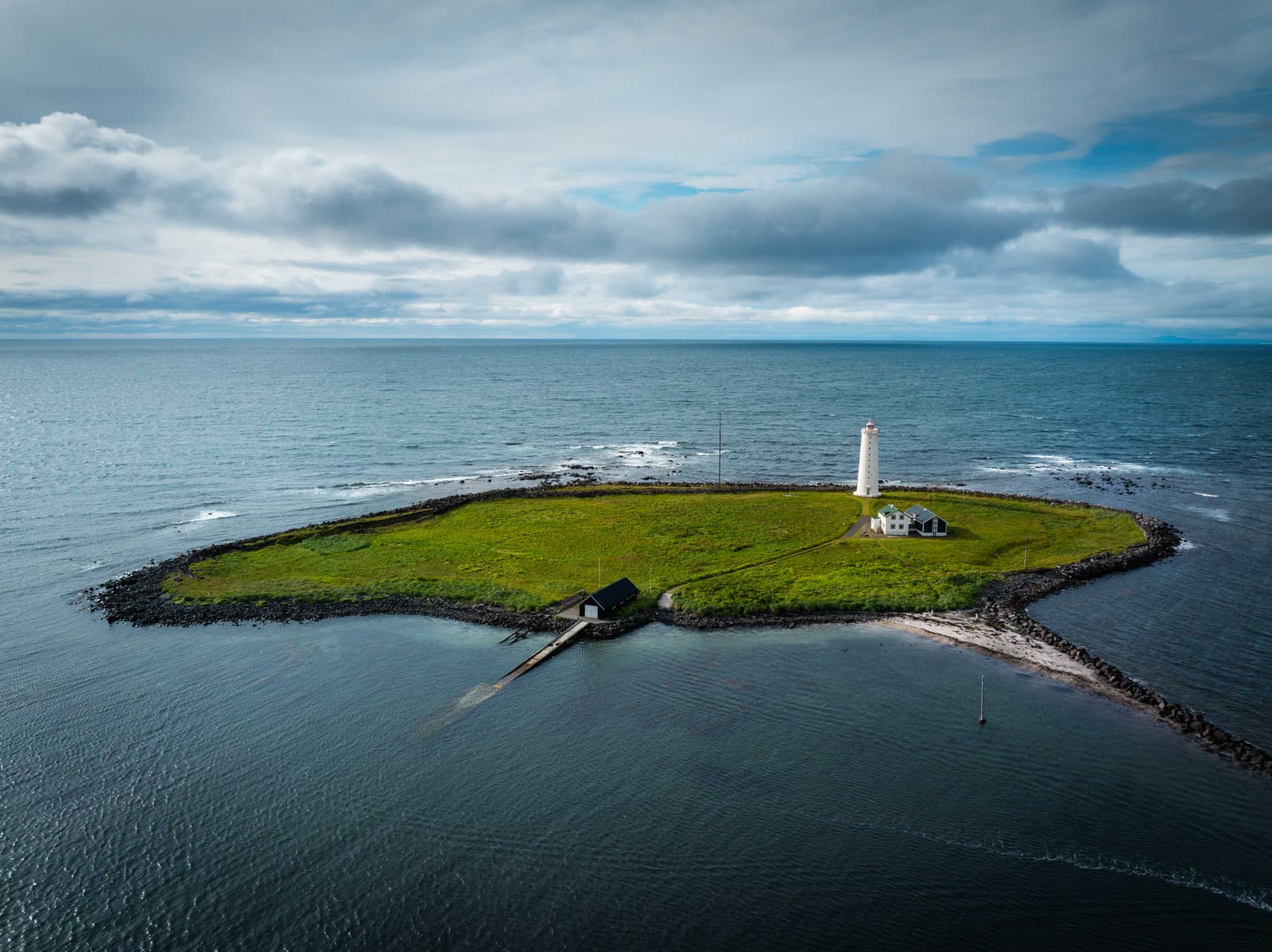
Seltjarnarnes is the small coastal town and peninsula just west of Reykjavík, useful when you want Grótta, birdwatching, sea air, Kvika footbath, and a calmer edge-of-city walk without committing to a full day away.
Coast snapshot
Yes, when your city day needs open coast, birdlife, lighthouse views, or a low-pressure walk. It is less convincing when you only have time for one Reykjavík landmark.
Seltjarnarnes is not a dramatic day-trip prize. Its value is that the city thins into sea, ponds, low buildings, black shore, and the Grótta skyline within an easy Reykjavík-side detour.
Choose it after you have handled the essentials, or when a slower Reykjavík plan would benefit from space and weather. If the day still needs a major city landmark, start with Hallgrímskirkja, Perlan, or the Reykjavík Old Harbour first.
Grótta is the obvious anchor, but Seltjarnarnes is stronger when you read it as a small coastal cluster: bird pond, shore paths, footbath, old buildings, and sea views.
The lighthouse is the visual headline, and the Grótta guide is the better next page if tide-linked access is your main concern. For the town as a whole, the better rhythm is a walk that can fold in Bakkatjörn, Kvika, and a look toward Nesstofa.
That secondary texture matters. Bakkatjörn gives the area a birdwatching reason to pause, while Nesstofa adds a compact medical-history angle for travelers who like Reykjavík-area heritage without committing to a full museum-heavy day.
Most visitors need about 45 minutes to 2 hours, depending on whether the stop is a viewpoint, a walk, a footbath pause, or a wider coastal loop.
| Visit style | Best use | Plan around |
|---|---|---|
| Quick coast look | A short break from downtown Reykjavík. | Wind, parking, and light. |
| Grótta-focused stop | Lighthouse views, birds, and shoreline photos. | Tide, reserve guidance, and footing. |
| Slow peninsula loop | Bakkatjörn, Kvika, Nesstofa, and sea paths. | Weather comfort and flexible timing. |
Do not make the lighthouse walk the only measure of success. If tide, birds, weather, darkness, or signs make that choice poor, the mainland shore can still give you sea air, views, and a clean pause before returning to Reykjavík.
Kvika and Nesstofa make Seltjarnarnes more useful for travelers who want a gentler local detail, not another headline attraction.
Kvika is a tiny sea-edge footbath, so its practical value is mood rather than scale. It belongs in a slow walk, a sunset pause, or a coast-first Reykjavík afternoon, not in a packed route day.
Nesstofa gives the peninsula a different layer: one of the old houses tied to Icelandic medical history. Check official visitor details if the museum, interior, or any managed facility is the reason you are going.
Check official details whenever your plan depends on Grótta access, birdwatching, after-dark photography, Kvika, Nesstofa, pool use, or tight onward timing.
The durable rule is simple: keep Seltjarnarnes flexible. Tide, wind, surf, nesting sensitivity, winter footing, darkness, and managed visitor details can all change which version of the peninsula makes sense.
If the coast looks like the highlight of your Reykjavík stay, compare it with Viðey or Akurey for a stronger birdlife or offshore feeling. If you want a more urban waterfront, keep your time around the Reykjavík Old Harbour.
Use for the Seltjarnarnes and Grótta visitor overview.
Use for local Grótta, tide, and birdlife context.
Use before relying on reserve access or birdlife-sensitive plans.
Use when weather, darkness, or winter footing affects the stop.
The peninsula also has small town details that can make a slow visit feel more grounded, as long as they stay secondary to the coast.
Ráðagerði, Seltjarnarneslaug, and the low residential streets are not reasons to reshape an Iceland route. They help explain why Seltjarnarnes feels local rather than like a fenced viewpoint.
Use those details lightly. If a managed stop matters to your plan, confirm official visitor information before you trade stronger Reykjavík time for it.
These are the practical decisions that usually decide whether the peninsula belongs in a Reykjavík stay.
Yes, if you want a wider coastal loop with Bakkatjörn, Kvika, Nesstofa, and shoreline paths. Use the Grótta page when the lighthouse and tide-linked access are the main focus.
Allow about 45 minutes to 2 hours. A quick viewpoint stop can be shorter, while birdwatching, Kvika, Nesstofa, or a slow shore walk need more room.
Usually only after stronger Reykjavík anchors are covered. It is best as a flexible city-edge coastal stop, not the main reason to reshape a first Iceland itinerary.
By ThorPublished Updated
Map
Use nearby places and useful bases before opening directions.
Interactive planning map for Seltjarnarnes
Interactive map
Place context and external map links remain available without loading it.
Planning context
Open the region or practical guide that resolves the next planning decision.
Wider route
Use broader place relationships for route comparison; they are not presented as immediate nearby stops.
Next step
Use the next page that helps turn this stop into a practical route decision.