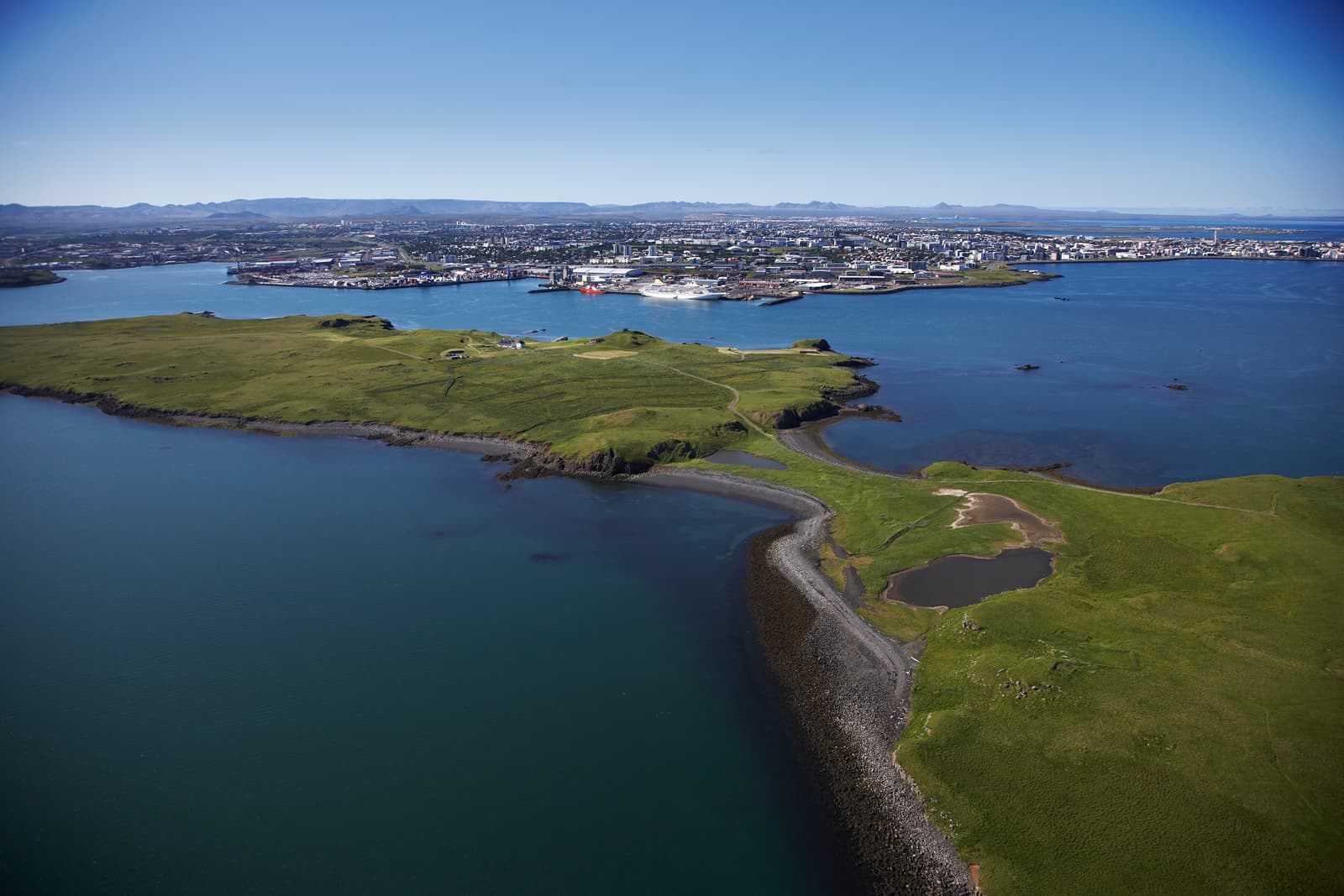
Viðey is a low, grassy island across the water from Reykjavík, reached by passenger ferry. Its appeal is the combination of early settlement history, old buildings, outdoor art and quiet coastal walking—not one headline sight.
Area snapshot
Setting
Low coastal island in Kollafjörður, just off Reykjavík
Main draw
Historic buildings, public art, open paths and sea views
Access
Passenger ferry; confirm departure point and return sailing
Time to allow
About 2–4 hours including the boat, depending on the walk
Underfoot
Mostly unpaved paths across exposed grass and coastal ground
In this guide
An island where history, art and open coast meet
Viðey is close enough to see from Reykjavík, but the short boat crossing changes the pace of the visit.
The island is not a compact museum or a single viewpoint. Paths spread between a small historic core, low shoreline, bird habitat and artworks placed in the landscape. This makes Viðey strongest for travelers who enjoy walking and noticing several layers of a place rather than arriving for one photograph.
Archaeological remains reach back to Iceland's settlement period. The island later held a monastery, farming and fishing activity, leaving a deeper history than its quiet appearance first suggests. Reykjavík City Museum identifies Viðey House and Viðey Church as two of Iceland's oldest buildings.
Island sights, ferry pattern and low-impact visitor guidance.
Photo guide
Viðey in photos
1 / 3
Viðey is a moodier, slower Reykjavík choice than the city’s headline landmarks.
Viðey House and church form the historic core
The two pale buildings near the landing give the island a clear center before the paths spread outward.
Viðey House and Viðey Church are not decorative replicas; they are surviving parts of the island's long history. Their setting also helps explain why Viðey feels different from a normal Reykjavík park: old architecture, archaeological ground and open coast sit together in a small area.
Viðey House and Viðey Church anchor the island's historic area.
You do not need specialist knowledge to enjoy this part of the island. Read the signs, look at how the buildings relate to the shore and allow time to explore beyond them; Viðey becomes less rewarding if the visit ends immediately after the ferry landing.
Public art changes the western walk
Two major works make the landscape itself part of the cultural visit.
Richard Serra's Áfangar, installed in 1990, consists of nine pairs of basalt columns positioned across the island. The columns frame changing views of sea, Reykjavík and Mount Esja, so the work makes most sense while moving through the landscape rather than from one fixed point.
Áfangar uses paired basalt columns to frame the island and surrounding horizon.
Yoko Ono's Imagine Peace Tower was unveiled in 2007 and dedicated to John Lennon. Its beam is illuminated only during set periods, so a daytime island visit may show the wishing-well base rather than the light. If sculpture is the main interest but a ferry does not fit, Ásmundarsafn is a land-based Reykjavík alternative.
The Imagine Peace Tower is a seasonal light work, not a permanent daytime beam.
The ferry sets the pace
Boat access is the one part of a Viðey visit that cannot be improvised.
Regular service is more frequent in summer, when boats may leave from both Skarfabakki and the Old Harbour. Winter service is more limited. Departure points, return times, fares and special sailings can change, so use the operator's live information rather than a copied timetable.
Choose a return sailing before walking away from the landing.
The crossing from Skarfabakki is short, but waiting and walking still turn the outing into more than a quick stop. Treat two hours as a compact visit and allow longer for the outer paths, art and historic area. Reykjavík Harbour is the easier coastal choice when the boat timing or weather does not fit.
Live departure points, return sailings, seasonal service and fares.
Walk gently and leave enough time
The paths are straightforward, but the island is open to wind and its wildlife needs space.
Wear layers and shoes that handle gravel, grass and damp ground. There is little shelter once you move away from the buildings. The simple terrain can still feel tiring in strong wind, and a longer loop should always be measured against the chosen return boat.
Stay on marked paths, avoid disturbing plants and give nesting birds a wide berth, especially in spring and summer. Viðey rewards a quiet pace. It works well as the main outdoor part of a Reykjavík day, with an indoor stop such as Harpa kept as a flexible contrast after the ferry.