Christopher Nolan turned Hjörleifshöfði into Hades, filled its black sand with more than 400 Icelandic extras, and sent a full-scale longship on an unlikely journey across Iceland. This is the story of the shoot—and what remains after the cameras and army of the dead went home.
Strange but true
Hades scale
400+ local extras; nearly 1,000 people at peak
Longest days
18–20 hours with makeup and costume
Dropouts
Only 3 across five crowd-shoot days
Ship problem
Rebuilt, floated, then hauled across Iceland
Camera first
Every frame was shot with IMAX cameras
How Iceland's black-sand coast became Hades
The Odyssey is set around the ancient Mediterranean, but when Christopher Nolan needed the land of the dead, he came to a black-sand beach below Hjörleifshöfði. Iceland is not pretending to be Ithaca here. It is playing somewhere beyond the living world.
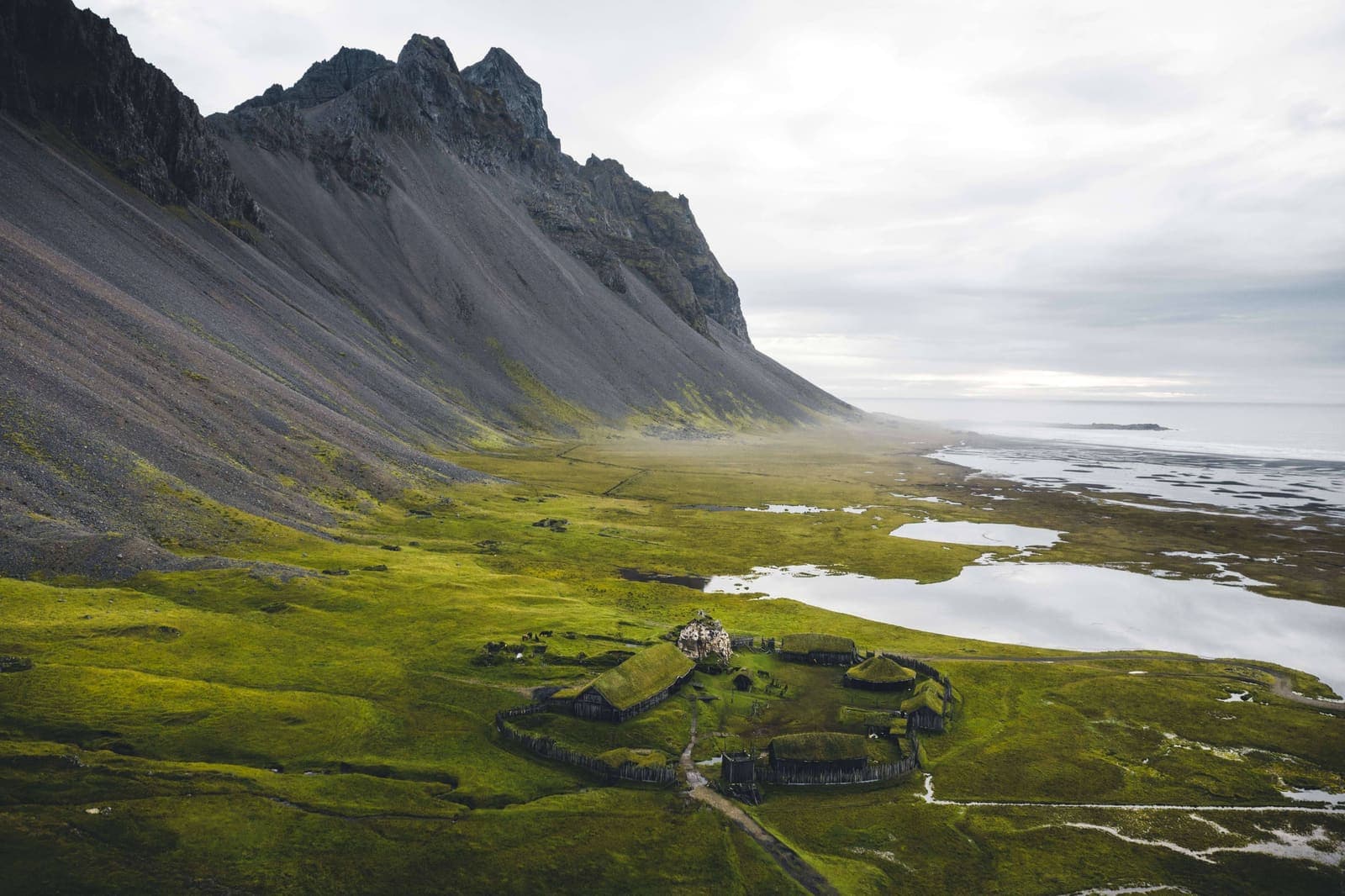
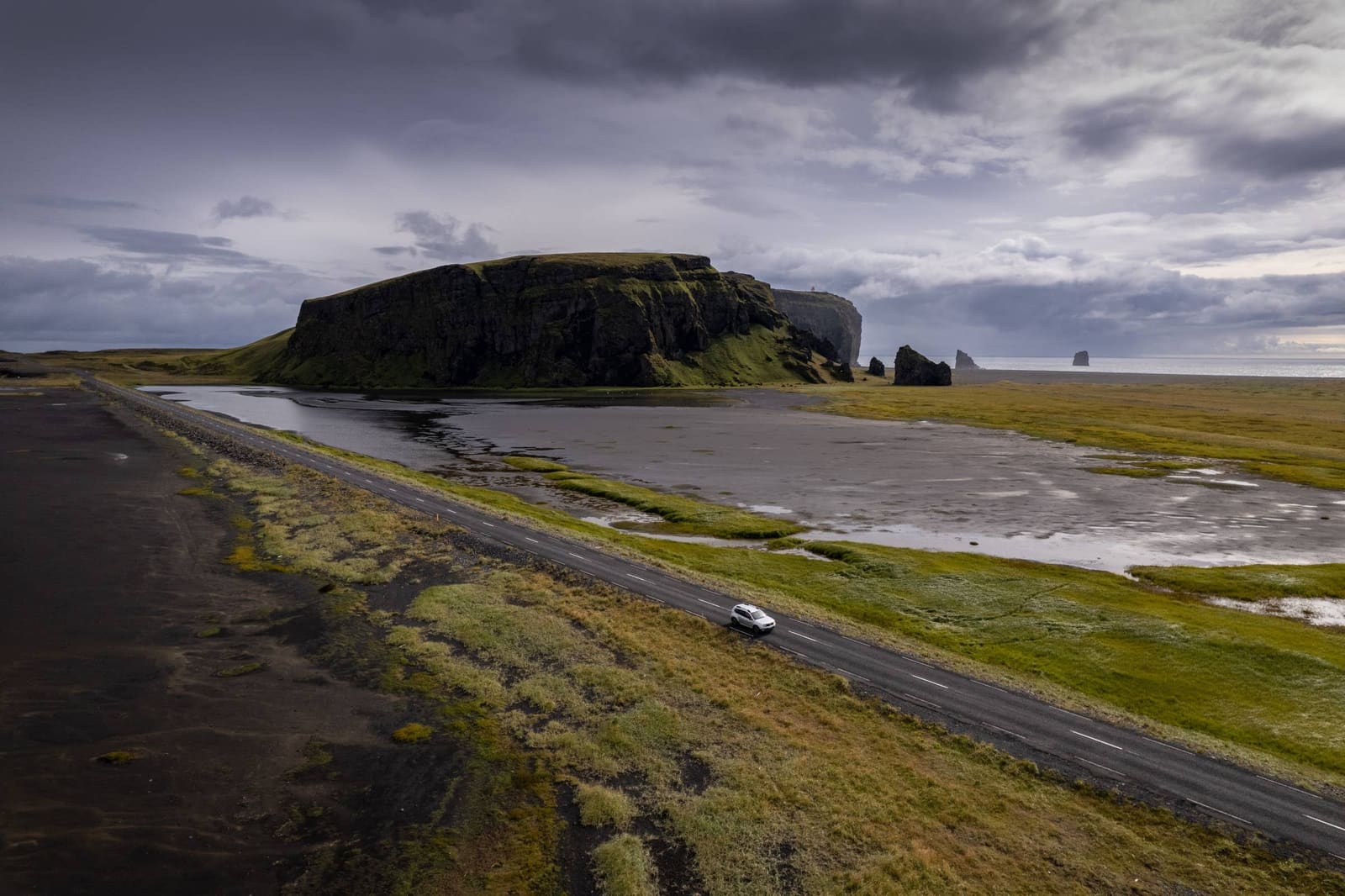
The choice makes immediate visual sense. Hjörleifshöfði rises alone from Mýrdalssandur, a green-topped headland surrounded by an enormous black plain. The beach below it became Hades. True North's account also names Markarfljót and Syðra-Skógarnes on Snæfellsnes as filming locations, but a broad production location does not establish where each finished scene was shot.
Planning a visit? Our guide to visiting Hjörleifshöfði separates the headland, cave and walking choices. Check current access and safety information before adding it to your South Coast route; the filming location is not a preserved movie set.
It was Nolan's third major production in Iceland after Batman Begins and Interstellar, but the role changed neatly each time: Himalayan exile, alien worlds, then the Greek underworld. Few landscapes have been asked to travel so far without moving at all.
The official trailer shows the film's visual world. Use it as context, not as proof that every scene or landscape is publicly accessible. Watch on YouTube
Photo guide
The Odyssey Filming Locations in Iceland in photos
1 / 4
Hjörleifshöfði rises from the black-sand plain used for Hades in The Odyssey.
The Hades scene that needed more than 400 Icelanders
The Hades sequence was not a quiet landscape shoot with a few figures added later. In a July 2026 Vísir interview, the managing director of True North, which handled the Iceland production, described more than 400 Icelandic extras gathered below Hjörleifshöfði.
According to True North's account of the shoot, the Iceland unit involved close to 1,000 people at its busiest. Around 200 Icelanders worked on the production itself, while 450 extras and stunt performers supplied the human scale. For five crowd-shoot days, the extras' schedules could stretch to 18 or 20 hours once makeup, costume, transport, and filming were counted.
Only three of the 450 reportedly dropped out across those five days. Many slept in tents, schools, or simple sleeping-bag spaces near the location. The glamorous version is an army of shades wandering Hades; the real version begins before dawn with several hundred people waiting for makeup on Mýrdalssandur.
The film turns dark volcanic terrain into Hades, but the image is atmosphere rather than a public-access map.Hjörleifshöfði rises from the black-sand plain used for Hades in The Odyssey.
The longship route across Iceland
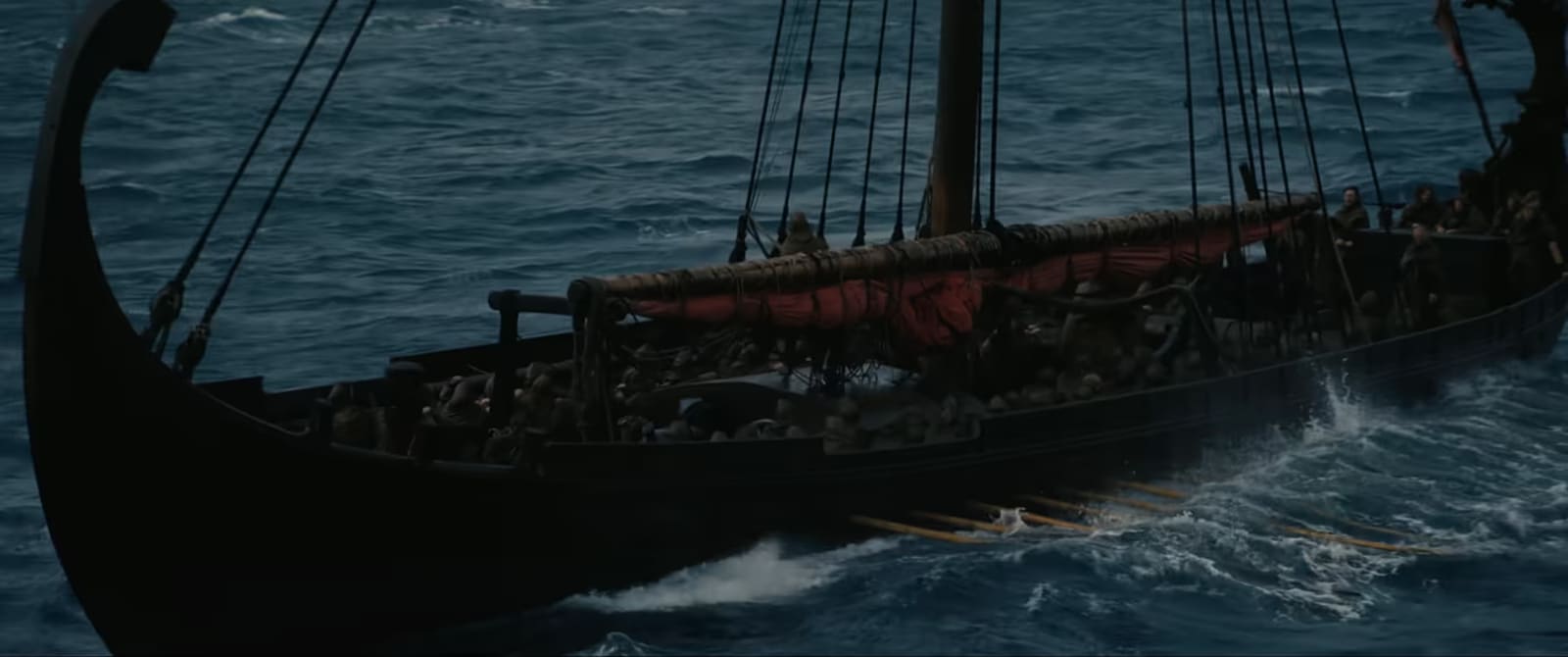
The crowd was enormous, but the hardest piece of Iceland logistics was apparently one boat. The production's longship arrived in pieces, had to be rebuilt locally, and then had to reach two landscapes that were never designed as film studios.
True North says the ship was assembled, placed in a glacial river near the coast, and later transported overland from the Markarfljót area to Snæfellsnes. Moving it required close coordination with police. In a production full of IMAX cameras, stars, and hundreds of costumed extras, the ship move was remembered as the greatest feat.
Contemporary reports also placed a large Viking ship near Landeyjahöfn while filming was underway. That helped turn the working ferry harbor into part of the production story, but it did not turn the harbor into a permanent movie attraction. The spectacle moved on; the ferry operation did not.
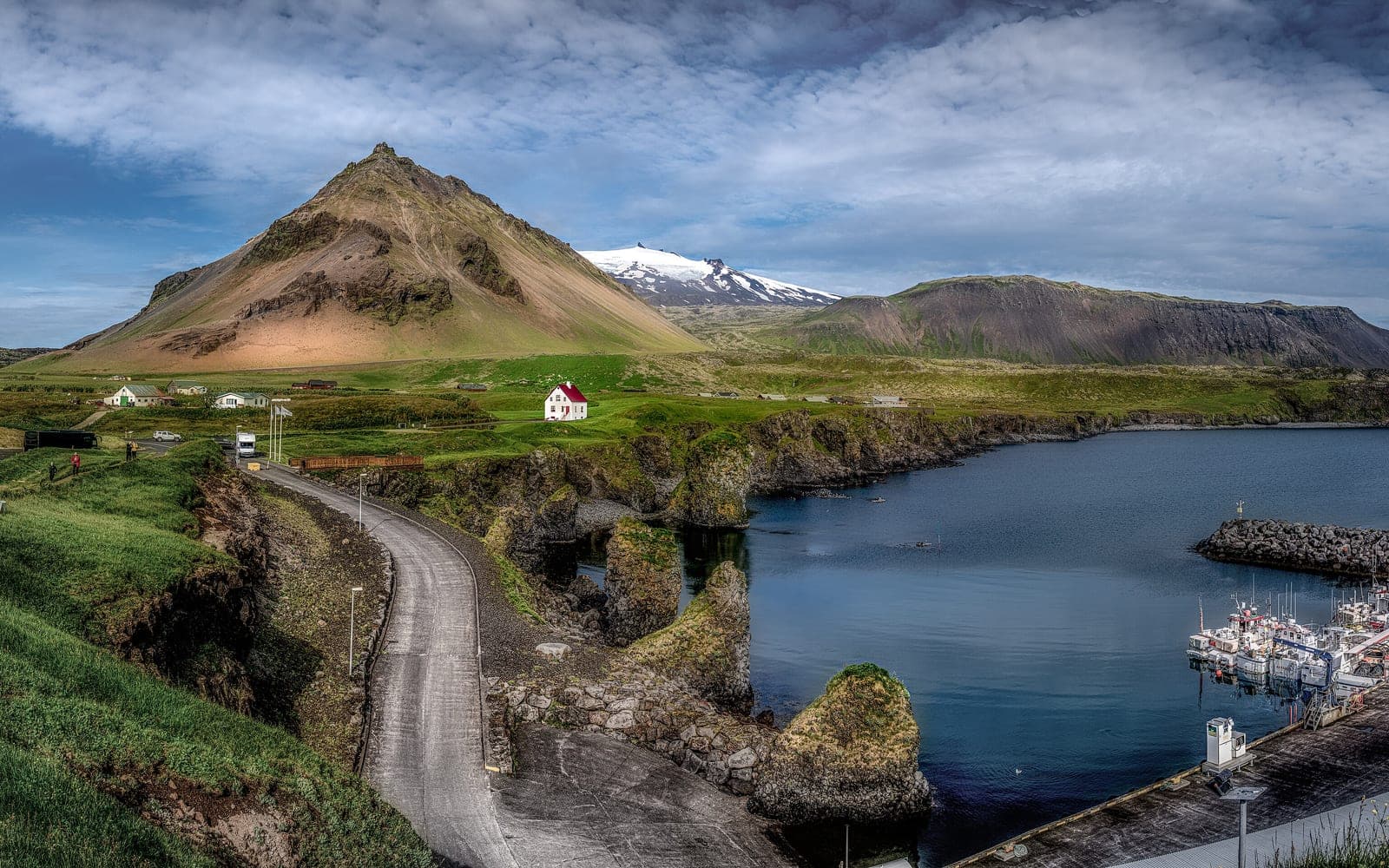
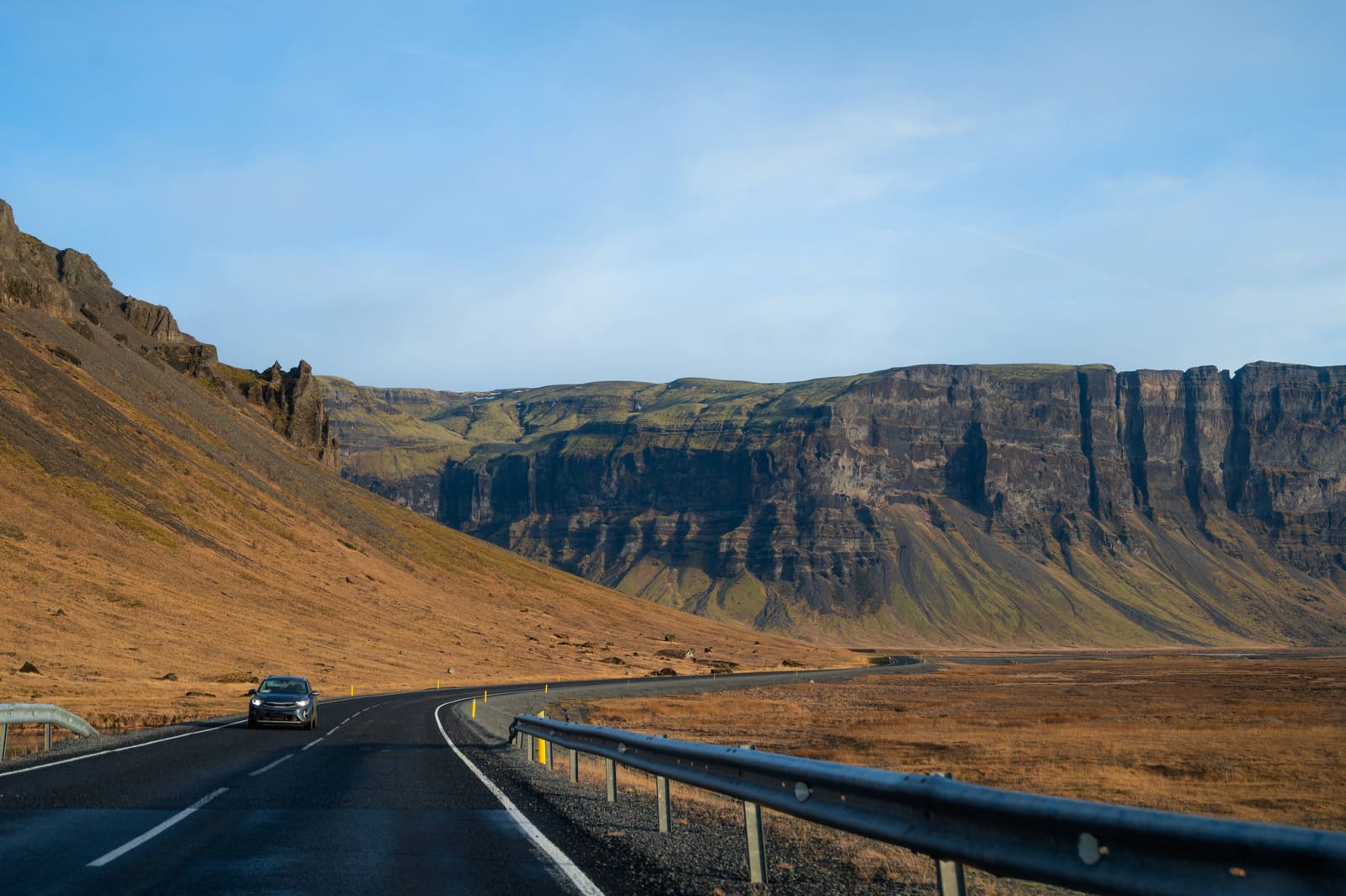
The lower Markarfljót crosses a broad working landscape used by the production before meeting the coast.
Where access is simple and where it is not
Plan around the real landscape and its current visitor access. The production reports establish filming locations; they do not establish a signed Odyssey trail, a preserved Hades set or public access to every shooting position.
Hjörleifshöfði is the clearest visitable connection, east of Vík on Mýrdalssandur. Use the signed visitor arrival, check parking payment on site, and distinguish a cave visit from the summit hike, for which the operator suggests one to two hours.
Gígjagjá belongs to the Hjörleifshöfði landscape, but do not assign every cave frame in The Odyssey to it. The confirmed Hades location is the beach and black-sand setting below the headland.
Markarfljót and the Snæfellsnes production area are broad working landscapes. The production reports do not establish marked movie stops, and a filming-region name is not permission to use side tracks, riverbanks, or private ground.
Landeyjahöfn is still a ferry harbor for Heimaey, not a longship exhibit. Visit it because the ferry or South Coast route makes sense, not because you expect a set.
Essential whenever a South Coast black-sand stop is involved.
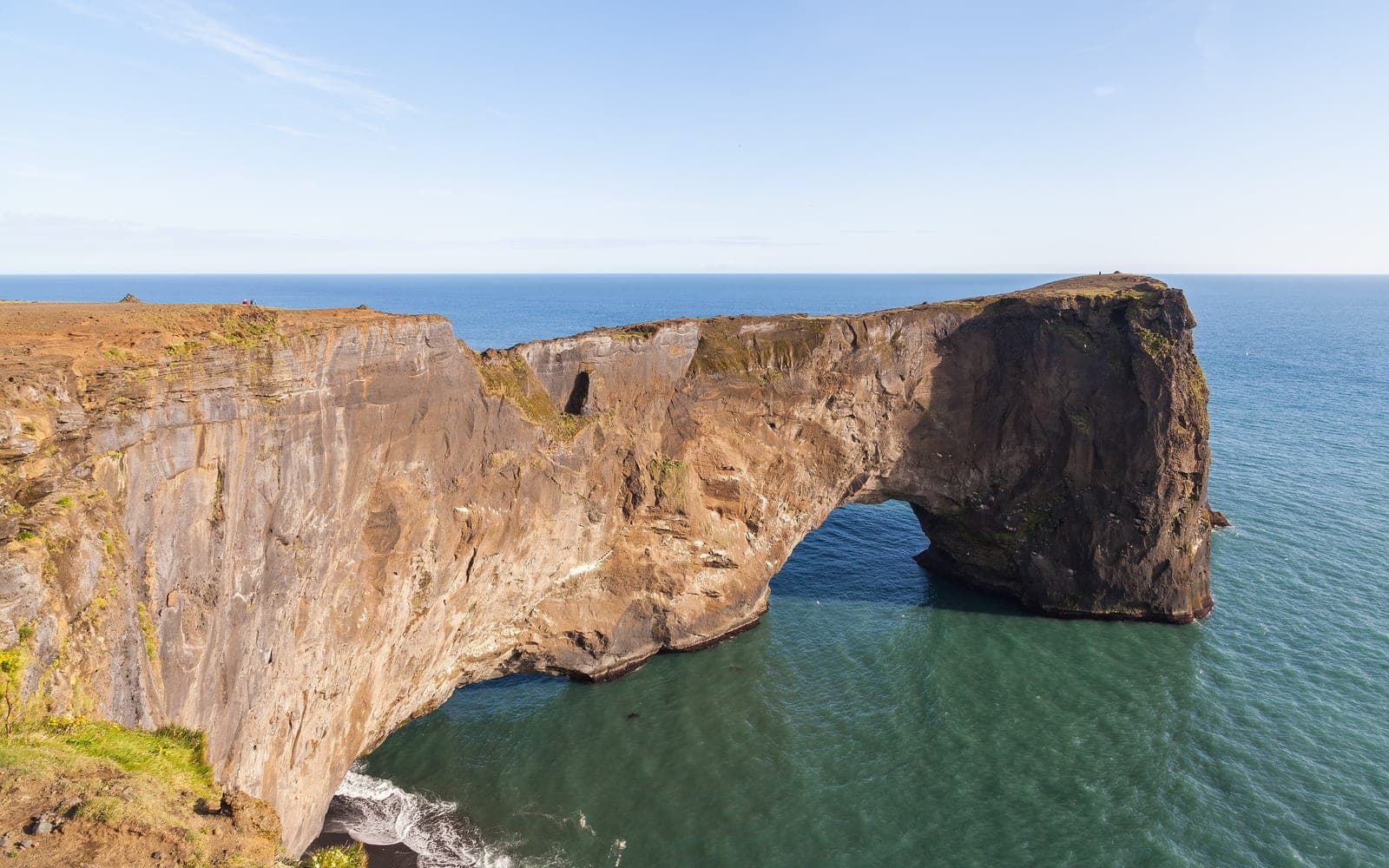
Gígjagjá sits within the Hjörleifshöfði landscape, although not every cave frame can be assigned to this opening.
The Odyssey in Iceland FAQ
Which place in Iceland became Hades?
The Hades sequence was filmed on the black sand below Hjörleifshöfði on Iceland's South Coast. More than 400 Icelandic extras appeared there as the shades of the dead.
How large was the Iceland shoot?
True North said the production involved nearly 1,000 people at its busiest, including around 200 Icelandic crew members and 450 extras and stunt performers. The local shoot ran for ten filming days.
Can you visit Hjörleifshöfði and Gígjagjá?
Yes. Hjörleifshöfði is a managed visitor location east of Vík, with Gígjagjá cave and a summit hike for which the operator suggests one to two hours. Follow the signed arrival and current parking instructions. The surrounding beach is the confirmed Hades location; that does not identify every cave scene.
Is the longship still at Landeyjahöfn?
The production sources describe the ship moving between Iceland locations, including an overland journey from Markarfljót to Snæfellsnes. They do not establish a permanent public exhibit at Landeyjahöfn. Treat it as a working ferry harbor and check current visitor information.
Was the whole movie filmed in Iceland?
No. The Odyssey used locations in several countries. Iceland provided the Hades landscape below Hjörleifshöfði, with other local filming reported at Markarfljót and on Snæfellsnes.