Culture snapshot
- Type
- National theatre and cultural landmark
- Region
- Central Reykjavik, on Hverfisgata
- Best for
- Architecture, performances, and city walks
- Time
- Exterior stop or ticketed evening
- Access
- Check show language and visitor details
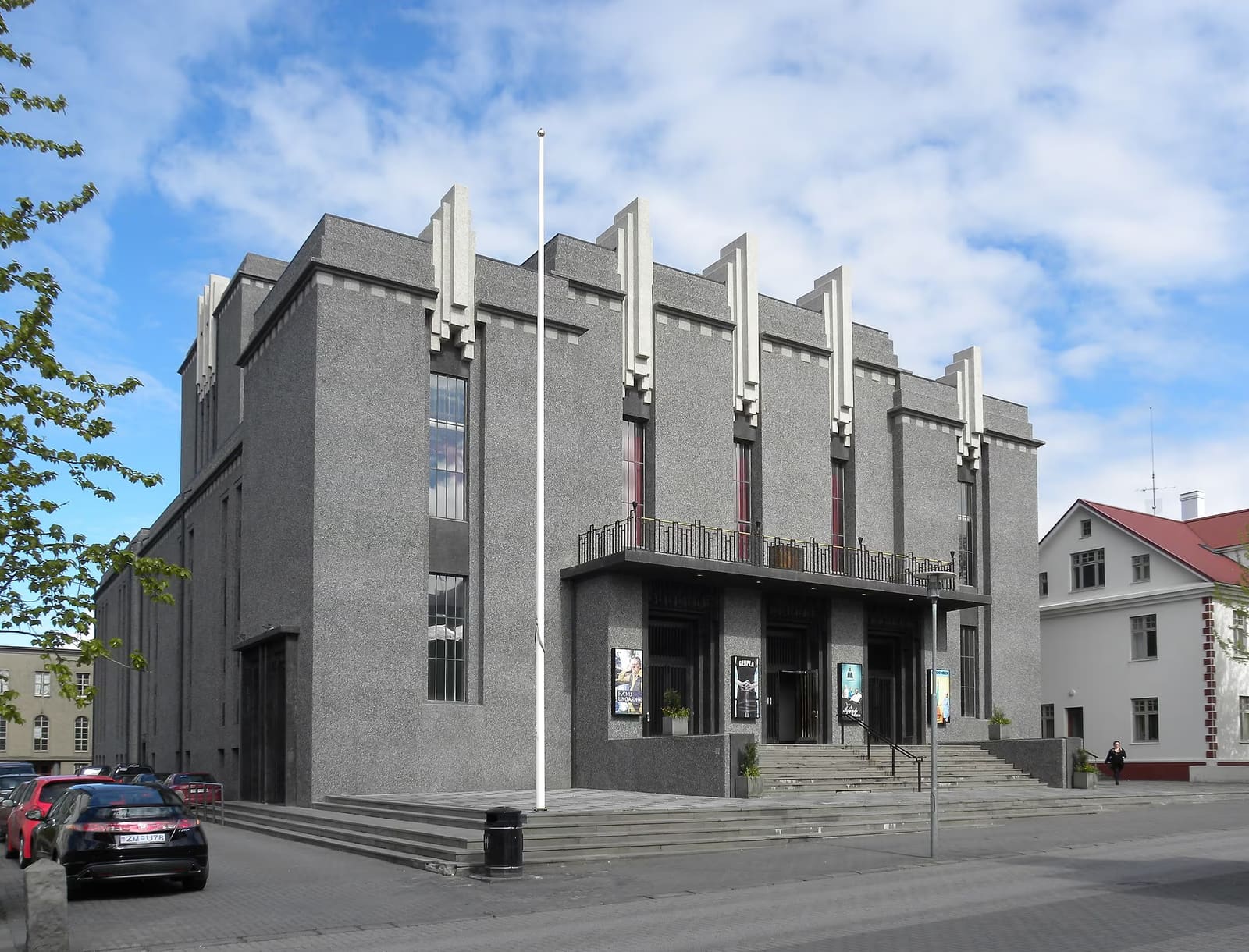
The National Theatre of Iceland is a central Reykjavik cultural landmark for travelers weighing architecture, Icelandic performing arts, official show details, and an evening performance against a simple city walk.
Culture snapshot
Yes, if you are already exploring central Reykjavik and care about architecture, theatre culture, or a distinctive Hverfisgata landmark. It is less persuasive as a standalone sightseeing detour.
The National Theatre of Iceland works in two different ways for travelers. Without tickets, it is a short architecture and city-walk stop near Safnahusid, Skolavordustigur, and Arnarholl. With tickets, it becomes a deliberate evening culture plan.
The honest decision is to match the stop to your interest. If Icelandic performing arts, unusual civic architecture, or a rainy Reykjavik afternoon sounds appealing, build it in. If your city time is mainly for Hallgrimskirkja, the waterfront, and food, a quick look from the street may be enough.
The building is part of the attraction, not just a shell around the stage.
The theatre opened in 1950 and was designed by Gudjon Samuelsson, the state architect also associated with several defining Icelandic buildings. Official theatre material describes it as Iceland's first building constructed and designed for the performing arts.
That helps explain why it feels different from many central Reykjavik stops. The exterior is heavy, dark, and rock-like, while the official building description links the main hall ceiling to basalt column formations. Even from the street, it adds a more theatrical, almost fortress-like note to Hverfisgata.
The theatre is more rewarding when you are choosing a show, but that choice needs a little more checking than a normal sightseeing stop.
Official theatre information points to a varied repertoire across Icelandic works, foreign works, classics, musicals, dance pieces, and productions for younger audiences. For travelers, the key issue is not whether the theatre matters culturally; it is whether a specific performance fits your language comfort, timing, and energy.
Selected performances may include English support, but do not treat that as a blanket promise. Check the official theatre site for the specific production, language notes, ticket setup, and accessibility guidance before making the evening fixed.
| Traveler situation | Best choice | Why |
|---|---|---|
| You love theatre or Icelandic culture | Check the programme | A performance can turn the building into a real trip memory. |
| You like architecture but not performances | Stop outside | The facade and setting still add value to a city walk. |
| Your group is language-sensitive | Verify first | Production language and support can vary by show. |
| You have one short Reykjavik window | Keep it brief | Nearby landmarks may serve first-time sightseeing better. |
The theatre is easiest to appreciate when it belongs to a compact city route rather than a long detour.
Its practical advantage is location. Hverfisgata puts the theatre close to Safnahusid, Arnarholl, Laekjartorg Square, and the lower part of Skolavordustigur. That makes it easy to notice without overloading your day.
For a culture-heavy city walk, pair the theatre with the House of Collections or the National Gallery. For an architecture-and-landmark walk, compare it with Hallgrimskirkja, Harpa, and the Sun Voyager instead of pretending they all serve the same purpose.
Use official visitor information for anything that affects a booking, arrival, or accessibility decision.
The durable guidance is simple: verify the exact production before you commit. Language, subtitles, performance length, ticket rules, building access, refreshments, and venue details can vary enough that they should come from the theatre rather than a travel guide.
Best source for programme, language, ticket, contact, and visitor details.
Useful city tourism listing for location and basic visitor context.
Helpful architecture reference for the building, date, and architect.
The best nearby choice depends on whether you want art, music, architecture, views, or a classic landmark.
Choose the House of Collections if art and historic interiors matter more than performance. Choose The Icelandic Punk Museum if you want something smaller, stranger, and music-led. Choose Harpa if waterfront architecture and events matter more than theatre history.
For first-time Reykjavik sightseeing, the theatre is usually a supporting stop beside stronger visual anchors. It can still make the walk better, especially when you want the city to feel like a working cultural capital rather than just a launch point for day trips.
By ThorPublished Updated
Map
Use nearby places and useful bases before opening directions.
Interactive planning map for The National Theatre of Iceland
Interactive map
Place context and external map links remain available without loading it.
Planning context
Open the region or practical guide that resolves the next planning decision.
Next step
Use the next page that helps turn this stop into a practical route decision.