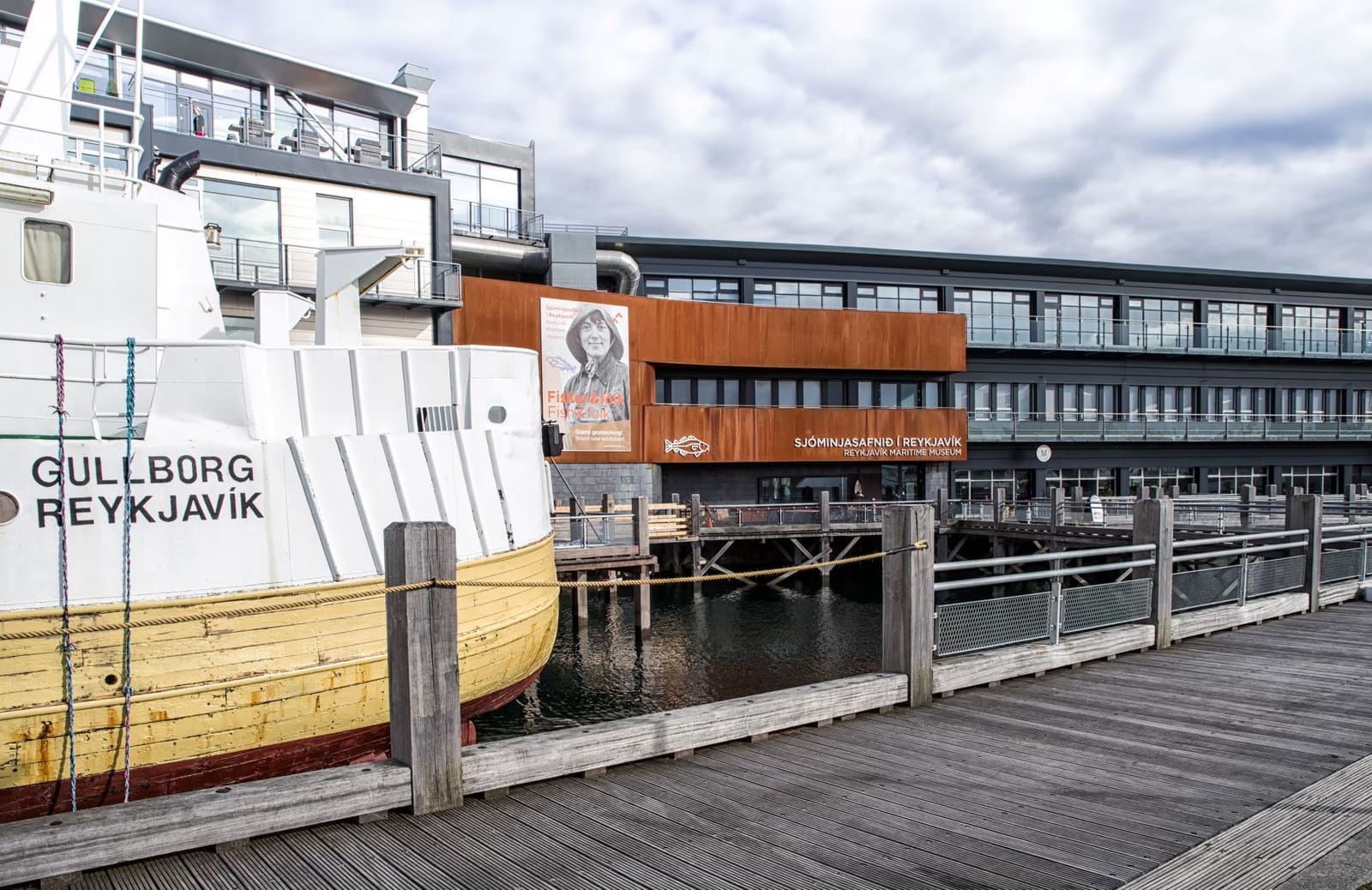
Reykjavik Maritime Museum is a harbor-side Reykjavík City Museum stop about Iceland's fishing, seafaring, and rescue history, best when a Grandi or Old Harbour day needs context rather than another quick waterfront photo.
Quick guide
Type
Maritime museum, cultural site, and harbor-side attraction
Setting
Grandagarður in Reykjavík's Grandi and Old Harbour area
Time to allow
About 45-90 minutes for the museum, longer if a vessel tour is part of the visit
Main appeal
Fish & folk fisheries history, harbor setting, floating vessel exhibits, and the story of Iceland's relationship with the sea
Best fit
A purposeful indoor stop before, after, or during an Old Harbour and Grandi walk
Check first
Use the official museum site for visitor details, vessel-tour availability, admission, events, groups, and access information
Is Reykjavik Maritime Museum worth your Reykjavík time?
Yes, if your Reykjavík day already leans toward Grandi, the Old Harbour, museums, or Iceland's relationship with the sea. It is less essential if you only have time for one classic city landmark or viewpoint.
The museum is strongest when it gives the harbor a story. Instead of treating the waterfront as a quick walk past boats, you get fisheries history, rescue context, and the working-sea background behind Reykjavík's growth.
The local editor's call is to add it when Reykjavík Harbour, Grandi, or nearby museums are already part of the day. Skip it when your group would rather spend limited city time on Hallgrímskirkja, Sun Voyager, or a broader nature-focused stop like Perlan.
Photo guide
Reykjavik Maritime Museum in photos
1 / 6
Give the visit more time if you want to read displays and connect the objects to Reykjavík's working harbor history.
Worth the stop?
When this stop makes sense
Good match for
maritime-history travelers
Grandi and Old Harbour walks
rainy or windy Reykjavík time
families who like hands-on museum stops
Think twice if
scenery-first visitors with one short Reykjavík window
The core visit is Fish & folk, a permanent exhibition about Icelandic fisheries from the shift away from rowing boats through the modern fishing industry.
Official museum sources describe the exhibition as visual and interactive, with the story told through Reykjavík's role as Iceland's biggest fishing port. That makes the visit more specific than a generic national-history room: the subject is how the sea shaped work, survival, technology, and the city.
Expect the best moments to come from objects, images, vessel context, and the feeling of being in a harbor building rather than from a single famous artifact. It suits travelers who like museums that explain how everyday labor became part of national identity.
Go for fisheries history if you want Reykjavík's working-harbor story.
Go for family-friendly indoor context if weather makes another exposed walk less appealing.
Go for a slower cultural stop if your trip has already covered the obvious city landmarks.
Fish & folk works best as an immersive fisheries-history exhibit, not just a room of harbor objects.
What is special about Óðinn and the harbor setting?
Óðinn gives the museum a physical harbor edge: a former Coast Guard vessel tied beside the museum, interpreted through rescue history and Iceland's Cod Wars story.
The vessel matters because it changes the museum from display-room history into something tied to the pier outside. If the ship experience is part of your visit, the story becomes more about cramped spaces, work at sea, rescue service, and Iceland's conflicts over fishing waters.
This is also where practical judgment matters. The official vessel guidance notes low ceilings, steep stairs, sharp edges, and limits for some visitors with reduced mobility or claustrophobia. Check official visitor details before making Óðinn the reason for the stop.
Óðinn turns the museum's sea history into something physically tied to the pier outside.
How long should you allow?
Most travelers should think in flexible museum ranges: shorter if you want a focused harbor-history stop, longer if you read closely or add the vessel experience.
Reykjavik Maritime Museum pacing
Visit style
Good when
Time to protect
Focused museum stop
You want Fish & folk, a sense of the harbor, and a compact indoor pause
About 45-60 minutes
Standard visit
You want the permanent exhibition, temporary rooms if they appeal, and slower looking
About 60-90 minutes
Museum plus vessel focus
Óðinn is a major reason for going and the official details work for your group
Closer to 90 minutes or more
Do not overload the same block. The museum pairs well with Grandi, but if you stack it with Whales of Iceland, Hafnarhús, food stops, and a harbor walk, the day can start to feel like a checklist instead of a useful city plan.
Give the visit more time if you want to read displays and connect the objects to Reykjavík's working harbor history.
What should you pair with it nearby?
The museum works best as part of an Old Harbour and Grandi cluster, not as a one-off cross-town errand.
Use Reykjavík Harbour for boats, sea air, and the waterfront setting before or after the museum. Add Whales of Iceland when marine life and family scale matter more than fishing-industry history.
Choose Marshall House or Reykjavík Art Museum Hafnarhús when you want the same harbor district to shift toward contemporary art and reused waterfront buildings. Choose Sun Voyager or Hallgrímskirkja when the group needs a classic open-air Reykjavík landmark after indoor time.
For trip planning, keep the stop inside your Reykjavík time. A first visit can easily include one compact city museum, but it should not take priority over the bigger route structure in a 5-day Iceland itinerary.
The museum's building history helps the Grandi area feel like more than a modern waterfront cluster.
Who should choose another Reykjavík stop?
Choose another stop if your group wants skyline impact, geology, live wildlife, or a broader overview more than a specialist maritime-history museum.
Better Reykjavík choices for different goals
Traveler goal
Better first choice
Why
Classic first Reykjavík landmark
Hallgrímskirkja or Sun Voyager
They deliver faster visual impact with less indoor commitment.
Families wanting broad nature exhibits
Perlan
It is a larger nature-focused attraction with a different city-view role.
Marine-life scale and whale context
Whales of Iceland
It focuses on whale species, models, and marine-life interpretation rather than fisheries history.
Contemporary art and harbor architecture
Reykjavík Art Museum Hafnarhús
It keeps the harbor setting but changes the subject from sea work to art.
This does not make the Maritime Museum weak. It makes it specific. The right visitor is someone who wants the sea to explain Reykjavík, not someone trying to tick off every possible city attraction.
The museum is specific: choose it for maritime texture, not for the broadest Reykjavík overview.
What visitor details should you check first?
Use official museum sources before building the stop into a tight day, especially if your plan depends on admission details, vessel access, events, group visits, or accessibility needs.
The most important checks are practical rather than editorial: whether the parts of the museum you care about fit your date, group, and access needs. This is especially true for Óðinn because the vessel is physically different from a normal gallery.
If you are using the museum as a weather buffer, keep the plan flexible. It is a strong indoor option for the right traveler, but Reykjavík has several good museum and landmark alternatives within the same trip rhythm.
Use for Old Harbour context and official Reykjavík visitor framing.
Reykjavik Maritime Museum FAQ
These questions help decide whether the museum should be a compact harbor stop, a longer maritime-history visit, or something to save for a different Reykjavík day.
Is Reykjavik Maritime Museum good for first-time visitors?
Yes, when first-time visitors want Reykjavík's harbor and fishing history to make more sense. If they only have a short city window, Hallgrímskirkja, Sun Voyager, or Perlan may be stronger first choices.
How much time should I allow for Reykjavik Maritime Museum?
Allow about 45-90 minutes for most museum visits, and more if the vessel experience is part of your plan and official visitor details work for your group.
Is Óðinn suitable for every visitor?
No. Official guidance describes low ceilings, steep stairs, sharp edges, and limits for some visitors with reduced mobility or claustrophobia. Check the museum's own visitor information first.
What should I pair with the museum nearby?
Pair it with Reykjavík Harbour, Whales of Iceland, Marshall House, or Reykjavík Art Museum Hafnarhús for a Grandi and Old Harbour cultural cluster.
Planning map
See this stop in route context
Use nearby markers and base towns to judge how this stop fits before you open directions.
Region
Reykjavík
Route fit
Reykjavík
Nearest base
Reykjavík
Interactive planning map for Reykjavik Maritime Museum
Reykjavik Maritime Museum
Keep exploring
Put this place in route context
Use nearby places and planning pages to decide whether this stop strengthens the route or stays optional.