Múlagljúfur Canyon is a steep southeast Iceland hike near Fjallsárlón, known for mossy canyon walls, Hangandifoss, Múlafoss, glacier views, and a rough, weather-sensitive approach that rewards unhurried summer days.
Canyon access
Main waterfalls
Hangandifoss drops more than 120 meters; Múlafoss measures about 101 meters in several sections
Time to allow
About 2-4 hours depending on turnaround point, footing, and photo stops
Effort
Shorter than many hikes but steep, uneven, and more serious than nearby roadside stops
Access reality
Unsigned gravel approach, small streams, marker posts at first, and no major visitor facilities
Main reward
High canyon-rim views of Hangandifoss, Múlafoss, mossy walls, and glacier country
In this guide
Canyon identity near the glacier lagoons
Múlagljúfur is the steep canyon hike hiding beside southeast Iceland's easier glacier-lagoon stops.
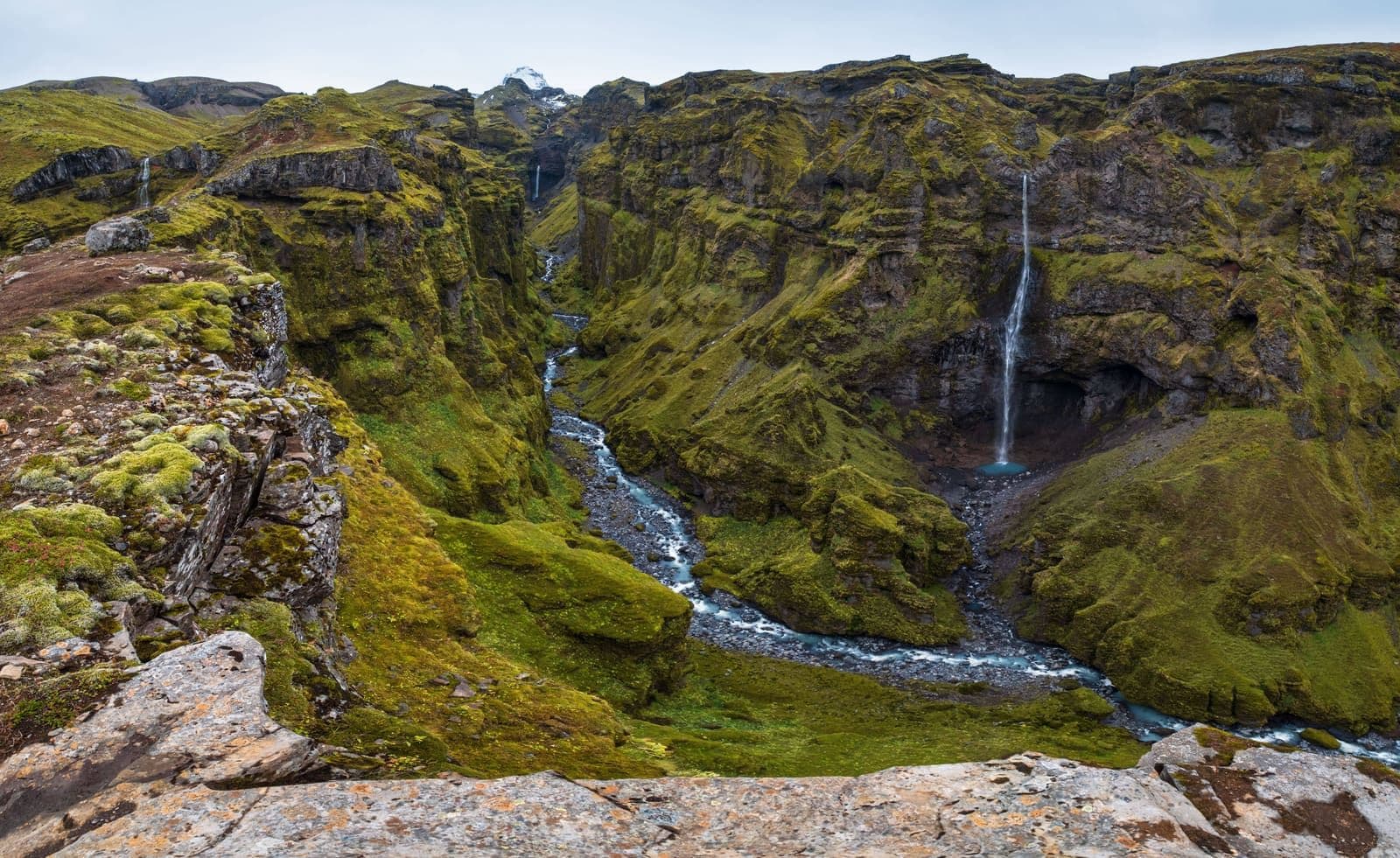
The attraction is not a polished roadside viewpoint. It is a climb into a narrow, moss-walled gorge below Öræfajökull, with a river below, waterfalls ahead, and glacier country opening behind you when the sky is clear.
That is the whole point of Múlagljúfur: it gives this part of the South Coast a wilder layer than the famous lagoon edges. Add it when you have time for a real hike. Keep moving when the day only has room for icebergs, beaches, and low-effort views.
Photo guide
Múlagljúfur Canyon in photos
Clear light changes the canyon from a hard climb into a layered southeast Iceland highlight.
Waterfalls, walls, and glacier history
The memorable details are physical: tall falls, steep green walls, rough ground, and the old glacier landscape around Öræfajökull.
Hangandifoss is the main vertical drama, dropping more than 120 meters into the canyon. Múlafoss sits farther inside the gorge; local visitor information gives it a total height of about 101 meters, with the largest visible drop around 53 meters. Those numbers matter because the hike is not selling distance. It is selling scale.
The landscape also has a glacier story. Kvískerjöklar, small glaciers on the eastern slopes of Öræfajökull, historically reached into the ravines around Múlagljúfur. Today, that context is visible in the broad mountain backdrop and in the way meltwater country sits close to the canyon.
The best reveal combines the canyon itself with the wider glacier-country backdrop beyond the rim.
Access is the real filter
This is not difficult because it is long. It is difficult because the approach is rougher and less managed than many South Coast visitors expect.
The turnoff is easy to miss, the gravel approach is unsigned, and the hike begins from a small parking area rather than a full visitor site. Expect marker posts on the first part of the path, a steep opening climb, uneven ground, and small stream crossings. Local guidance says most visitors should allow about 2-4 hours, depending on fitness, weather, and how far they continue.
Use the first major canyon reveal as a valid finish, not a failed attempt.
Continue higher only when visibility is good and the path still feels clear.
Turn back early when wet ground, low cloud, stream levels, or exposed edges start taking over the experience.
Hangandifoss is the visual proof that the climb is earning something bigger than another roadside stop.
Use it beside easier glacier stops
Múlagljúfur works best as the active choice in a southeast Iceland day, not as one more name squeezed into a long list.
If the weather is clear and the group wants effort, start with Múlagljúfur and then ease down into Fjallsárlón, Jökulsárlón, or Diamond Beach. If the day is already tight, reverse that priority and protect the easier glacier-lagoon stops first.
For a gentler contrast, Hofskirkja Turf Church gives the same area a short heritage pause, while Öræfajökull explains the larger glacier setting. If the question is how much of this corner belongs in the trip, step back to South Iceland or the South Coast road trip guide.
The stop works best when you can slow down enough to let the whole canyon scene land.
Check Múlagljúfur conditions before committing
The facts that change this visit are conditions, not tickets. Focus on road, weather, daylight, footing, and group ability.
Check conditions before you treat Múlagljúfur as fixed. A clear summer day can make it one of the strongest hikes near the glacier lagoons; low cloud, wet ground, snow, ice, or a rougher-than-expected approach can make it the wrong choice. In winter or shoulder season, read the winter driving guide before relying on this part of the drive.