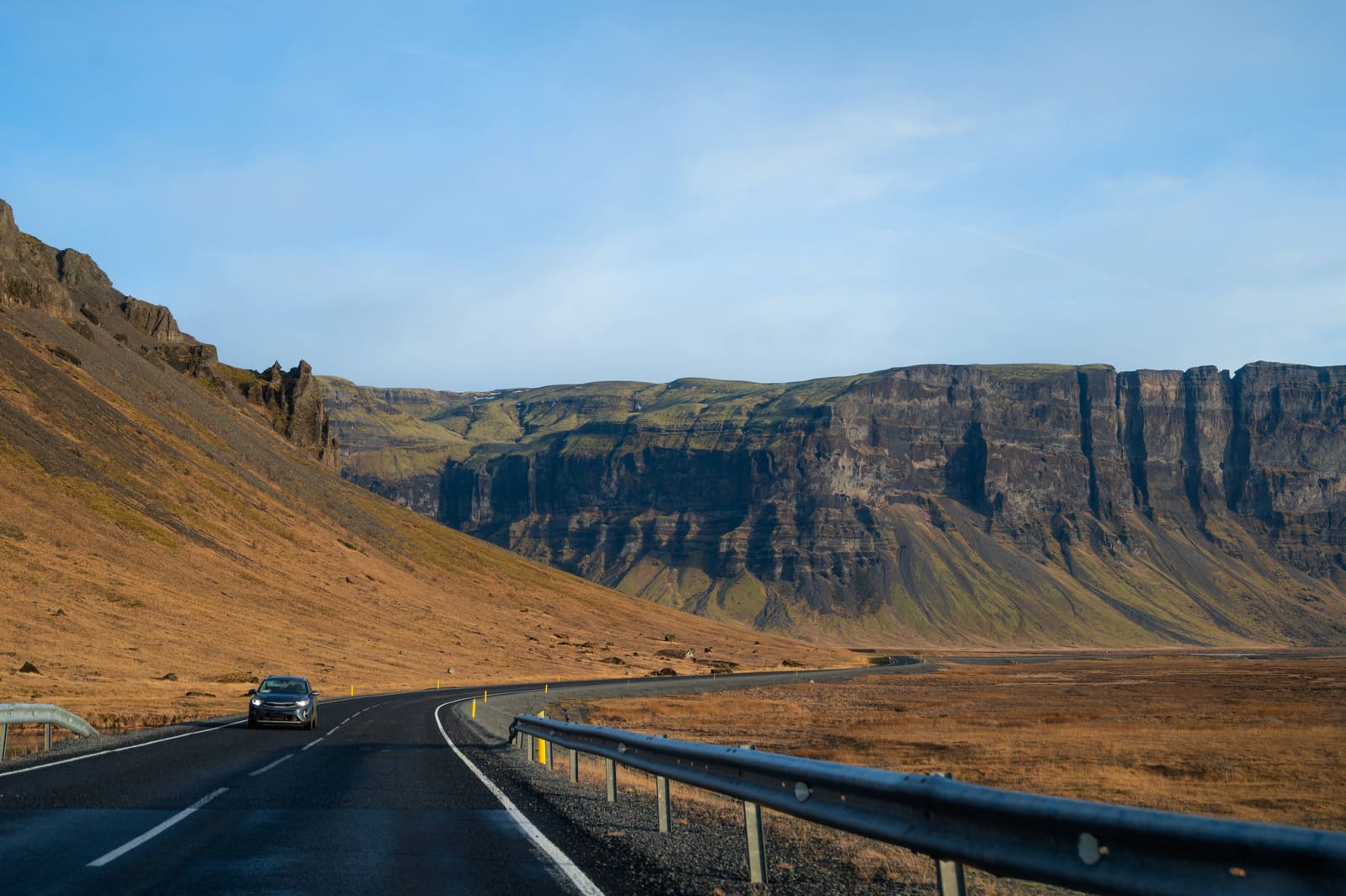
Gluggafoss is a quieter South Iceland waterfall in Fljótshlíð, useful for travelers deciding whether a short inland detour adds window-like geology and calmer scenery between Seljalandsfoss and Skógafoss.
Waterfall facts
Type
Waterfall and geosite
Region
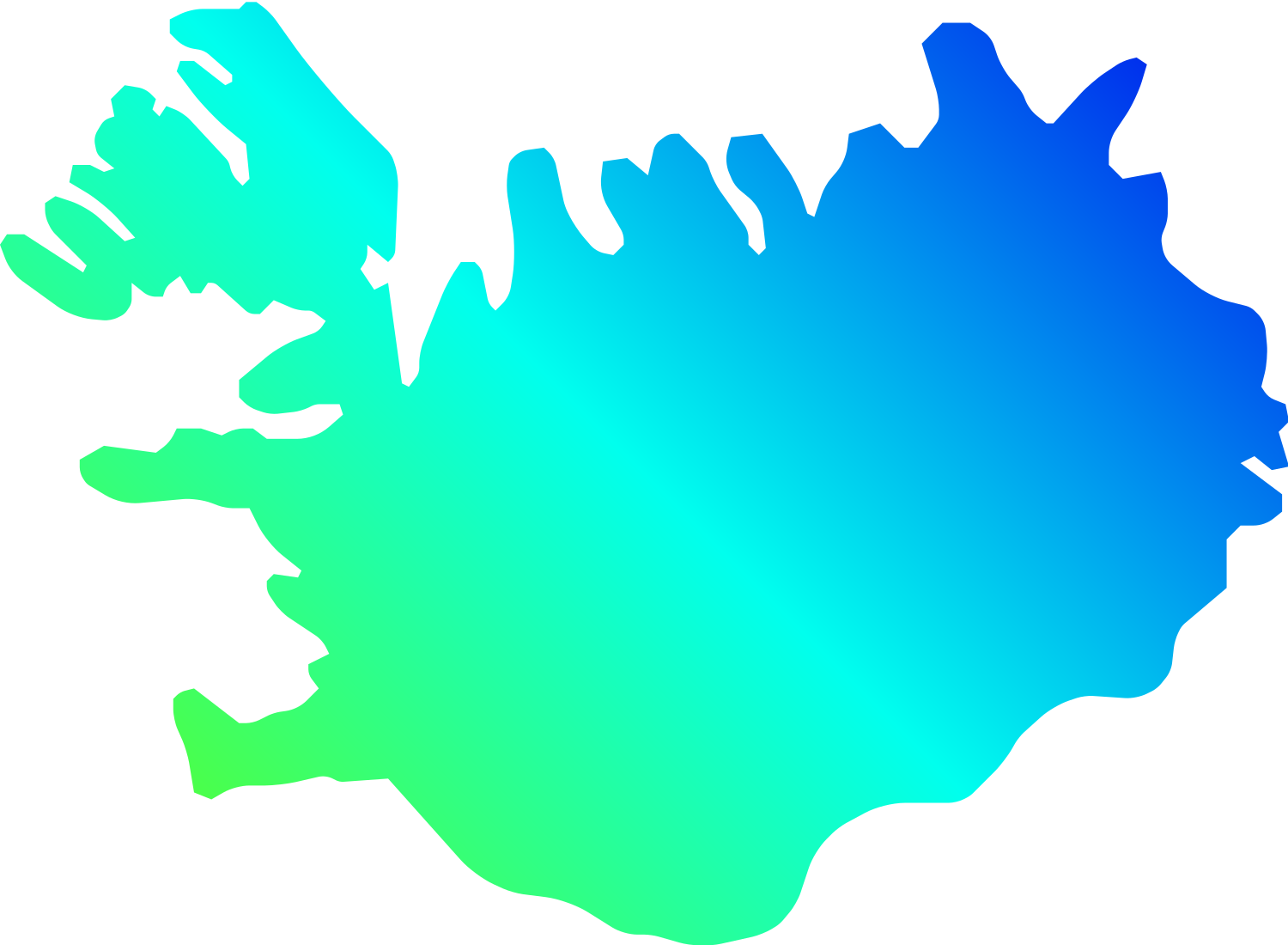
Fljótshlíð in South Iceland, near the Hvolsvöllur side of the South Coast
Route context
Best as a short inland detour from a South Coast or Ring Road driving day
Time to allow
About 20-45 minutes for a focused stop; longer when pairing it with Fljótshlíð or nearby canyon stops
Best experience
Window-like tuff openings, a two-level waterfall scene, and a quieter farm-country setting
In this guide
Is Gluggafoss worth the side trip from the South Coast?
Yes, if the day has room for a quieter waterfall that feels more local than the headline South Coast stops. Keep it optional when the same day already needs Seljalandsfoss, Skógafoss, Reynisfjara, and a long eastbound drive.
Gluggafoss works best as a deliberate pause, not as another name squeezed into an already crowded waterfall list. The appeal is the combination of a compact stop, Fljótshlíð farm-country scenery, and the unusual way the water has cut window-like openings through the softer rock.
Add Gluggafoss when the South Coast road trip has space for one calmer inland stop near Seljalandsfoss or Hvolsvöllur. Skip it when the main goal is to keep momentum toward Skógafoss, Dyrhólaey, Reynisfjara, or a distant overnight base.
When Gluggafoss earns its place
Trip situation
Best decision
Why it matters
Flexible South Coast day
Add Gluggafoss as a quieter inland waterfall
It gives the day a different texture from the bigger roadside icons
Packed first-time route
Keep it as an optional stop
Seljalandsfoss, Skógafoss, and Reynisfjara usually matter more for first-timers
Slow Fljótshlíð loop
Pair it with countryside and canyon stops
The waterfall makes more sense when the district is part of the plan
Photo guide
Gluggafoss Waterfall in photos
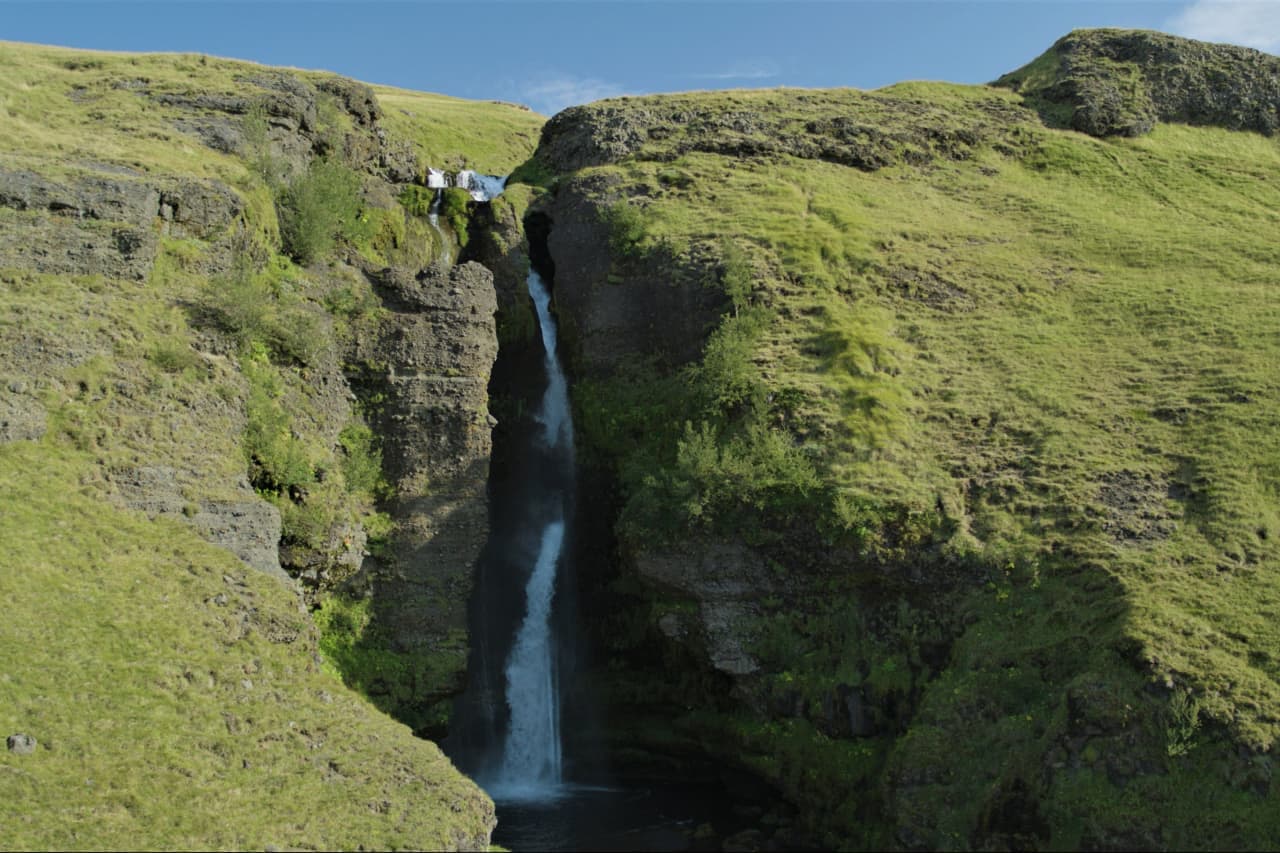
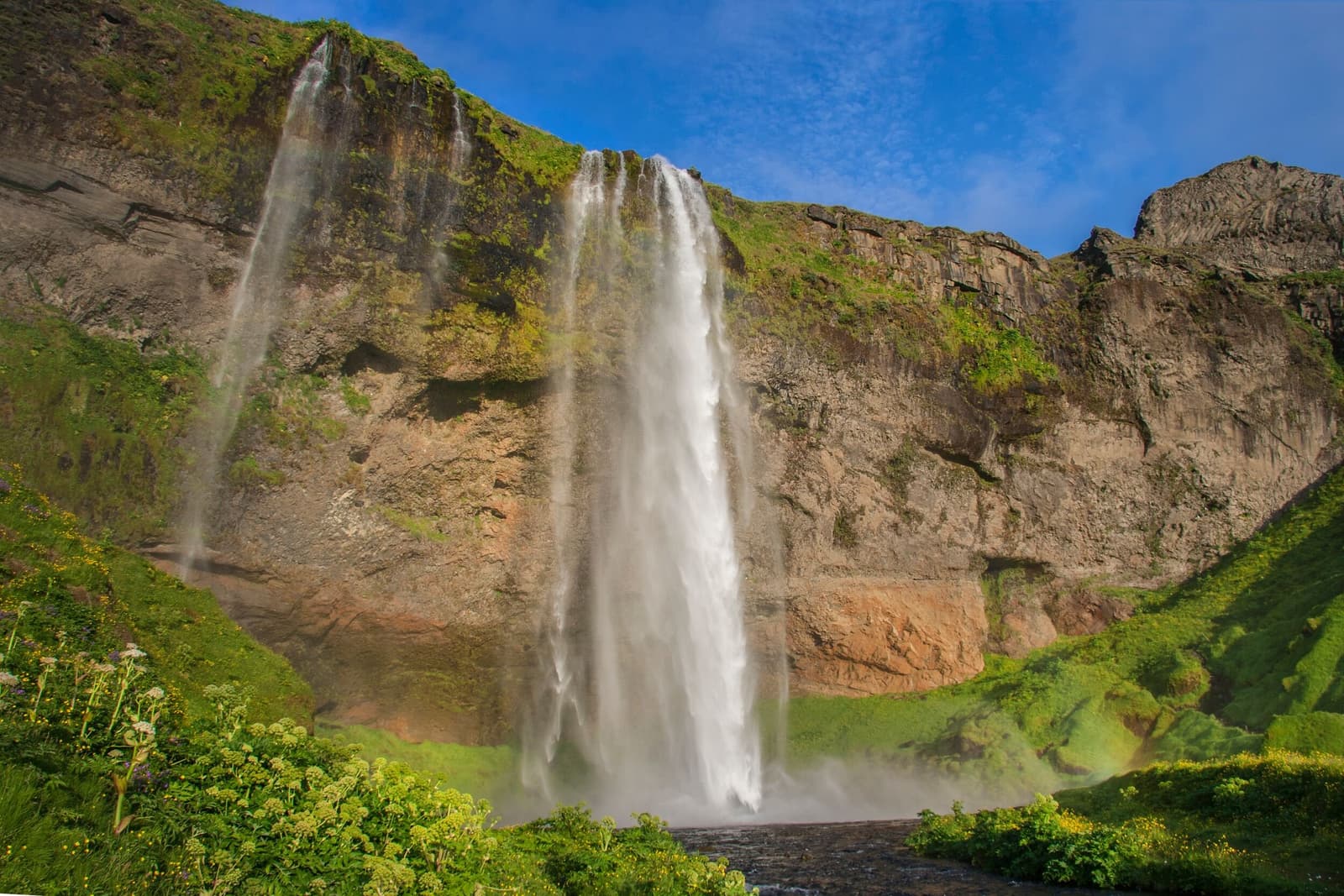
The tighter view highlights the shaded main drop and textured rock around Gluggafoss.
What makes the window waterfall different?
The name is the clue. Gluggafoss means a waterfall of windows, because the Merkjá River has carved openings, grooves, and tunnel-like gaps through softer tuff above harder basalt.
From the main view, the waterfall does not feel like one clean curtain. It appears in stages: water disappears into dark rock, reappears through gaps, drops into a shaded bowl, and continues through smaller lower cascades. That broken, layered shape is the reason Gluggafoss feels different from Seljalandsfoss or Skógafoss.
The broader view shows why Gluggafoss is about layered geology as much as waterfall height.
The setting helps too. Fljótshlíð gives the stop a quieter South Iceland feel: green slopes, farm-country edges, and fewer visual distractions than the most photographed coastal stops. If you like reading the landscape rather than only standing at the largest waterfall, this is the strongest reason to go.
Treat Gluggafoss as a compact stop first
Treat Gluggafoss as a compact stop first. Most travelers should allow enough time to look at the main waterfall, notice the lower cascades, take photos, and decide whether conditions make a closer look sensible.
The useful range is short: about 20-45 minutes for a focused visit. Add more time if you are deliberately linking it with Fljótshlíð, Nauthúsagil, Gljúfrabúi, or a slower local loop instead of returning directly to the main South Coast flow.
Use the short version when the day still belongs to the major South Coast landmarks.
Use the slower version when the route goal is quieter Fljótshlíð scenery and smaller waterfall contrasts.
Skip close approaches when wet ground, wind, ice, crowds, or on-site signs make the effort feel forced.
Check official visitor information, safety guidance, road conditions, and the South Iceland forecast before you make Gluggafoss a fixed part of a tight day
Check official visitor information, safety guidance, road conditions, and the South Iceland forecast before you make Gluggafoss a fixed part of a tight day.
This is not a complex expedition, but it is still an outdoor waterfall stop beside soft rock, water, and changing weather. Treat close viewing, winter plans, side-road driving, and any service-dependent details as things to verify before the day depends on them.
Use official road guidance when the drive involves winter conditions, poor visibility, or side-road uncertainty.
Use official weather guidance when wind, freezing conditions, or heavy rain could change footing and comfort.
Use official visitor information and on-site signs for any access, protected-area, or close-viewing limits.
Gluggafoss Waterfall: the strongest pairings are nearby South Coast stops that create a real contrast
The strongest pairings are nearby South Coast stops that create a real contrast: bigger open waterfalls, tighter canyon scenery, and the slower Fljótshlíð district around the waterfall.
Use Seljalandsfoss as the major nearby anchor. Add Gljúfrabúi when you want a wetter, enclosed waterfall contrast, or Nauthúsagil when you are choosing a rougher canyon-feeling stop. Skógafoss belongs in the same broader South Coast day, but it can make the schedule feel more pressured if every waterfall gets equal time.
Fljótshlíð changes the logic. Instead of treating Gluggafoss as a quick detour from Route 1, you can make the district part of a slower South Iceland day with farms, hills, saga context, and mountain-edge views. That version is better for repeat visitors and photographers than for rushed first-time itineraries.
Best Gluggafoss pairings
Waterfall contrast
Seljalandsfoss and Gljúfrabúi give the most immediate comparison between open, enclosed, and window-like waterfall scenes.
Canyon-style add-on
Nauthúsagil is the more rugged nearby choice when the day has enough weather and footing margin.
Classic South Coast flow
Skógafoss works when the route still has time for a major eastbound waterfall after the quieter detour.
Slow local context
Fljótshlíð makes Gluggafoss feel like part of a lived-in valley rather than an isolated photo stop.
Gluggafoss Waterfall FAQ
Use these answers to decide whether Gluggafoss belongs in the day before you start adding more South Coast stops around it.
Is Gluggafoss the same as Merkjárfoss?
Yes. Gluggafoss is also known as Merkjárfoss, and both names refer to the waterfall on the Merkjá River in Fljótshlíð.
Is Gluggafoss better than Seljalandsfoss?
No for most first-time landmark days. Gluggafoss is quieter and geologically interesting, while Seljalandsfoss is the stronger headline stop nearby.
How long should I spend at Gluggafoss?
Most travelers can treat it as a short stop. Add buffer only if you are slowing down around Fljótshlíð, nearby canyon stops, or photography.
Should I visit Gluggafoss in bad weather?
Only if official road, weather, and safety guidance support the wider plan. The waterfall is not worth forcing when wind, ice, or wet footing would make the stop uncomfortable.
Gluggafoss Waterfall: use official and regional sources for the details that can change
Use official and regional sources for the details that can change, then keep the plan flexible enough to remove the stop if conditions do not support it.