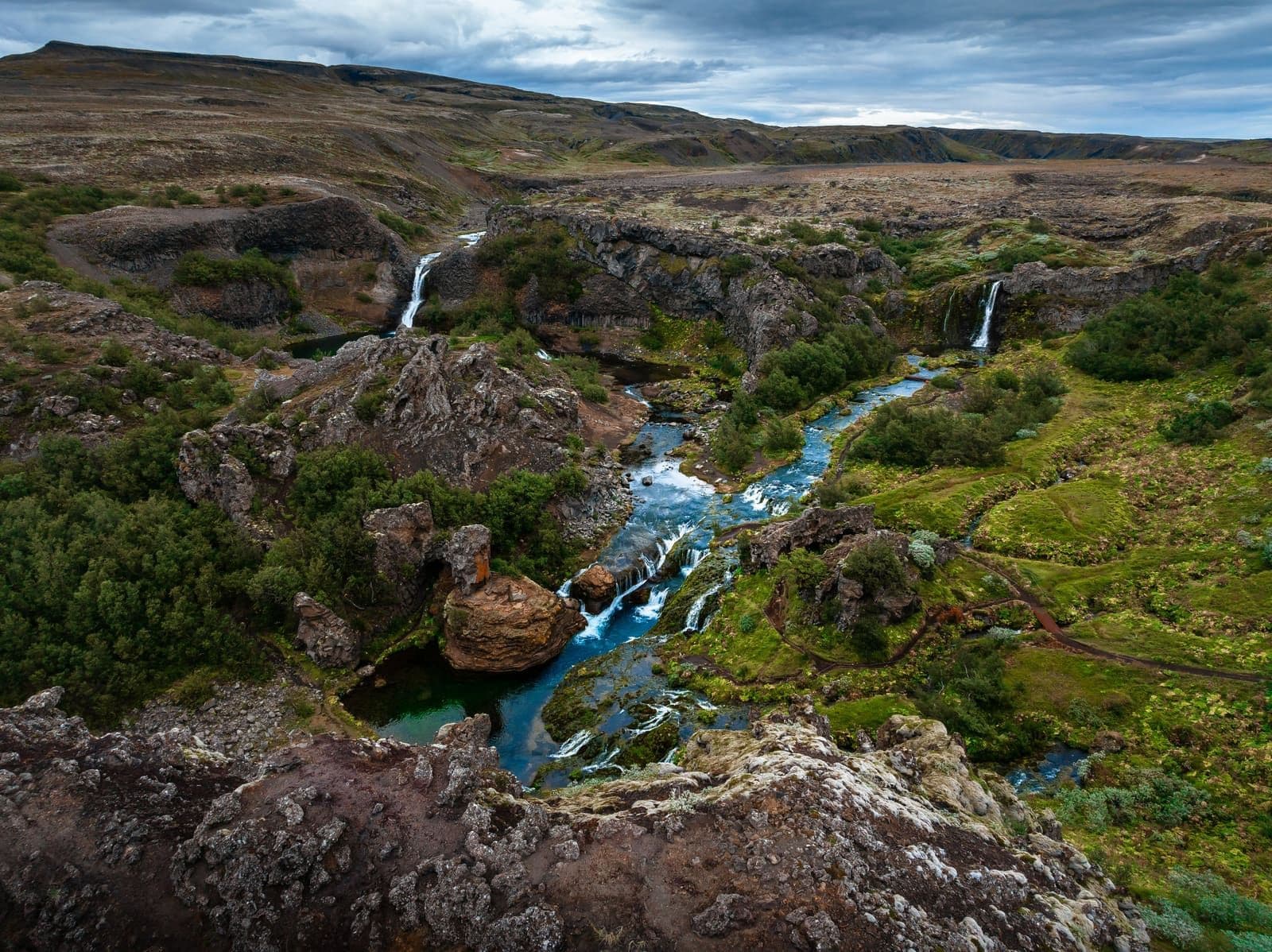
Is Gjáin worth a stop of its own?

Yes, if you want the most intimate and walkable piece of Þjórsárdalur rather than another big roadside spectacle. It is weaker when the day is already overloaded with every classic Golden Circle stop.

Gjáin is the stop for texture. Instead of one massive waterfall or one giant viewpoint, you get a sheltered gorge where water, basalt, lava edges, moss, and pools all sit close together. That smaller scale is the whole appeal.

A local Iceland travel editor would add Gjáin when a self-drive traveler wants Þjórsárdalur to feel quieter and more immersive than the standard loop around Gullfoss and Geysir. They would skip it when the day still needs the main loop, a long return drive, and no room for short walks or condition checks.

When Gjáin earns a place in the day
Plan shapeChoose Gjáin whenBetter alternative
Primary valley stopYou want one short walk with the highest payoff for pools, small falls, and lava detail.Choose Gullfoss if you only have time for one major waterfall anchor.
Balanced inland clusterYou can connect Gjáin with Þjóðveldisbærinn at Stöng or Hjálparfoss without rushing the return.Keep only one valley stop if the drive is already long.
Keep optionalRoad, weather, daylight, or energy levels still look uncertain.Save Gjáin for a slower South Iceland day rather than forcing it late.

Worth the stop?

When this stop makes sense

Good match for

  • self-drive travelers who want the valley's most intimate gorge stop
  • photographers who care more about texture, pools, and basalt than raw scale
  • travelers pairing a short nature walk with Þjóðveldisbærinn at Stöng
  • summer and settled-weather Golden Circle extensions with real time to slow down

Think twice if

  • packed one-day Golden Circle plans already stretched by every classic stop
  • travelers who only want zero-walk roadside viewpoints

Pair it with

South IcelandÞjórsárdalurÞjóðveldisbærinn at StöngHjálparfoss

What does the walk into Gjáin actually feel like?

It feels more enclosed and greener than the broad valley around it. That contrast is what makes Gjáin memorable.

The approach is short, but Gjáin does not feel like a quick pull-off. You step into a tighter landscape where small falls appear between rock walls, dark lava edges break up the ground, and the path asks you to slow down and watch your footing.

The short walk is part of the reward, but it still needs footwear, pace, and attention to the ground.

This is also why Gjáin is easier to oversell than to use well. Travelers who want the drama of a huge drop may prefer Háifoss. Travelers who want a short, careful walk through water, greenery, and basalt usually come away feeling Gjáin was the smarter choice.

How much time should Gjáin get in a real driving day?

Give Gjáin enough room to be a small walk, a few pauses, and a decision point for the rest of the valley. It loses value when treated as a checkbox between longer drives.

  • Quick version: use Gjáin as the single Þjórsárdalur stop and leave the rest of the day anchored by Gullfoss, Geysir, or the return drive.
  • Balanced version: pair Gjáin with Þjóðveldisbærinn at Stöng and Hjálparfoss for a slower half-day inland cluster.
  • Ambitious version: add Háifoss only if the day has real buffer for roads, weather, walking time, and a longer drive back out.

If you are shaping a 5-day Iceland itinerary or a wider South Iceland loop, Gjáin works best as the intimate stop that makes Þjórsárdalur feel more than a map detour. If you only have room for one quick roadside sight, it is usually the wrong fit.

What should you check before making Gjáin a fixed detour?

Check conditions before you commit, because the valley only helps the route when the access reality still matches the plan.

Road 32 brings you into the area, but the useful decision is smaller than that: whether the side-road approach, path conditions, wet ground, wind, and daylight still support the kind of stop you wanted. Protected-area signs and on-site conditions should settle the final call.

Gjáin is part of a protected landscape, so access choices matter as much as the scenery.

If the detour depends on unsettled weather or a shoulder-season inland drive, read winter driving in Iceland before assuming Gjáin should stay fixed in the plan.

Which nearby stops make Gjáin more useful?

Gjáin is strongest when it helps you build the right valley version, not when it competes with every famous stop in South Iceland at once.

The cleanest pairing is Þjóðveldisbærinn at Stöng first, then Gjáin as the short nature walk that changes the mood of the day. Hjálparfoss adds an easier waterfall stop with less walking pressure, while Háifoss is the bigger scenic gamble that needs more margin.

Gjáin works when you want layered detail and quiet scale, not only the biggest waterfall in the region.

For first-time travelers, compare Gjáin against the wider Þjórsárdalur guide before treating it like a separate must-see. For travelers already committed to the classic Golden Circle, Gullfoss and Geysir stay the stronger anchors unless the day was built to slow down inland.

Common questions before visiting Gjáin

Is Gjáin hard to visit?

No, Gjáin is not a major hike, but it is not a zero-effort pull-off either. Expect a short walk on uneven ground where wet paths and on-site conditions matter.

How long should you allow for Gjáin?

About 45-90 minutes is a sensible planning range for Gjáin itself. Add more time if you also want Þjóðveldisbærinn at Stöng, Hjálparfoss, or a wider Þjórsárdalur loop.

Is Gjáin better than Háifoss?

They do different jobs. Choose Gjáin for a sheltered short walk and layered detail; choose Háifoss when the main goal is the bigger canyon-and-waterfall payoff.

Can Gjáin fit into a classic Golden Circle day?

Yes, but only when the day was built with buffer for an inland extension. It is usually better as the slower choice that replaces a weaker extra stop, not as one more rushed add-on.

Official and regional sources to check for Gjáin

Official and regional sources