Church details
- Type
- Stone church and heritage site
- Region
- North Iceland, near Blönduós
- Best for
- History, views, and quiet pacing
- Time
- About 20 to 45 minutes
- Access
- Road 721 off Route 1
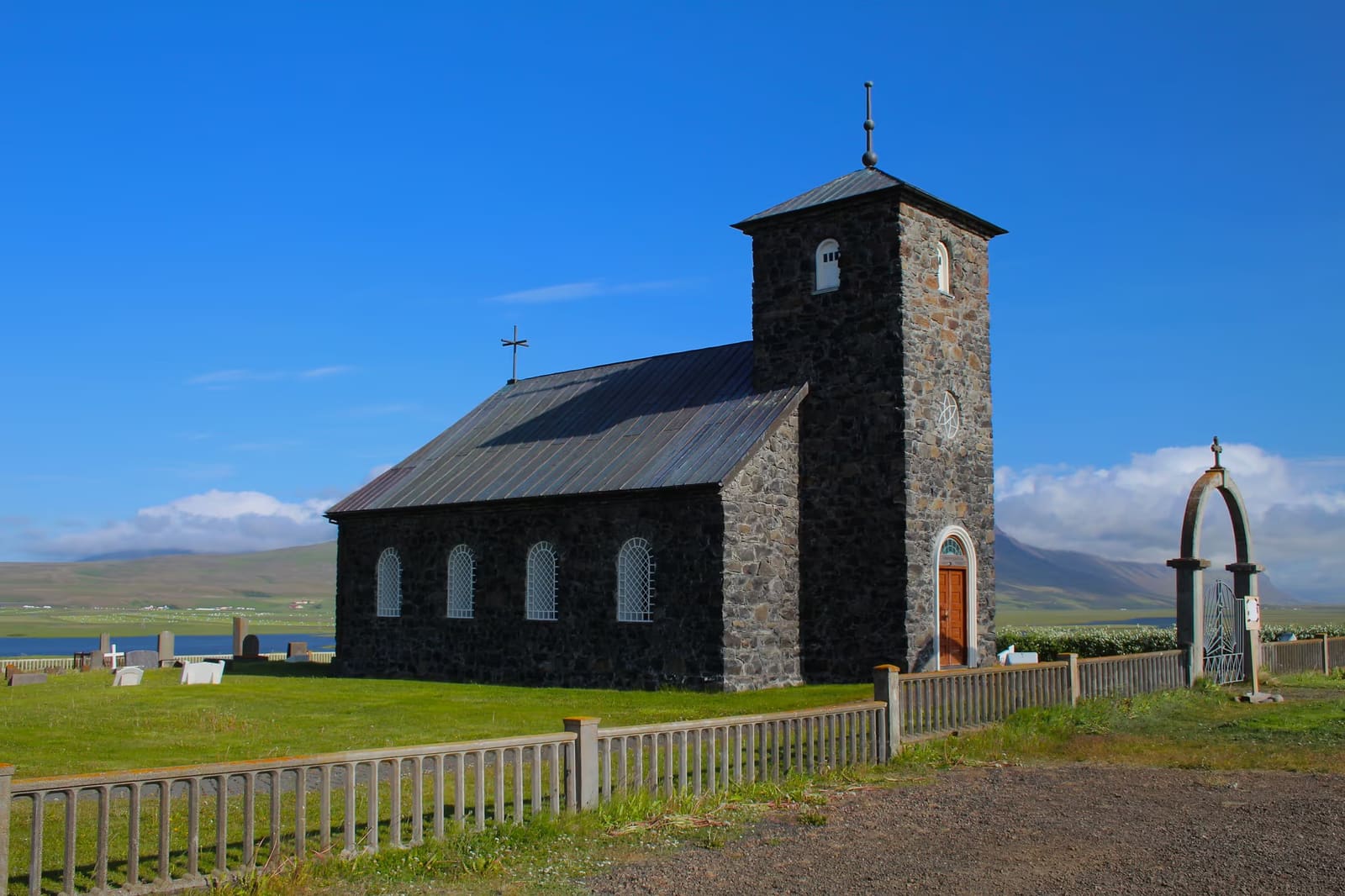
Þingeyrarkirkja Church is a historic stone church at Þingeyrar in North Iceland, useful for travelers choosing whether a quiet cultural stop near Hóp and Blönduós belongs in a Ring Road day.
Church details
Yes, when you want a quiet heritage stop that adds a real historic layer to a North Iceland drive without taking over the day.
Þingeyrarkirkja is not a big-ticket Iceland sight. Its value is more specific: a dark stone church, a low open setting between Hóp and Húnavatn, and a site tied to one of the country's most important medieval religious estates.
The stop works best if you are already near Blönduós, tracing the Hóp Lake area, or deciding whether to continue around Vatnsnes. It is less convincing as a standalone detour from a rushed Ring Road transfer.
The first impression is compact but memorable: black basalt walls, a fenced churchyard, broad lake country, and mountains across the water.
The building has a heavier presence than many small Icelandic churches because it is built of stone rather than timber. The tower, arched doorway, and white-trim windows stand out against the flat, open farmland around Þingeyrar.
The view is part of the reason to stop. Regional tourism sources place the church in the Þingeyrar landscape, where the site looks across one of the broadest panoramas in the Húnaþing area.
The church is only the visible piece of a larger story: Þingeyrar was a powerful estate and a major monastic center.
Þingeyrar was the site of an early monastery, and research on the place points to its long role in religious, literary, and landholding history. That background changes the visit from a simple church photo into a short encounter with a site that mattered well beyond the local parish.
The present church was consecrated in the late nineteenth century, but sources connect the site to much older religious material. If you care about Icelandic manuscripts, medieval Christianity, or how rural power centers shaped the north, this is the detail that makes the stop worthwhile.
Think of Þingeyrarkirkja as a route texture stop near Blönduós, not as a replacement for bigger coastal or canyon plans.
For a compact plan, pair the church with Blönduós and the Hóp shoreline. With more time, it can sit before a slower loop toward Vatnsnes, Hvitserkur, Borgarvirki, or the seal-focused side of the peninsula.
| Trip shape | How to use the church | Best next move |
|---|---|---|
| Brief Ring Road pause | Stop for the exterior, churchyard, and view. | Return to Blönduós or Route 1. |
| Hóp and Vatnsnes day | Use the church as the cultural opening. | Continue toward Borgarvirki or Hvitserkur. |
| History-focused north | Slow down for Þingeyrar's monastery story. | Add a museum or heritage stop nearby. |
Do not make the stop depend on entering the church unless you have confirmed visitor details close to your trip.
Church access, local contacts, events, and visitor expectations can vary. The safer plan is to treat the exterior, churchyard, and setting as the baseline, then consider any interior look a valuable addition if details line up.
Road 721 is a small side road, so conditions matter more in winter, wind, or low visibility. Check official road and weather information before turning this into a fixed stop on a tight driving day.
Use for place identity, route number, coordinates, and regional context.
Use for local church history and contact context.
Check before adding side roads in difficult weather.
Check wind, visibility, and warnings before exposed rural stops.
By ThorPublished Updated
Map
Use nearby places and useful bases before opening directions.
Interactive planning map for Þingeyrarkirkja Church
Interactive map
Place context and external map links remain available without loading it.
Planning context
Open the region or practical guide that resolves the next planning decision.
Wider route
Use broader place relationships for route comparison; they are not presented as immediate nearby stops.
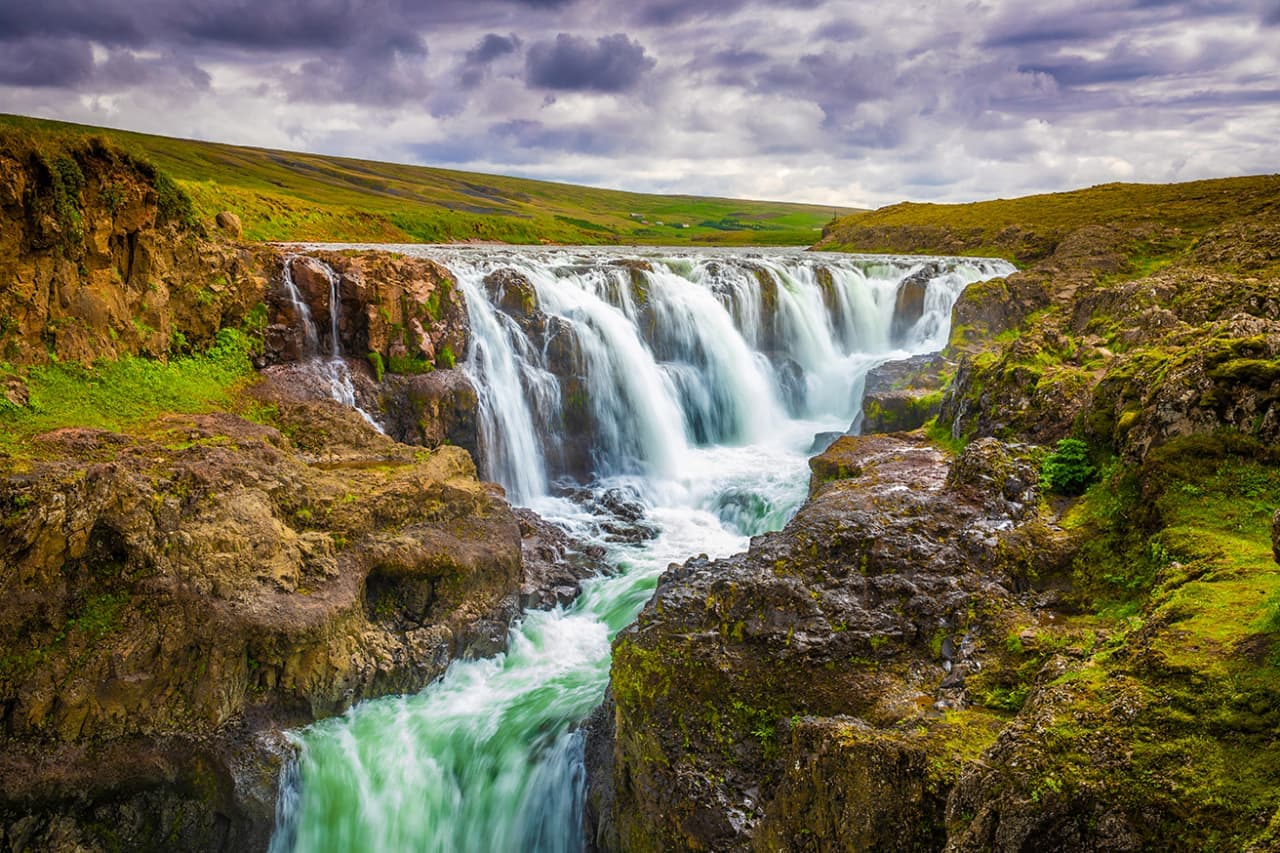
Kolugljúfur Canyon is a compact waterfall gorge in northwest North Iceland, best for travelers who want a memorable short stop between Vatnsnes, Blönduós, and larger north-coast route anchors.
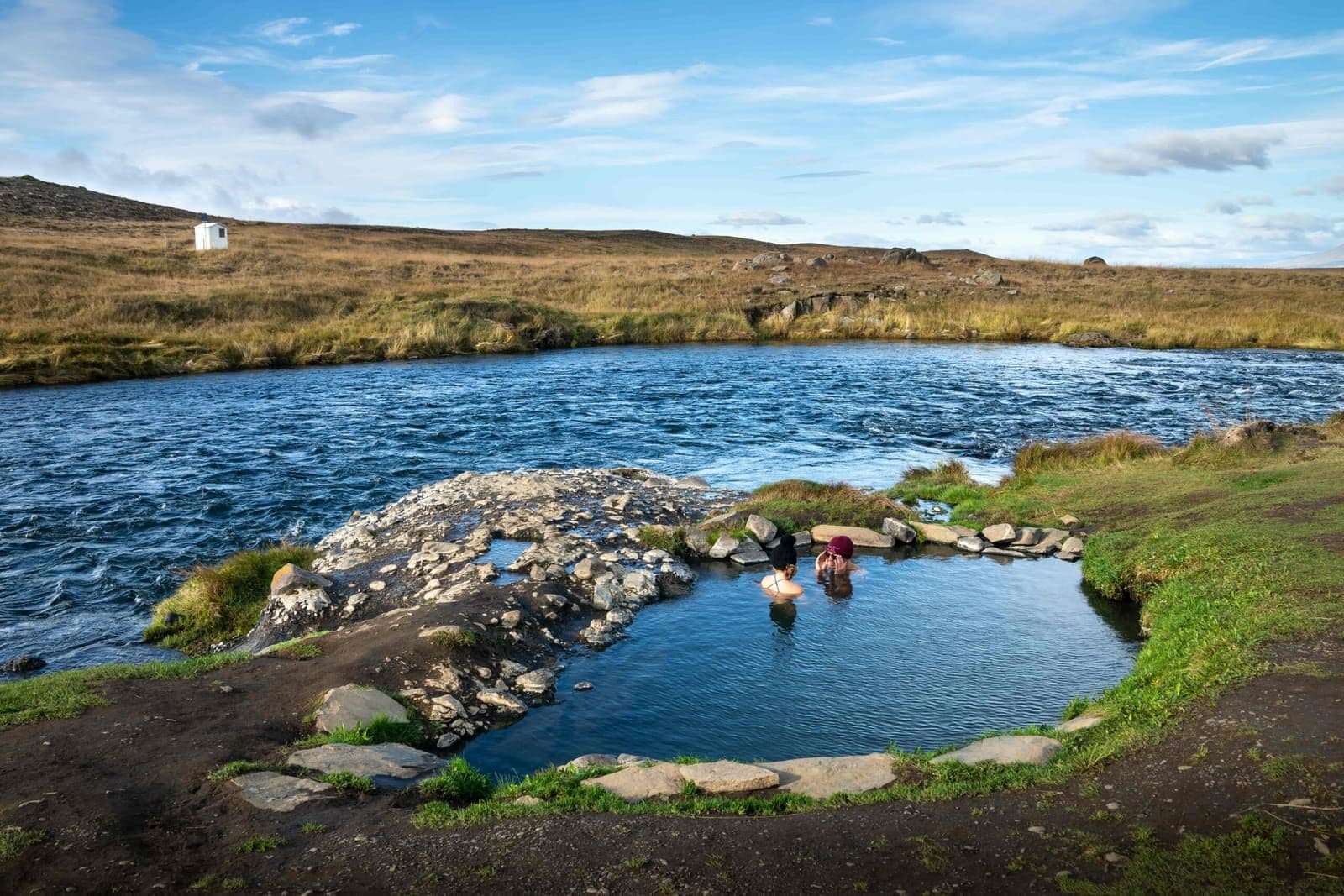
Fosslaug is a small riverside hot spring beside Reykjafoss near Varmahlíð in Skagafjörður. The landowner announced an access closure in June 2026, so confirm reopening before including either place in your plans.