City stop snapshot
- Type
- Central city park
- Region
- Hlíðar, Reykjavík
- Best for
- Play, lawns, art, and pauses
- Time
- About 20 to 75 minutes
- Pair with
- Kjarvalsstaðir or Hallgrímskirkja
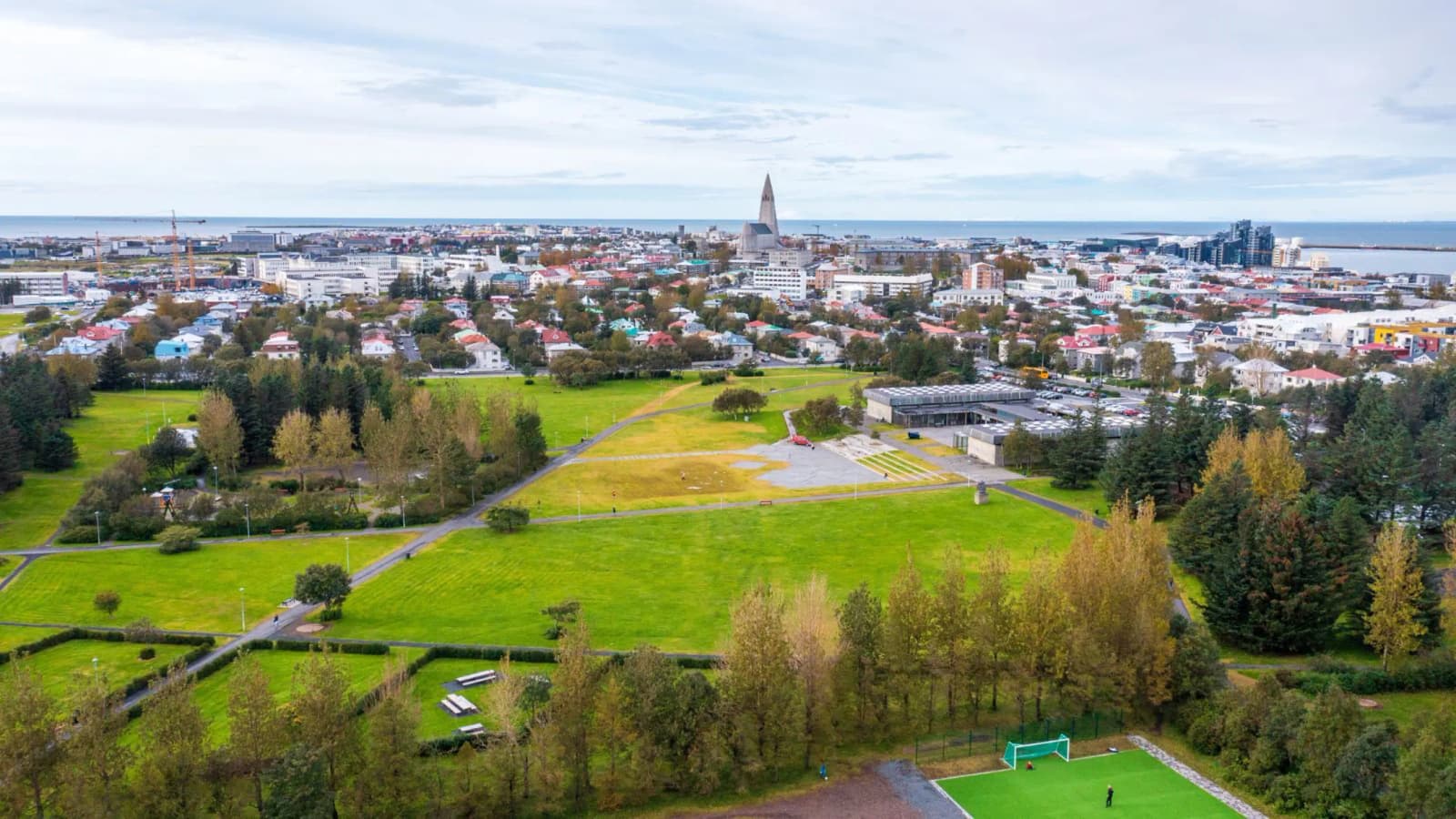
Klambratún Park helps Reykjavík travelers decide whether a central green-space pause, playground break, casual sports stop, or Kjarvalsstaðir pairing belongs between the capital's bigger landmarks and indoor plans.
City stop snapshot
Yes, if your city plan needs space to breathe. Klambratún is most useful as a flexible park-and-art pause, not as a headline sight competing with Reykjavík's main landmarks.
Think of Klambratún as a breathing point in the capital. The park gives you lawns, paths, play areas, outdoor activity space, and Kjarvalsstaðir on the northern edge, so it works best when the day needs a softer pace.
It is less convincing as a special detour if you only have time for Hallgrímskirkja, the waterfront, and a quick downtown walk. The park earns its place when children need room, adults want a low-key break, or art and open air belong together.
Photo guide
Disc golf is one of the specific casual-activity reasons some travelers may care about the park.
The park is not just a patch of grass beside a museum. Its open southern lawns, paths, play spaces, and low museum building give this part of Reykjavík a calmer neighborhood feel.
Visit Reykjavík describes Klambratún as one of the city's largest public parks, bounded by Hringbraut, Rauðarárstígur, Flókagata, and Langahlíð. That bounded shape makes it easy to use as a contained stop rather than an open-ended city wander.
The source-supported extra reason to care is Kjarvalsstaðir. Reykjavík Art Museum's history page ties the building and park together through art, architecture, and public recreation, which gives Klambratún more visitor value than a generic green-space pause.
For families and slow travelers, Klambratún is practical because the visit can be short, loose, and outdoors. It does not need a fixed route to be useful.
The park has the kind of mixed city-park setup that helps between more structured stops: lawns, benches, playground space, sports areas, disc golf, public art, and paths. Treat those as possible uses, not as guarantees that every facility will suit every season or visit.
Allow a quick 20-minute pause if everyone only needs air and space. Stretch toward an hour or more if children want the playground, someone wants disc golf, or you plan to fold in Kjarvalsstaðir.
Klambratún belongs inside a Reykjavík cluster. It is more useful when it reduces city fatigue than when it adds another mandatory stop.
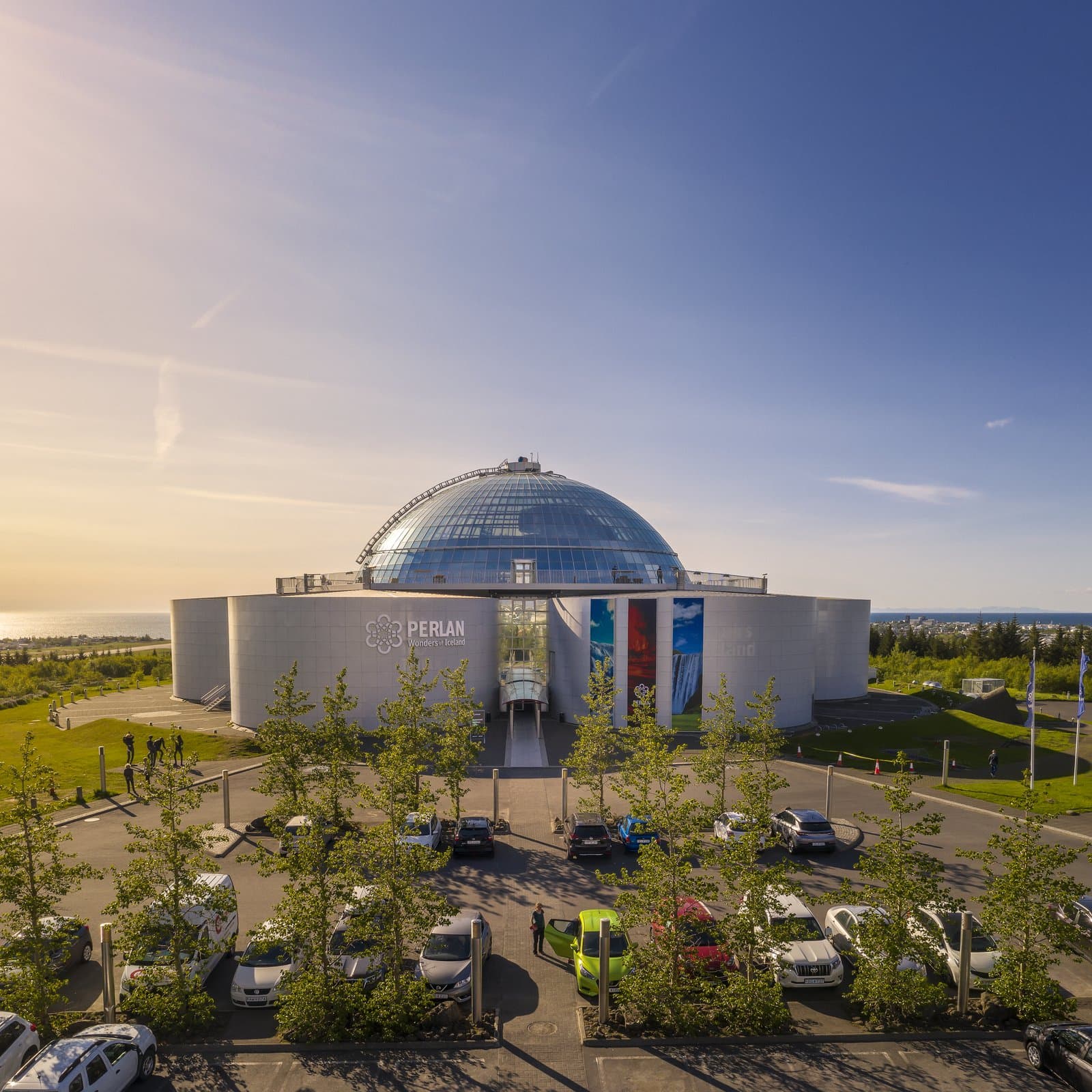
A sensible city pairing is Hallgrímskirkja, a walk through nearby streets, then Klambratún if the group needs open space before continuing. If indoor structure matters more, compare the park-and-Kjarvalsstaðir combination with Perlan instead.
For an art-led day, Klambratún pairs naturally with Kjarvalsstaðir and can sit beside Hafnarhús or Ásmundarsafn as a Reykjavík Art Museum choice. For a landmark-led day, keep it optional and use it only if the pace needs relief.
| Pairing | Why it works |
|---|---|
| Kjarvalsstaðir | Turns the park into a culture-and-fresh-air stop. |
| Hallgrímskirkja | Adds open space after a landmark and street walk. |
| Perlan | Works when families want a bigger indoor attraction nearby. |
| Sundhöllin | Useful when a city day needs a pool-and-park rhythm. |
Klambratún is simple, but not frictionless. Wind, wet grass, snow, city events, and facility maintenance can change whether it feels like a pleasant pause or an easy skip.
In good conditions, the park gives a Reykjavík day room to slow down. In rough weather, the better move may be to use Kjarvalsstaðir, Perlan, Sundhöllin, or another indoor stop rather than forcing outdoor time.
Before relying on a specific activity, check official city or visitor information for access details, events, maintenance, and services. That matters most if playgrounds, sports areas, dog rules, accessibility, or toilets affect your plan.
These questions help decide whether to add Klambratún as a quick pause, family stop, or art pairing.
No. It is most useful as a flexible city-park pause, especially for families, slow travelers, or anyone pairing it with Kjarvalsstaðir.
Allow about 20 to 75 minutes depending on whether you only want a breather, use the playground or sports areas, or add Kjarvalsstaðir.
Kjarvalsstaðir is the strongest pairing. Hallgrímskirkja, Perlan, Sundhöllin, and Laugavegur can also fit different city-day rhythms.
By ThorPublished Updated
Use these sources for official park context, outdoor-area details, art-museum background, and practical Reykjavík visitor checks.
Map
Use nearby places and useful bases before opening directions.
Interactive planning map for Klambratún Park
Interactive map
Place context and external map links remain available without loading it.
Nearby walk
Use nearby streets, public spaces, and museums to decide whether this is a quick pause or a longer city stop.
Planning context
Open the region or practical guide that resolves the next planning decision.