
Culture snapshot
- Museum network
- One of three Reykjavík Art Museum locations
- Core artist
- Jóhannes S. Kjarval
- Building
- Designed by Hannes Kr. Davíðsson and built in 1971–1972
- Setting
- Flókagata at the northern edge of Klambratún
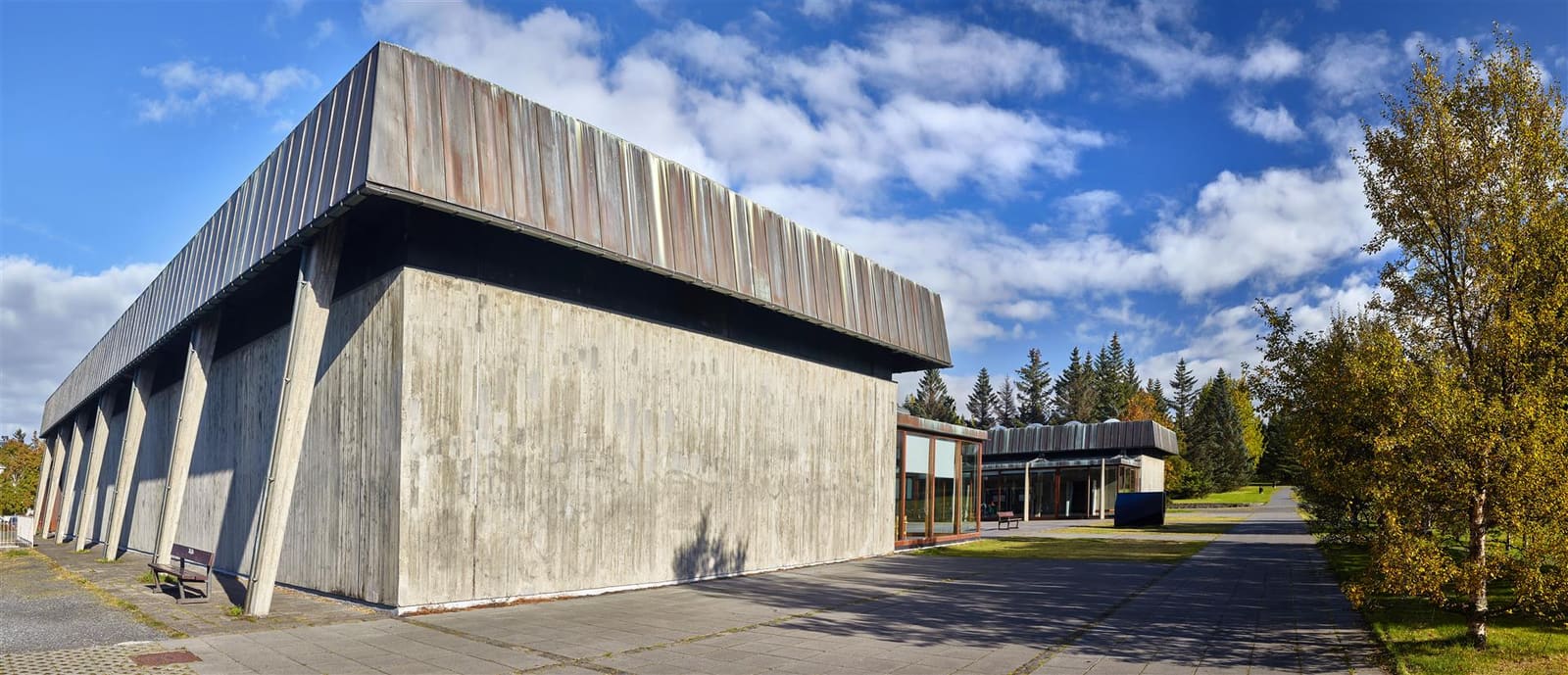
Kjarvalsstaðir is one of the three Reykjavík Art Museum locations. It focuses on Jóhannes S. Kjarval and Icelandic modern art in a low modernist building beside Klambratún park.
Culture snapshot
The museum is named for Jóhannes S. Kjarval, one of Iceland's best-known artists. His landscapes and imaginative depictions of Icelandic nature are central to its identity.
Kjarvalsstaðir regularly displays Kjarval's work. Its other galleries feature changing exhibitions of Icelandic and international painting and sculpture, so check the current program if a particular artist or show matters to you.
Kjarval focus, exhibitions, facilities and current visitor information.
Photo guide
1 / 2
Kjarvalsstaðir is strongest when the visitor wants Icelandic painting and a slower gallery rhythm.
Kjarvalsstaðir stands at the northern edge of one of Reykjavík's larger public parks, away from the busiest streets in the city center.
The museum was built in 1971-1972 to a design by Hannes Kr. Davíðsson. Its low concrete form and broad windows face the lawns and trees of Klambratún, so the park remains visible from inside and gives the museum a quieter character than a downtown gallery.
Park setting, museum construction dates and architect.
Nordic modernist character and the relationship between the galleries and park.
Kjarvalsstaðir suits visitors who want painting, sculpture or a quiet indoor hour in Reykjavík.
The National Museum of Iceland gives a broad historical account of the country. Kjarvalsstaðir focuses more closely on visual art, Kjarval's work and changing exhibitions. Its family workshop gives children a place to respond creatively to what they see.
A focused visit takes about an hour. Allow longer when several exhibitions interest you, or spend time in Klambratún before continuing toward Hallgrímskirkja.
All galleries are on the ground floor. The main entrance has a small threshold, and staff can place a ramp over it when needed.
Accessible toilets, a loan wheelchair and portable gallery chairs are available. Large bags and strollers cannot enter the exhibition rooms, but the museum provides lockers and lightweight loan strollers. Light, sound and activity levels vary by exhibition, so visitors with mobility or sensory needs should read the current guidance before arriving.
By ThorPublished Updated