Hvalnes Lighthouse is a bright coastal landmark on the Hvalnes peninsula, best used as a short Ring Road pause when the black pebble beach, Eystrahorn backdrop, and exposed East Iceland weather all work in your favor.
Coast snapshot
Place type
Coastal lighthouse, black pebble beach, and scenic short stop
Region
East Iceland, on the Hvalnes peninsula between Höfn and Djúpivogur
Route context
Best as a flexible Ring Road pause rather than a destination day
Time to allow
20-45 minutes for a quick look, or up to about 90 minutes if the beach, birds, and light invite a slower stop
Best experience
Clear mountain visibility, manageable wind, and enough route margin to enjoy the exposed coast
In this guide
Where Hvalnes Lighthouse fits on the Eastfjords drive
Yes, when your Ring Road day has room for a quiet coastal pause and the lighthouse, black beach, and Eystrahorn backdrop are visible. Skip it when the drive is already stretched or a bigger mountain-and-beach stop is doing the same job.
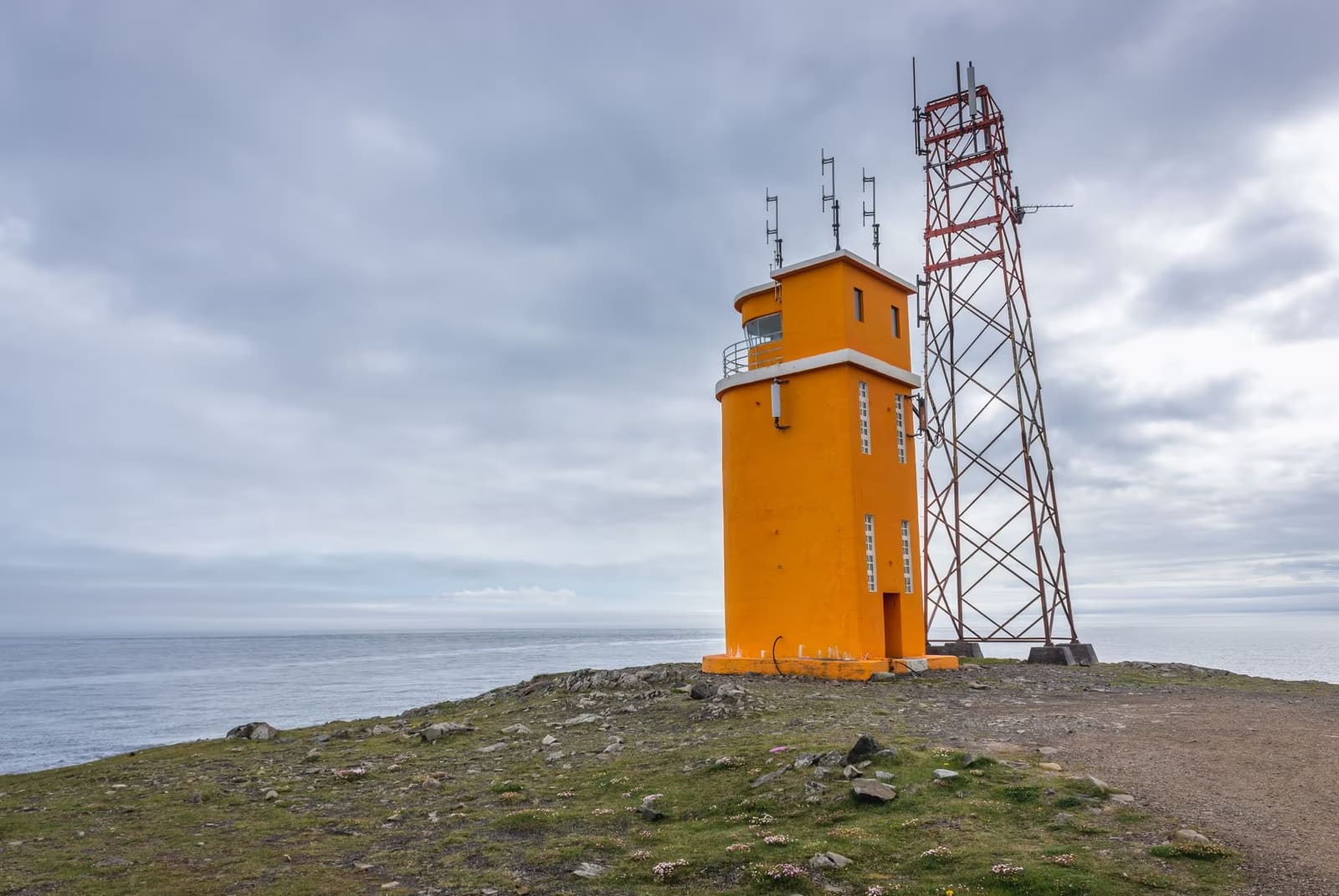
Hvalnes Lighthouse is the bright orange marker on the low Hvalnes peninsula, set between the North Atlantic, a black pebble shoreline, and the dark slopes around Eystrahorn. It is not a long attraction; it is a short stop that works because the color and coast are so immediate.
Add Hvalnes Lighthouse when the day between Höfn and Djúpivogur needs one memorable pause, not when the route is already overloaded. If you are also considering Eystrahorn, Stokksnes, Vestrahorn, and Brunnhorn, choose the stop that gives you the clearest view and the best pace.
Lighthouse, black shore, and Eystrahorn views
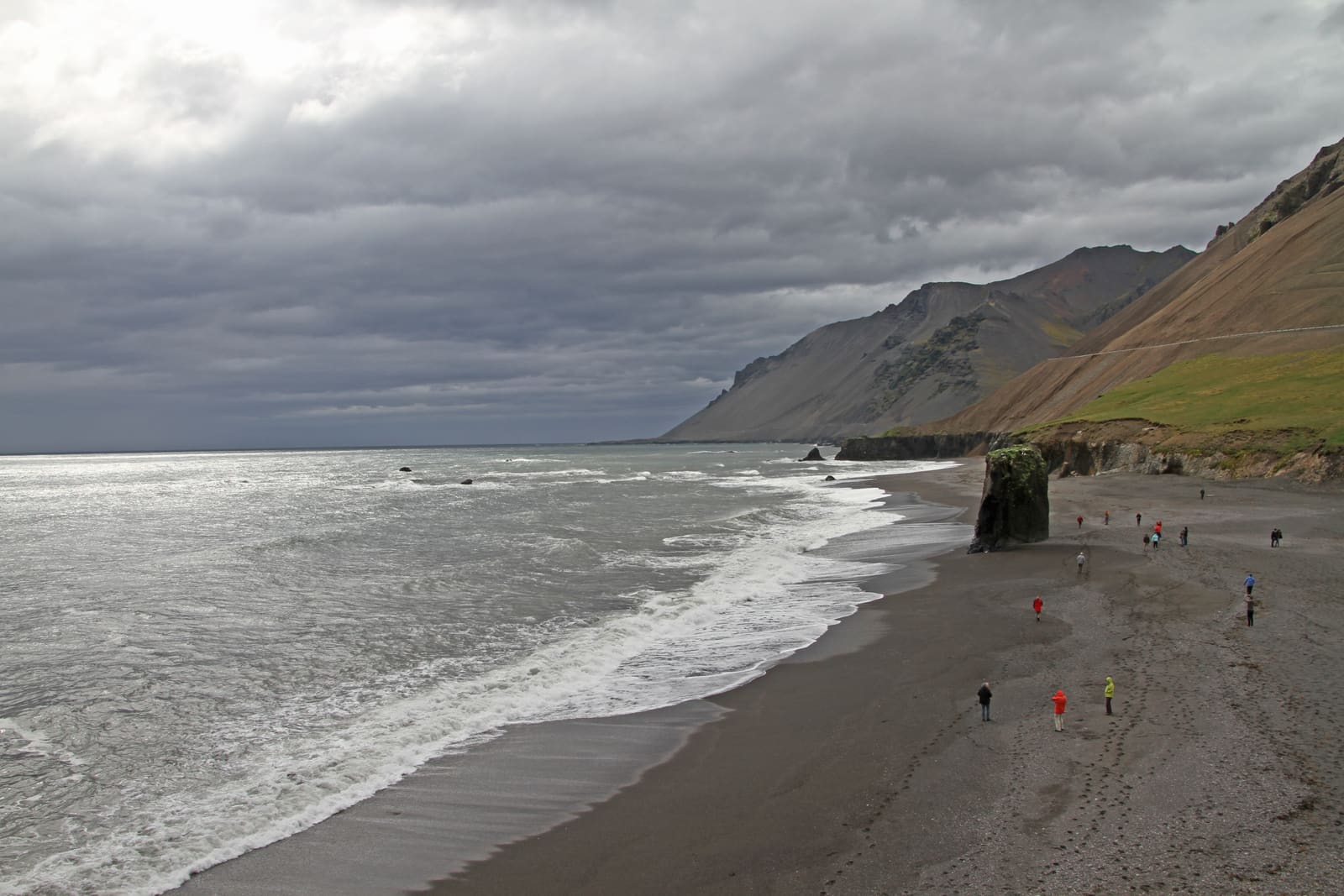
The appeal is simple: an orange lighthouse, a dark beach, open sea, birdlife, and mountain edges rising behind the coast. It feels more exposed and quieter than the famous southeast stops, which is exactly why it can be worth a pause.
The lighthouse gives Hvalnes its human scale. Against the black shore and grey-green mountains, the tower is easy to spot and easy to photograph without needing a long walk or a complicated plan.
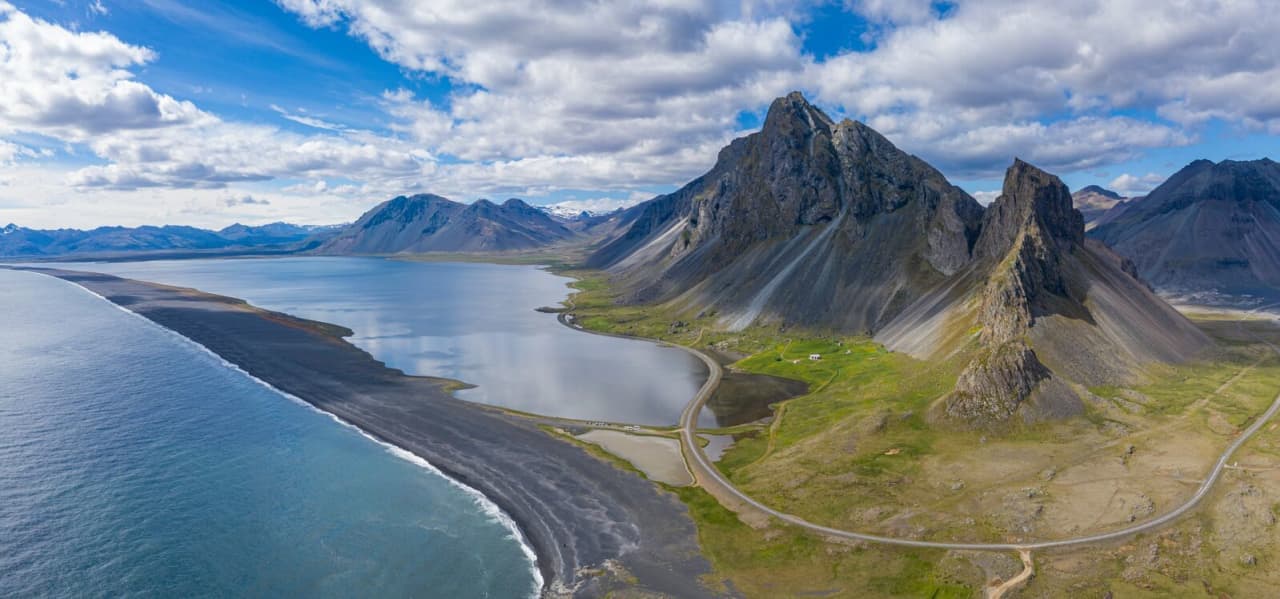
The surrounding peninsula matters just as much as the tower. Visit South Iceland describes Hvalnes as a black pebble beach that stretches for several kilometers, with walking, birdwatching, and photography as the natural reasons to linger.
This is also where the stop overlaps with Eystrahorn. If the mountain is clear, Hvalnes feels like a full coastal scene. If the mountain disappears into low cloud, the lighthouse can still be pleasant, but the payoff becomes smaller.
Hvalnes is small, simple, and photogenic: the orange tower is the scene’s clearest focal point.The orange lighthouse is the clearest visual cue at Hvalnes, especially against the black shoreline and muted coastal hills.
Stop length, pull-offs, and wind exposure
Most travelers should think in minutes, not hours. Hvalnes Lighthouse is strongest as a flexible pause that can expand only when the weather, light, and shoreline are all working.
A quick look can be satisfying in about 20 to 45 minutes. That gives enough time to step out, read the scene, photograph the lighthouse, and decide whether the beach or birdlife deserves a slower walk.
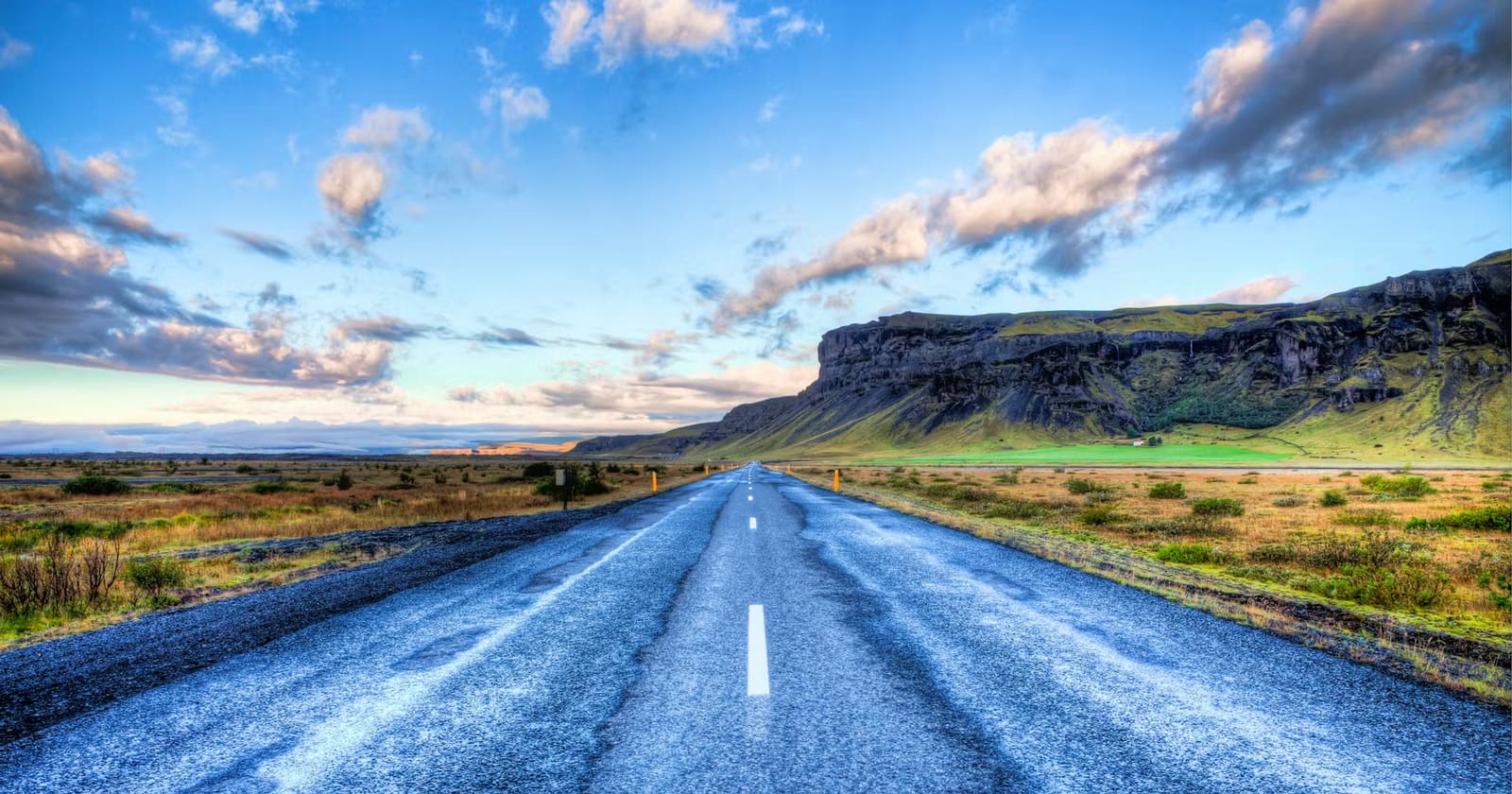
The lighthouse and exposed coast explain why this stop is best treated as a short weather-dependent pull-off.
Keep it brief when the day still has a long push toward Djúpivogur or deeper East Iceland.
Stay longer when the light is strong, the wind is manageable, and the black shore adds more than a standard pull-off.
Use Winter Driving in Iceland as the better planning page when road confidence matters more than one short coastal stop.
Do not build the whole day around the lighthouse unless you already want a slow Hvalnes and Eystrahorn photography pause. For most trips, the smarter move is to keep it optional until you see the conditions.
Route pairings between Eystrahorn and Höfn
Hvalnes Lighthouse works best when it clarifies the route instead of crowding it. Use it as the easy lighthouse pause, then decide whether you still need a larger mountain-and-beach stop nearby.
Pair it with Höfn when you want a simple base and a short eastbound stop the next day. Pair it with Almannaskarðsgöng only if you like short viewpoint stops and have time for both the old pass viewpoint and the coast without rushing.
Pair it with Eystrahorn when mountain visibility is the reason you are stopping at Hvalnes at all. If the goal is a more famous black-sand-and-mountain experience, Stokksnes and Vestrahorn are the stronger destination-style choices.
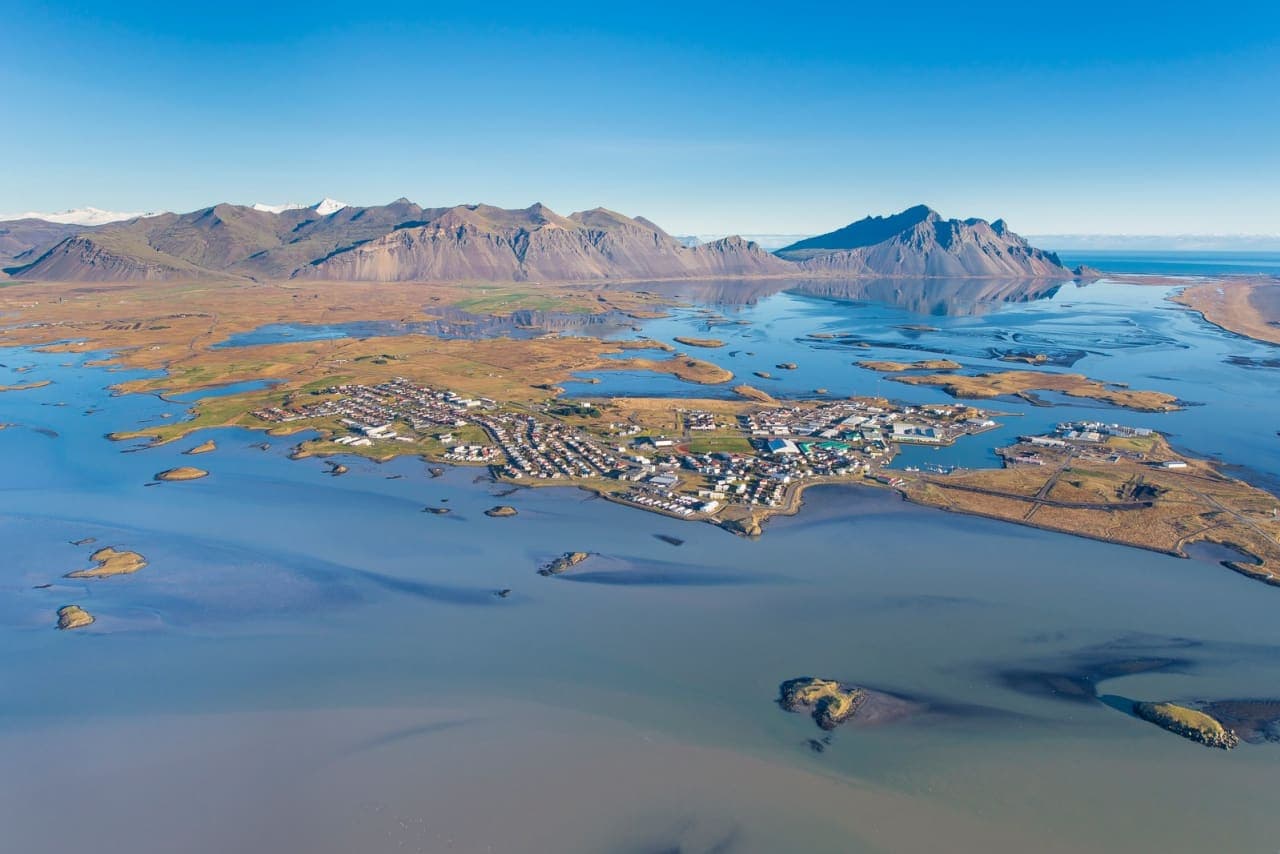
The wider Hvalnes setting explains why the lighthouse is best judged as part of a short coastal route pause.
Simple ways to use Hvalnes Lighthouse
Plan
Best when
What to pair it with
Quick lighthouse pause
The tower is visible and the drive has a little slack
Höfn or Almannaskarðsgöng
Photo-led Hvalnes stop
Eystrahorn, beach texture, and light are all working
Eystrahorn or Brunnhorn
Skip and keep moving
The day already has enough scenic stops
Stokksnes or Vestrahorn instead
The bigger planning choice is whether you are still treating this as a southeast Iceland day or already moving into East Iceland. Ring Road vs South Coast is the better next read if you are deciding how far east your trip should realistically go.
Use Hvalnes as the easy lighthouse stop when Eystrahorn is the real backdrop you want to frame.
Weather and road checks before Hvalnes
Check road conditions, weather guidance, travel safety guidance, and local signs before making Hvalnes a fixed part of a tight day. The stop is straightforward, but the exposed coast can change the value quickly.
Visibility is the first filter. Hvalnes is much stronger when Eystrahorn and the shoreline are clear enough to give the lighthouse its setting. Wind matters too, because the beach and headland feel open.
If those checks make the stop look weak, keep it optional. You can use Höfn as the calmer base, continue toward East Iceland, or save the scenic time for Stokksnes, Vestrahorn, or Brunnhorn when conditions are better.
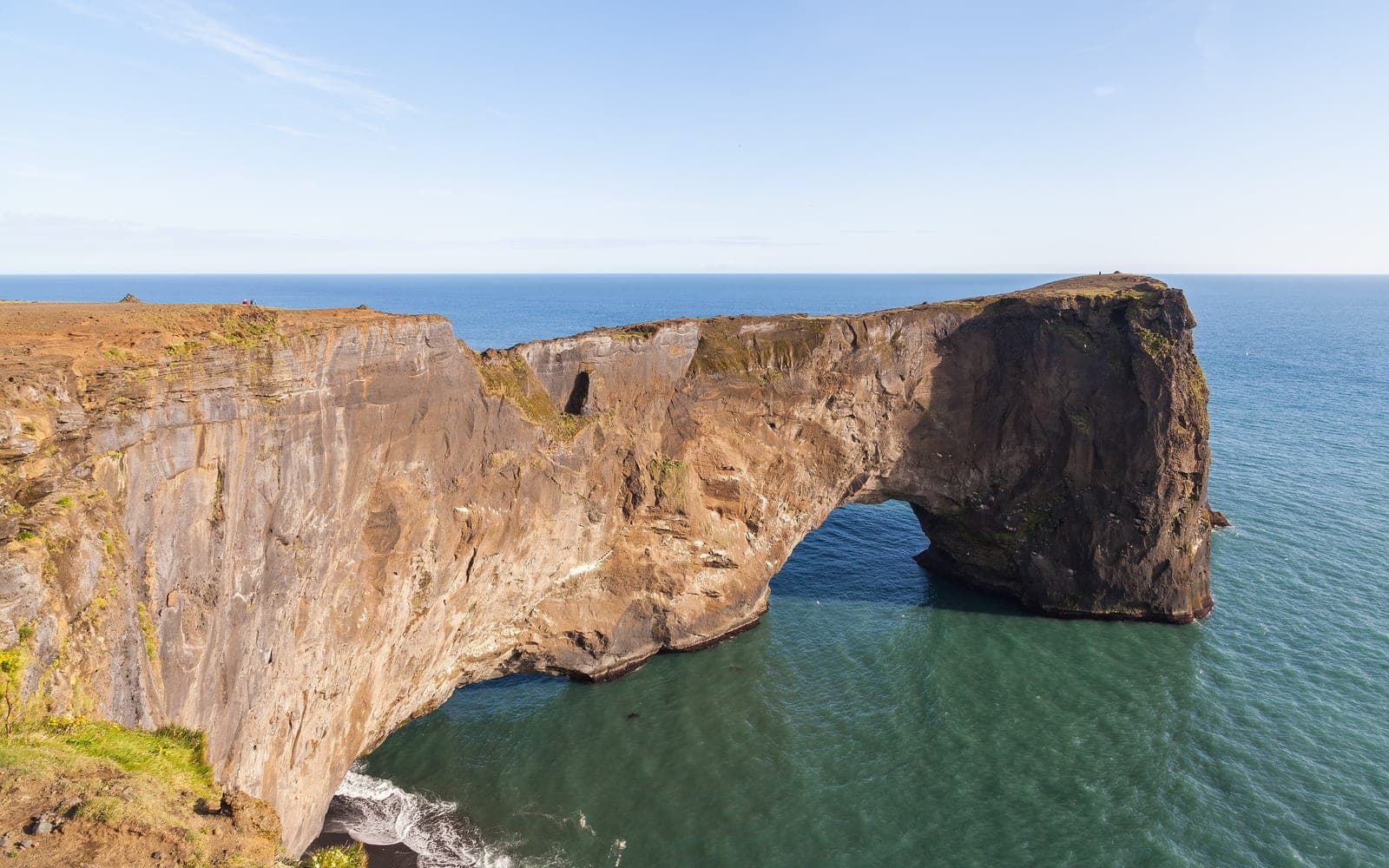
At Hvalnes, the coast is part of the decision: if visibility or wind turns poor, the stop loses much of its payoff.
Hvalnes Lighthouse FAQ
These are the practical questions that usually decide whether Hvalnes Lighthouse earns a place in the day.
Is Hvalnes Lighthouse worth visiting if I am already stopping at Eystrahorn?
Yes, if you want the lighthouse and shoreline as part of the same Hvalnes scene. Skip it if Eystrahorn is already giving you enough mountain-and-coast time.
How long should I allow at Hvalnes Lighthouse?
Allow about 20 to 45 minutes for a normal stop. Stretch it toward 90 minutes only when the light, beach, birdlife, and route margin all justify a slower pause.
Is Hvalnes Lighthouse a good stop in poor visibility?
Usually not as a priority. The lighthouse can still be atmospheric, but the best version depends on seeing enough of the coast and mountains to make the stop feel distinct.
What should I check before going to Hvalnes?
Check official road conditions, weather guidance, travel safety guidance, and local signs. Treat shoreline walking and winter driving decisions as condition-dependent.