Geology snapshot
- Type
- Crater row and lava-field stop
- Region
- Western Reykjanes, off Road 425
- Best for
- A short volcanic texture stop
- Time
- About 20 to 45 minutes
- Access
- Rough lava, sand, and wind
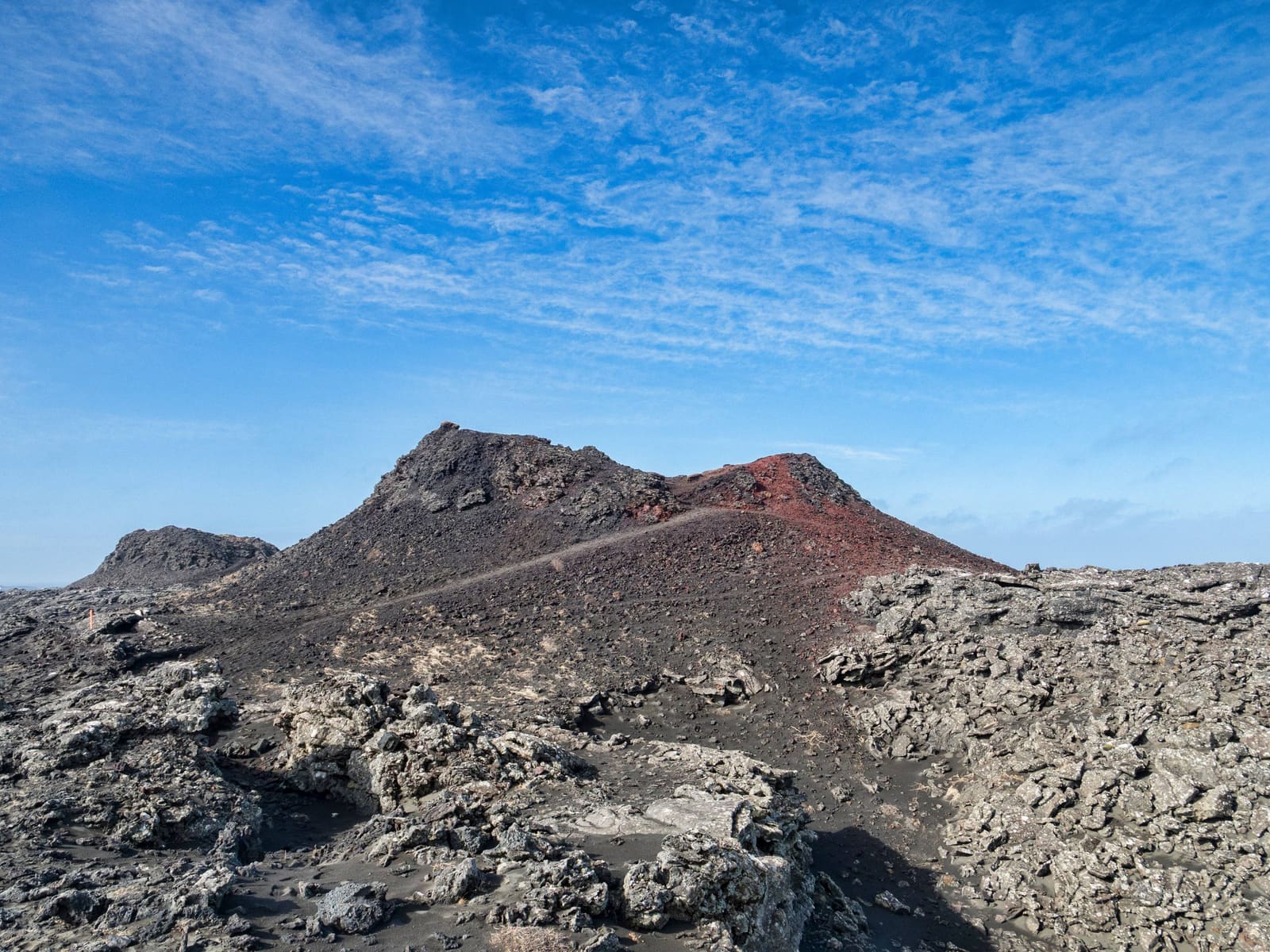
Stampar Crater Row is a low-profile Reykjanes volcanic stop for travelers already using Route 425, especially those who want a short crater walk, lava-field texture, and nearby geothermal or coastal pairings.
Geology snapshot
Add Stampar when you already want a volcanic Reykjanes day and have time for a short, exposed walk. Leave it out when the day needs only the peninsula's clearest headline stops.
Stampar Crater Row sits on the western side of Reykjanes, close enough to Gunnuhver, Reykjanesviti, and Sandvík to work as a compact Route 425 add-on.
Its appeal is not height or spectacle. The stop is about standing beside low scoria cones, rough lava surfaces, ocean-facing wind, and a crater row that helps the peninsula's volcanic story feel physical.
Photo guide
Stampar is strongest when you value volcanic texture more than a big landmark moment.
The craters are low and spread out, so the place can look underwhelming from the road. The reward comes after you slow down and read the ground.
Visit Reykjanes describes two volcanic fissures running from the sea onto land, with older and younger crater series following the common southwest-northeast fissure direction of Reykjanes. The younger series formed during the Reykjanes Fires in the 13th century.
That context changes the visit. Instead of looking for one perfect crater, notice the row: small cones, cracks, darker lava, sand, moss, and the way the landscape points between the Atlantic and the inland volcanic systems.
The Hundred Crater Trail adds a useful secondary angle. It passes through the Stampar lava field and continues over rough pahoehoe lava and sand toward the seaward side of the Reykjanes Power Plant, but the formations are fragile and should be treated carefully.
Most travelers should think in minutes, not hours. The stop works when you can walk a little, look closely, and still keep the rest of the Reykjanes day moving.
| Visit style | Best use | Watch for |
|---|---|---|
| Quick look | Stop briefly for the nearest crater and landscape context | Wind, soft ground, and low visual drama |
| Slow crater pause | Walk enough to understand the row and lava texture | Fragile formations and uneven surfaces |
| Geology-focused loop | Pair it with Gunnuhver, Bridge Between Continents, or Sandvík | Too many similar stops in one short day |
If you are using the Reykjanes Peninsula Road Trip, Stampar works best as one of several short decisions rather than the reason for the whole day.
Stampar becomes more convincing when it sits between higher-impact stops. The best pairings give the day contrast: steam, coast, tectonic fissure, lava pool, or lighthouse.
Choose Gunnuhver when you want the strongest geothermal payoff nearby. Choose Bridge Between Continents or Sandvík when the day is about fissures, black sand, and the western edge of the peninsula.
Reykjanesviti and Brimketill make the route feel more coastal. Together, they keep Stampar from carrying more weight than a subtle crater-row stop should carry.
Stampar depends on small details, so weather has an outsized effect. If the crater row feels flat, the smarter move may be a shorter look and a stronger nearby stop.
Clear light, manageable wind, and enough time to walk slowly make the crater row easier to appreciate. In poor visibility, the low cones and lava textures can disappear into a grey, exposed landscape.
This is where Stampar differs from bigger Reykjanes stops. Gunnuhver can still feel powerful in rough weather, while Stampar needs patience and visibility to show why the crater row matters.
The practical checks are simple: roads, wind, visibility, local signs, and safety guidance. The page should help you decide, but the day-of conditions should shape the final call.
Reykjanes can change the feel of a short stop quickly. Strong wind, wet rock, low visibility, volcanic updates, or a tired group can turn a quick crater pause into a weaker choice.
Use Winter Driving in Iceland for cold-season road judgement, and check official visitor, road, weather, and safety information before treating Road 425 as a simple add-on.
Place identity, geology, location, trail context, and fragile formation guidance.
Visitor safety alerts and outdoor travel guidance.
Road conditions before relying on Reykjanes drives.
Forecast, warning, wind, and visibility checks.
By ThorPublished Updated
Map
Use nearby places and useful bases before opening directions.
Interactive planning map for Stampar Crater Row
Interactive map
Place context and external map links remain available without loading it.
Planning context
Open the region or practical guide that resolves the next planning decision.