Is Herjolfstown worth adding to a Heimaey day?

Yes, Herjolfstown is worth adding when you want a short, vivid Viking-age stop that explains why Herjolfsdalur matters before you move on to cliffs, puffins, or volcanic history.

This is a compact cultural stop, not a major museum that should reshape a whole Iceland itinerary by itself. Its value is the reconstructed turf-and-stone house, the life-size figures, and the valley setting tied to early settlement on Heimaey.

A local Iceland travel editor would add Herjolfstown when a Westman Islands day already includes Herjolfsdalur, Eldheimar, Eldfell, or a slower island loop. The same editor would skip it on a rushed mainland South Coast day if the ferry crossing would crowd out stronger route anchors such as Seljalandsfoss, Skogafoss, Dyrholaey, or Reynisfjara.

Worth the stop?

When this stop makes sense

Good match for

  • travelers already planning real time on Heimaey
  • families who like staged, easy-to-read history stops
  • visitors interested in Viking-age settlement stories
  • Westman Islands days that need a short cultural pause

Think twice if

  • rushed mainland-only South Coast itineraries
  • travelers who want a large museum collection

Pair it with

South IcelandHeimaeyVestmannaeyjar (Westman Islands)Eldheimar Museum

What do you actually see at the Viking Town?

Expect a small reconstructed settlement scene rather than a conventional museum hall. The visit is built around a replica house, staged Viking-age characters, artifacts, and storytelling.

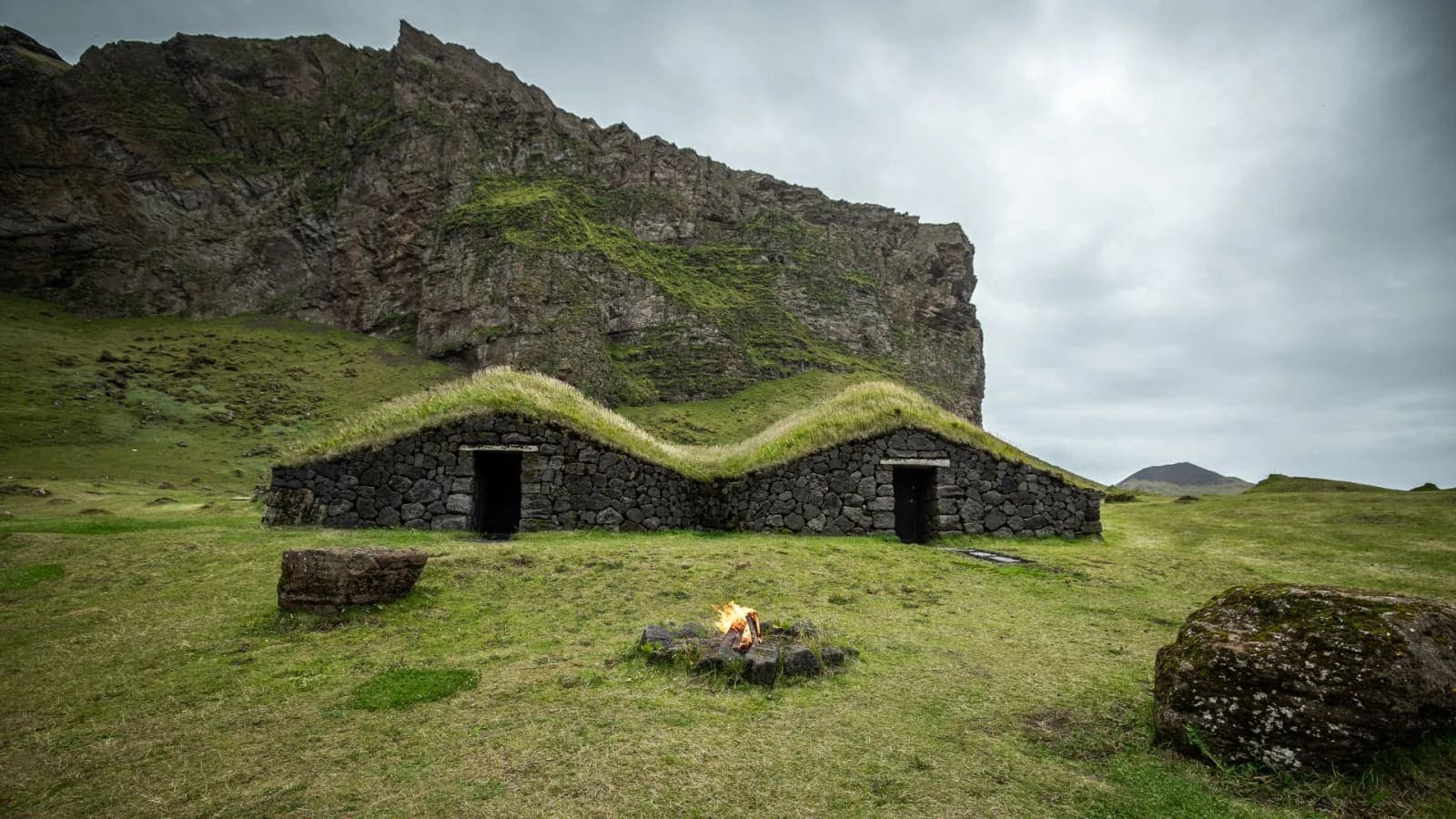
The official site presents Herjolfstown, also branded as Viking Town, as a tribute to the first family associated with Vestmannaeyjar around the year 900. The house is a modern reconstruction in Herjolfsdalur, based on archaeological work and local settlement tradition.

Inside, the wax figures and household details make the stop approachable for families and casual visitors. Treat them as interpretation: useful for imagining daily life, but not a substitute for deeper archaeology or a full regional history museum.

  • Go for the reconstructed house and the settlement story.
  • Expect a short visit with staged figures, props, and photo-friendly scenes.
  • Pair it with outdoor Herjolfsdalur context so the place feels grounded, not just theatrical.
The interior is intentionally theatrical, using figures and household scenes to make the settlement story easy to grasp.
Use the wax figures as interpretation rather than literal proof; the reconstruction is strongest when treated as a visitor-friendly settlement story.

How much time and effort should you allow?

The museum itself is a short stop, but Herjolfstown is on an island. The real planning cost is the ferry day and how much Heimaey time you protect around it.

Once you are on Heimaey, Herjolfstown is easy to fold into a flexible island loop. It should not be treated like a full half-day attraction unless you are also spending time in Herjolfsdalur, walking nearby, or building the stop into a slower family or culture-focused day.

Use Herjolfstown differently depending on your Heimaey plan.
PlanHow Herjolfstown fits
Quick island samplerUse it as a short cultural stop if the ferry timing leaves breathing room.
Family or mixed-weather dayLet the house and figures provide an easy indoor-outdoor anchor.
Culture-led Heimaey dayPair it with Eldheimar or Sagnheimar-style history context if those pages are already on your list.
Mainland-only South Coast dayUsually skip it unless the Westman Islands are already the main decision.
The museum is compact, so the value comes from slowing down with the reconstruction and interpretation rather than rushing through a large collection.

Where does Herjolfstown fit on a South Coast route?

It fits best as part of a deliberate Westman Islands detour from the South Coast, not as a casual add-on between mainland waterfalls.

Most travelers reach Heimaey by ferry from the mainland, so Herjolfstown competes with the same day space as other South Coast stops. If your route already includes <a href="/attractions/seljalandsfoss">Seljalandsfoss</a>, <a href="/attractions/skogafoss">Skogafoss</a>, <a href="/attractions/dyrholaey">Dyrholaey</a>, and <a href="/attractions/reynisfjara">Reynisfjara</a>, do not add the island just to tick off one small museum.

The stronger plan is to make Heimaey the point of the day. Use <a href="/attractions/westman-islands">the Westman Islands</a> or <a href="/attractions/heimaey">Heimaey</a> as the bigger decision, then let Herjolfstown become one compact layer inside that island time.

A Herjolfstown visit makes more sense when it belongs to a wider Heimaey day, not as a one-stop ferry errand.

Why does Herjolfsdalur matter to the visit?

Herjolfsdalur is not just a backdrop. It is the valley tied to the settlement story, archaeological evidence, the reconstructed house, and the broader west-side landscape of Heimaey.

Regional tourism material describes Herjolfsdalur as the valley associated with Herjolfur Bardarson and notes archaeological work on Norse house remains there. That context is what keeps Herjolfstown from feeling like a generic Viking-themed photo stop.

The valley is also a real place to orient yourself on Heimaey, with cliffs, green ground, and nearby island activity. If the weather is good and your schedule has slack, give the setting a few minutes before or after the museum.

Herjolfsdalur gives the museum its setting: a sheltered valley, steep rock walls, and the island landscape around the settlement story.

Should you pair it with Eldheimar, Eldfell, or the wider island?

Pair Herjolfstown with one or two nearby Heimaey themes rather than trying to turn it into the main reason for crossing.

For history, <a href="/attractions/eldheimar-museum">Eldheimar Museum</a> is the stronger anchor because it explains the 1973 eruption and makes the modern island landscape more legible. Herjolfstown works as an older settlement layer beside that volcanic story.

For scenery, Eldfell, Stórhöfði, cliffs, harbor views, and puffin areas usually carry the day. Herjolfstown is the cultural pause that keeps the island from becoming only viewpoints and wildlife.

The strongest visual context is the house in its valley, because the page is about a specific reconstructed settlement site.
Puffins are a separate Heimaey reason to stay longer; pair them with Herjolfstown only when the wider island day has room.

What should you check before going?

Check official visitor information for the museum and official ferry, weather, road, and safety sources before building a tight same-day plan around Heimaey.

Public opening, admission, ferry routing, and sailing details can change, so keep the public plan durable: decide whether Herjolfstown belongs in the day, then verify the details close to travel through official sources.

  • Check Viking Town visitor information for museum details.
  • Check Herjolfur ferry information before relying on a same-day island crossing.
  • Check Icelandic weather and road conditions before driving to the mainland ferry port.
  • Use Safetravel guidance if the wider day includes exposed walks, cliffs, or fast-changing weather.
The stop is low-effort once you are on Heimaey, but the island day still needs ferry and weather margin.

Who should add it, and who should skip it?

Add Herjolfstown if you like compact cultural stops, family-friendly interpretation, and settlement history. Skip it if you only want the island’s biggest scenic payoffs.

This is best for travelers who enjoy small, place-specific interpretation. It is also useful for families because the reconstructed house and figures are easier to read than a text-heavy museum stop.

Skip it if your Westman Islands plan is already tight around a boat tour, puffins, Eldfell, Eldheimar, and ferry timing. A short stop can still become one stop too many when the day depends on crossings and weather.

Official sources to check