Waterfall facts
- Type
- Small downstream waterfall
- Region
- North Iceland near Goðafoss
- Best for
- Extra river time after Goðafoss
- Time
- About 10 to 25 minutes
- Access
- Short walk, uneven river edges
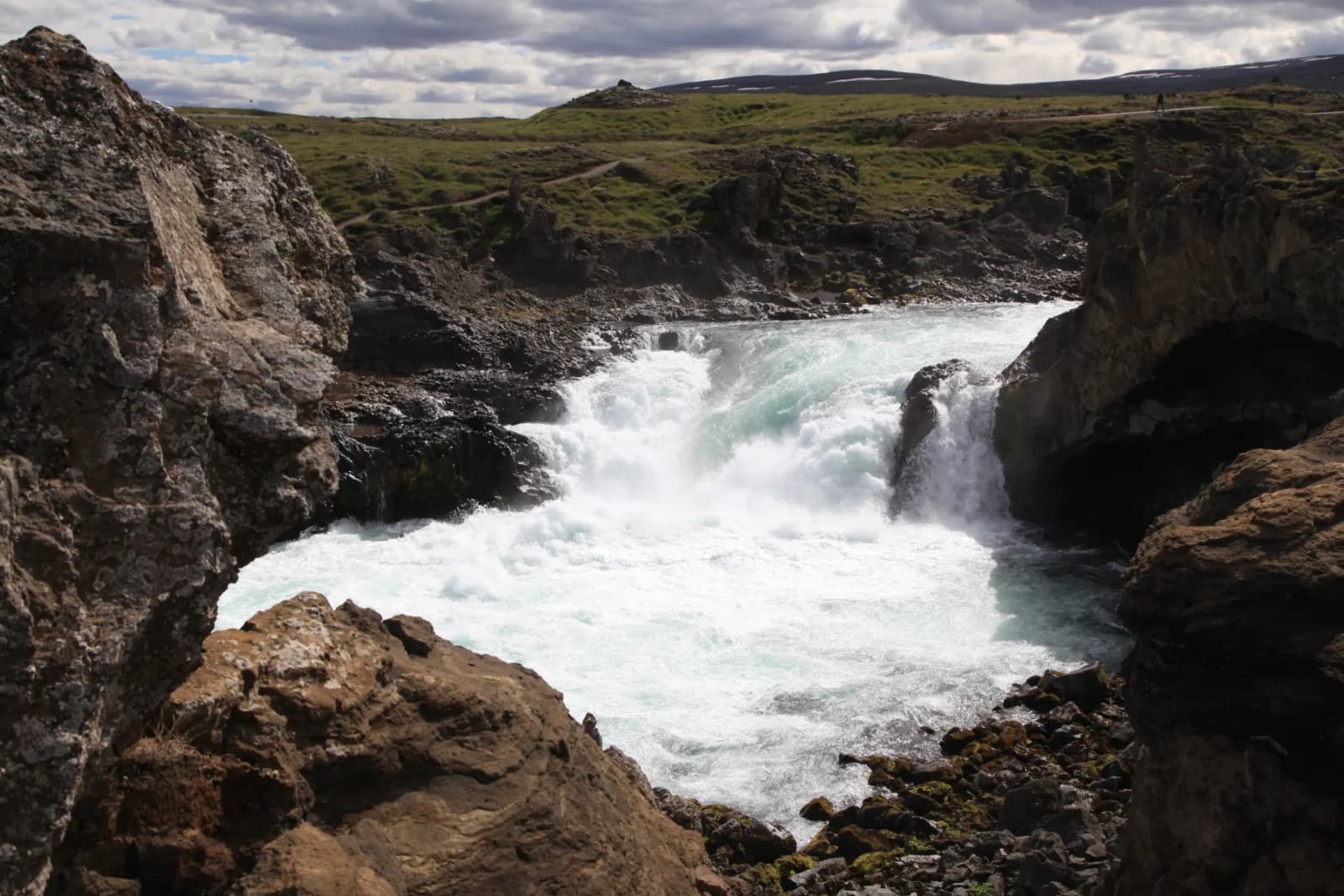
Geitafoss is the small downstream waterfall beside the Goðafoss area, useful for travelers who want a few extra minutes with the Skjálfandafljót rather than another major North Iceland detour.
Waterfall facts
Yes, but only as a small extension of the Goðafoss visit. Geitafoss is useful when you want a closer look at the lower Skjálfandafljót, not when you need another headline waterfall.
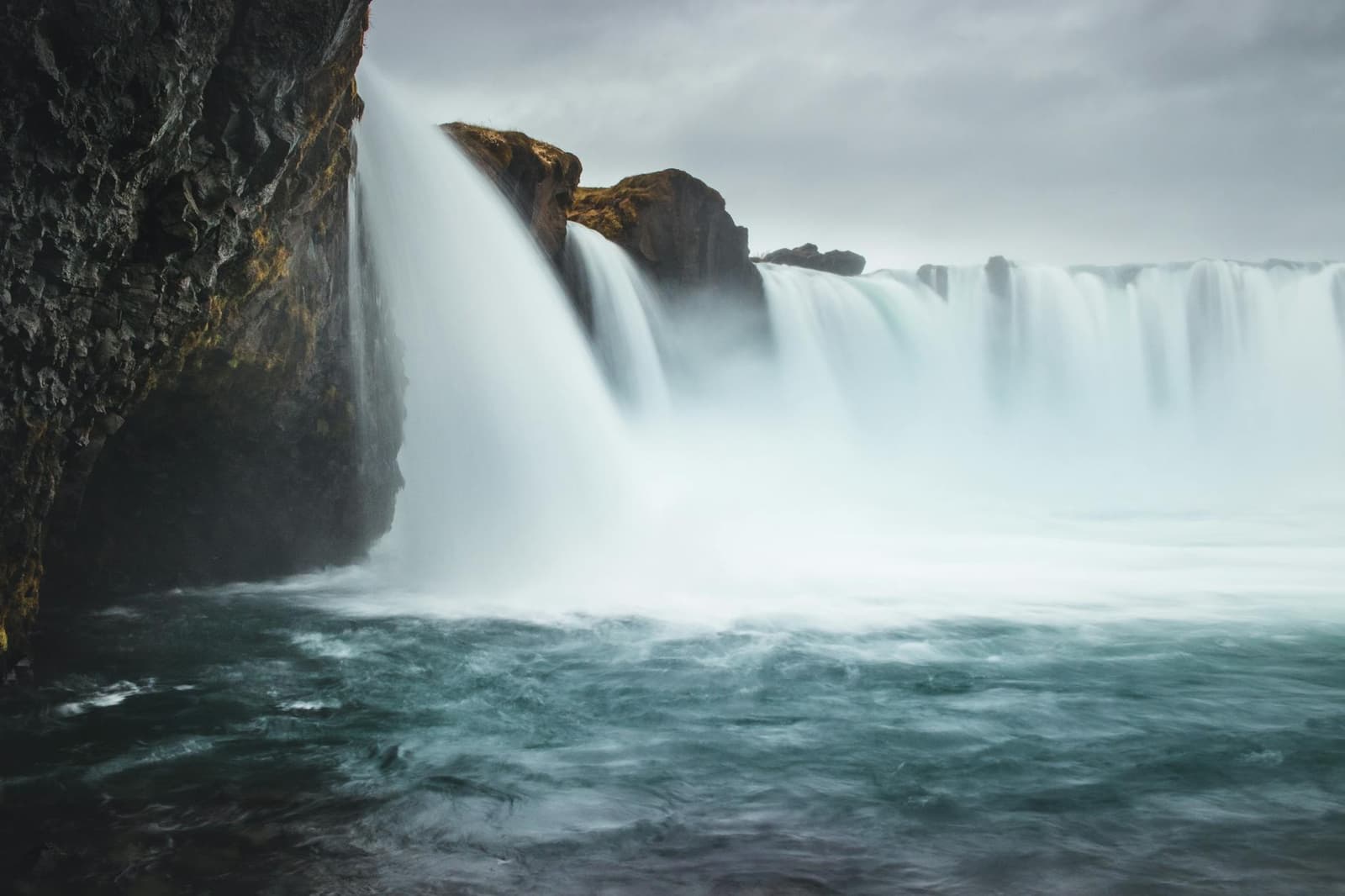
The best way to understand Geitafoss is by scale. Goðafoss is the main reason most travelers stop here; Geitafoss is the smaller downstream fall that rewards people who keep walking toward the bridge and lower river.
That makes the decision simple. If your Goðafoss stop is already rushed, stay focused on the main viewpoints. If you have a little margin, Geitafoss adds turbulence, gorge texture, and a different view of the same powerful river system.
Geitafoss sits on the Skjálfandafljót downstream from Goðafoss, where the river tightens into a rougher lower channel.
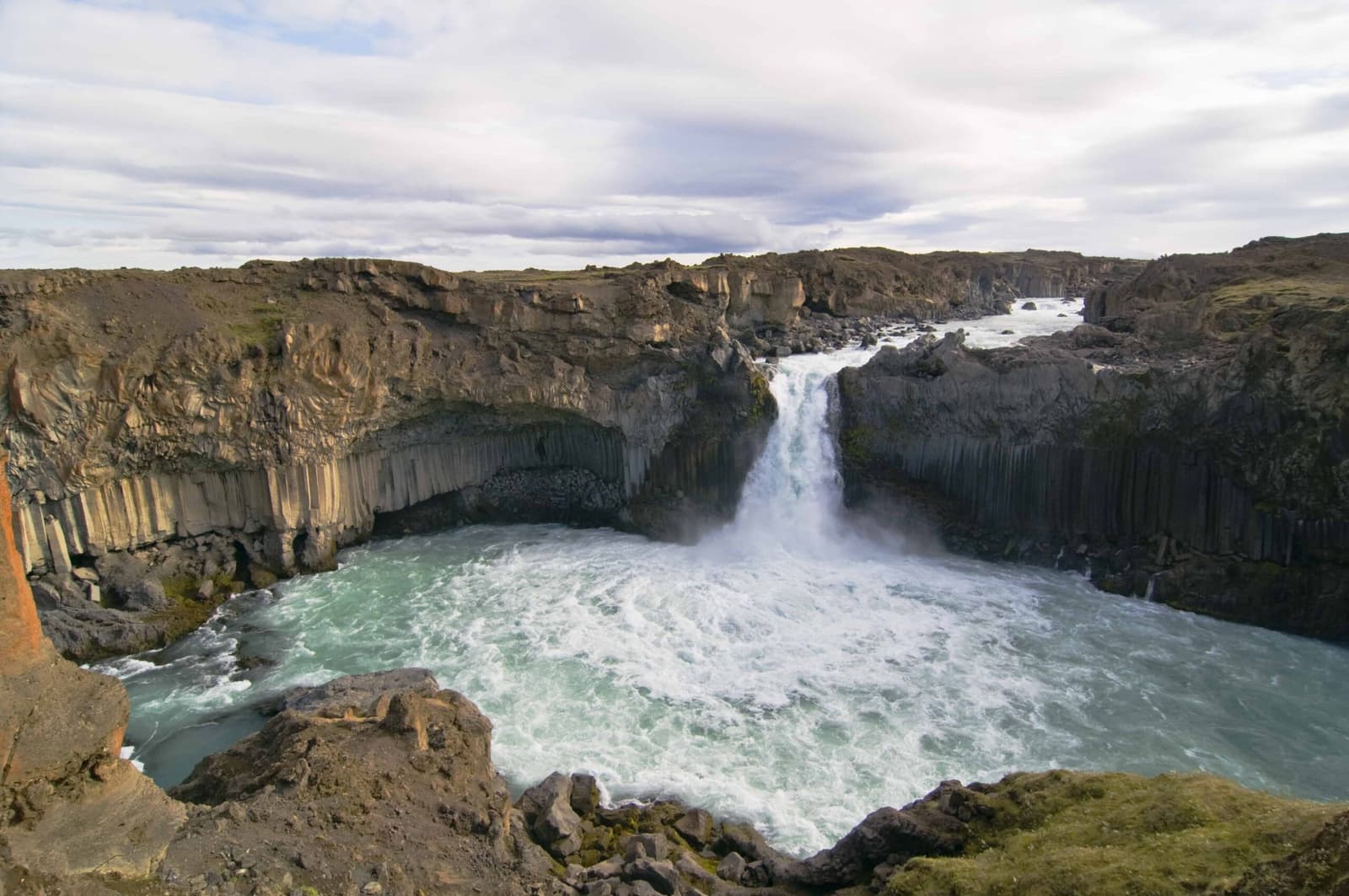
Specialist waterfall sources describe Geitafoss as a much smaller sibling to Goðafoss, with the water dropping through a churning chute near the bridge area. The visual reward is not height; it is the force and compression of the river after the broad main falls.
That also explains why the stop can be easy to miss. Many visitors park, see Goðafoss, and leave before walking far enough downstream to notice how the river changes shape.
The most distinctive context around Geitafoss is Hansensgat, a natural opening in the rock by the turbulent river.
Local coverage of the Goðafoss area connects Hansensgat with Geitafoss and describes the lower river as powerful and uneven. Treat this as texture for the visit rather than a separate caving stop: the useful part is understanding why the downstream area has more character than a quick waterfall glance suggests.
The footbridge and older bridge context also help. From this part of the river, the landscape feels more like a crossing and gorge edge than the open amphitheater of Goðafoss upstream.
Keep Geitafoss attached to Goðafoss in your plan. It is not a separate route anchor.
On a Ring Road or Diamond Circle day, the efficient version is Goðafoss first, then Geitafoss only if timing and footing still feel good. After that, the bigger decisions are Mývatn, Húsavík, Dettifoss, Aldeyjarfoss, or Akureyri depending on your route.
The stable plan is simple, but the day-specific details still matter around a river gorge in North Iceland.
Check weather and road information before building a long North Iceland driving day around waterfall stops. Around Geitafoss itself, make the final call from what you see on the ground: wind, spray, ice, wet rock, poor visibility, or crowded paths can all make the extra walk less useful.
Use for local lower-river context around Geitafoss and Hansensgat.
Use before relying on North Iceland driving conditions.
Use for wind, precipitation, visibility, and winter condition checks.
Use for outdoor preparation and changing travel conditions.
By ThorPublished Updated
Map
Use nearby places and useful bases before opening directions.
Interactive planning map for Geitafoss Waterfall
Interactive map
Place context and external map links remain available without loading it.
Routes and itineraries
Compare road trips and itineraries that give this place a sensible position in the wider journey.
Planning context
Open the region or practical guide that resolves the next planning decision.
Next step
Use the next page that helps turn this stop into a practical route decision.