
City stop snapshot
- Opened
- 1912 as Iceland's first public park
- Botanic garden
- Established in 1957 and run by Akureyri municipality
- Size
- About 3.7 hectares at 65.7°N
- Access
- Winter access is possible, but toilets and some facilities are seasonal
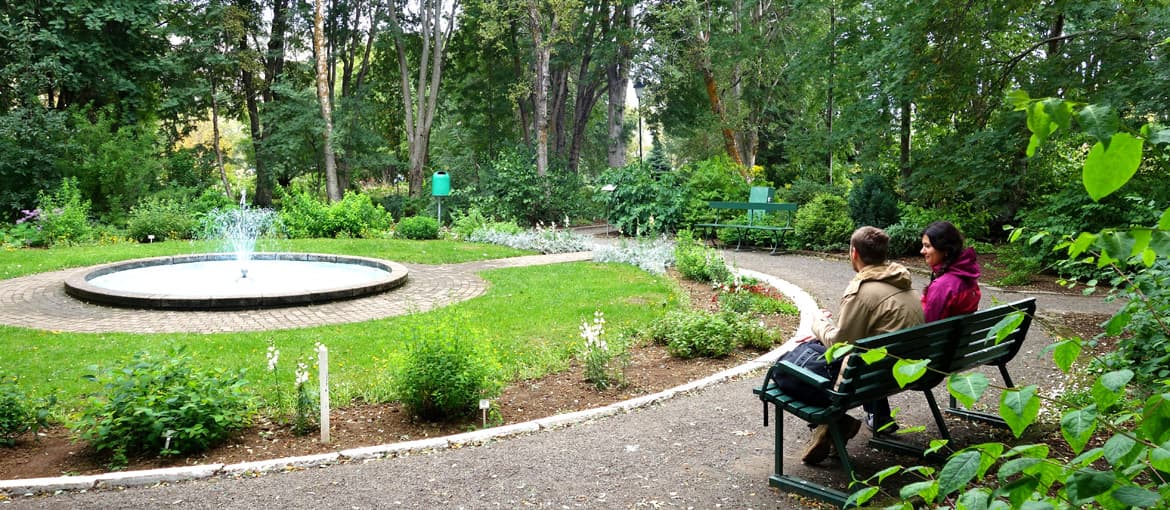
Akureyri Botanic Garden began as Iceland's first public park in 1912 and became a botanic garden in 1957. Its sheltered 3.7-hectare grounds show how Icelandic and imported plants grow just below the Arctic Circle.
City stop snapshot
Akureyri Botanic Garden is both a public park and a working collection shaped by North Iceland's short, bright growing season.
The 3.7-hectare garden sits at 65.7°N, sheltered by the mountains around Eyjafjörður. Mature trees, winding paths, flower beds, a pond, and black timber buildings make it feel like a compact town park, but the plant labels and collection give the walk a clear botanical purpose. The garden tests which trees, shrubs, and herbaceous perennials can thrive in northern Iceland's strong seasonality and unusual daylight.
Its history begins in 1910, when land was set aside for a park and its design entrusted to the all-women Akureyri Park Society. The park opened in 1912 as Iceland's first public park. Donated collections helped it become a municipal botanic garden in 1957, while recreation, education, research, and international seed exchange remain part of its work.
Official dates, size, location, collection, climate, and institutional purpose.
Town setting, visitor context, and public-garden overview.
Photo guide
1 / 3
The old black timber building gives the garden a stronger Akureyri identity than a flower-only image would.
Summer brings the fullest flower displays, while winter reveals the park's structure rather than the same botanical spectacle.
A section devoted to native and naturalised Icelandic flora sits alongside thousands of hardy perennial species from elsewhere. Annual planting adds concentrated color in summer. You do not need specialist knowledge to enjoy the contrast: labels, beds, trees, and changing textures make a slow circuit rewarding, especially when plants are actively growing.
The official garden page says the gates remain open in winter, but snow, ice, dormant beds, and fewer public facilities change the experience outside summer. That makes the garden a calm winter walk, not a promise of flowering displays. For another nearby landmark, Akureyrarkirkja gives the town a very different architectural focus.
The garden lies between Þórunnarstræti and Eyrarlandsvegur, about 1.5 kilometres from Akureyri's town centre.
The official garden describes the paths as fully accessible to visitors with mobility needs. Gates stay open through winter, while the public toilets operate in the summer period and the on-site restaurant keeps its own schedule. Drinking fountains and garden toilets are also seasonal details worth confirming before relying on them.
Most visitors can understand the garden in a short, unhurried walk. It works best as part of time already spent in town, while the North Iceland region guide is the better place for wider base and driving decisions. Check the garden's current practical page if toilets, café access, bus service, or mobility details are important on the day.
Current gates, toilets, facilities, directions, bus context, and accessibility information.
By ThorPublished Updated