World in Words is Reykjavík’s manuscript exhibition inside Edda, best for travelers who want sagas, medieval texts, multimedia displays, and an indoor cultural stop beside the National Museum and University of Iceland.
Culture snapshot
Type
Manuscript exhibition and cultural site
Setting
Edda on Arngrímsgata, near the National Museum, University of Iceland, and Tjörnin area
Time to allow
About 45-90 minutes for most visitors, longer if you read deeply or add nearby museums
Best experience
Use it for sagas, medieval manuscripts, Norse mythology, language, and interactive cultural context
Access
Check official visitor information before relying on tickets, services, guided options, or accessibility details
In this guide
Is World in Words worth visiting in Reykjavík?
Yes, if sagas, medieval manuscripts, Norse mythology, language, or a thoughtful indoor Reykjavík stop sound like your kind of city time. It is not the default stop for every first-time visitor, but it can be one of the city’s most distinctive cultural choices.
World in Words is strongest when you want Icelandic culture to feel less abstract. Instead of treating the sagas as names on a reading list, the exhibition puts manuscripts, images, sound, touchscreens, and interpretation around the stories and texts that shaped Iceland’s literary identity.
Add World in Words to a Reykjavík day when the trip needs depth, weather flexibility, or a focused cultural stop near the university area. Skip it when the city window is only long enough for Hallgrímskirkja, a short walk, and a meal.
Photo guide
World in Words in photos
1 / 3
The stop works best for visitors who want to engage with the material, not just see a famous building.
What makes it different from another Reykjavík museum?
The attraction is narrow in a good way. World in Words is about manuscripts, medieval thought, sagas, Norse mythology, language, and how written culture carried stories forward.
If the National Museum of Iceland gives you a broad sweep of Icelandic history, World in Words goes deeper into the written material behind many of the country’s best-known stories. Expect themes such as creation, life and death, law, belief, honor, power, and foreign influence on medieval Icelandic culture.
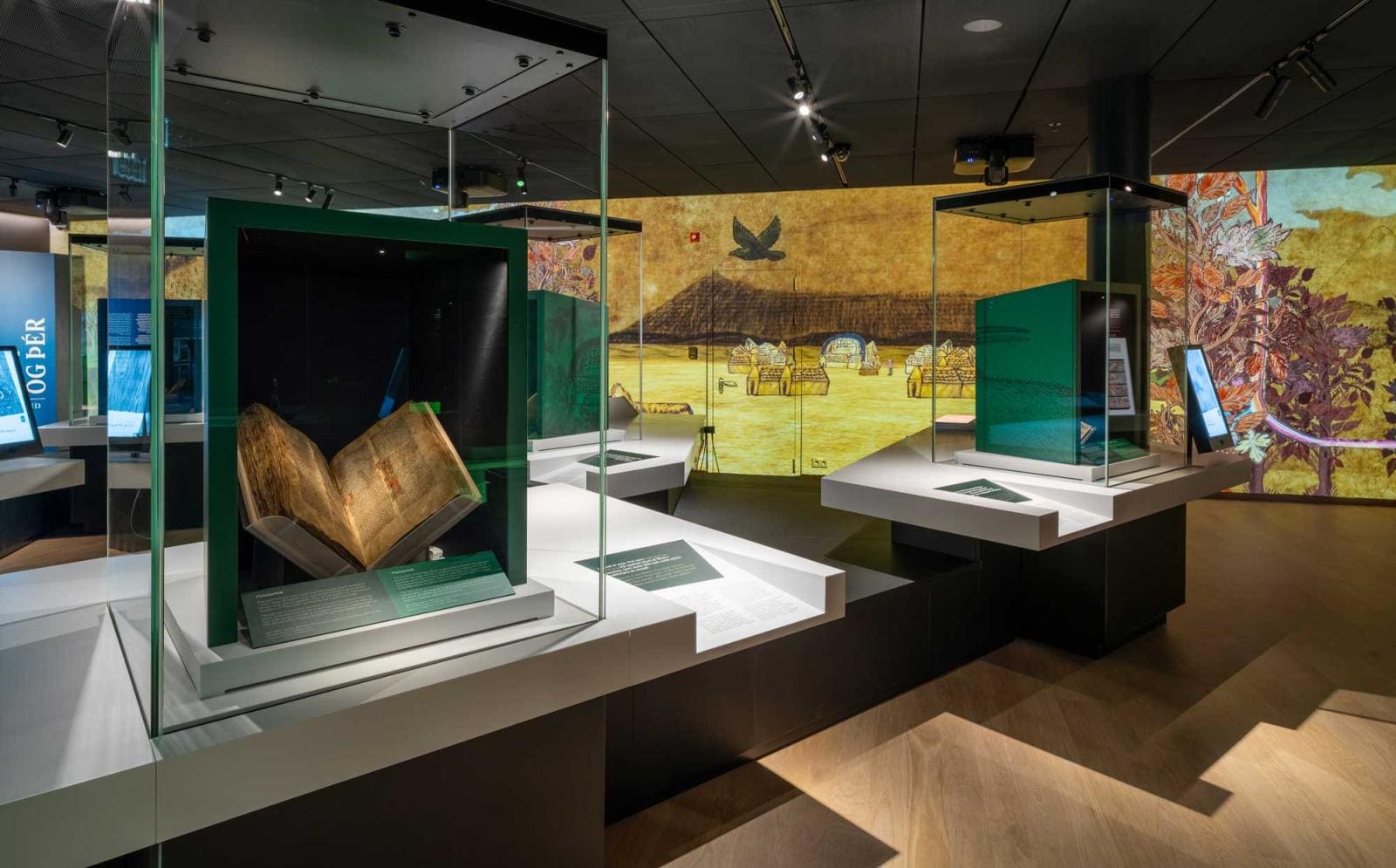
The exhibition uses manuscripts, wall-scale illustration, and digital interpretation rather than a simple object-label format.
That focus also makes the stop easier to judge. Go if you like literature, history, mythology, language, book culture, or carefully designed exhibitions. Choose a broader museum or a city landmark if you want a more general introduction to Reykjavík.
World in Words: expect a modern exhibition built around manuscripts rather than a room of static display cases
Expect a modern exhibition built around manuscripts rather than a room of static display cases. The strongest parts combine original material, enlarged manuscript imagery, audio, video, interactive screens, and family-friendly interpretation.
The official exhibition framing emphasizes the world preserved in Icelandic manuscripts: ancient sagas, renowned poems, religious and legal texts, and ideas about society, belief, emotion, and power. The exact manuscript selection can change for conservation and curatorial reasons, so treat any named manuscript as something to verify before making it the whole reason for a visit.
Interactive screens and multimedia make the manuscript material easier to approach, especially for visitors who are not already saga specialists.
Go for manuscript culture if you want the roots of sagas and medieval Icelandic literature.
Go for family pacing if touchscreens, sound, and visual interpretation help hold attention.
Go slowly if you like reading labels and following themes rather than taking a fast photo pass.
Close manuscript viewing is the core reason this stop is different from a general Reykjavík culture walk.
Most travelers should treat World in Words as a compact cultural stop, not a full half-day museum plan
Most travelers should treat World in Words as a compact cultural stop, not a full half-day museum plan. The right pace depends on how much you read and whether you pair it with nearby museums.
World in Words visit choices
Visit style
Choose it when
Time to protect
Focused look
You want the exhibition’s main idea and a few manuscript highlights
About 45-60 minutes
Balanced visit
You want to read, use interactive displays, and let the themes connect
The effort is mostly about attention, not terrain. This is a city indoor stop where the value drops if you rush past text-heavy material. If your day is already crowded, keep the visit focused or save it for a Reykjavík culture block.
The visit is compact, but it rewards enough time to read and interact instead of moving through like a corridor exhibit.
World in Words sits in a useful cultural cluster near the National Museum, University of Iceland, Norræna húsið, and the Tjörnin area
World in Words sits in a useful cultural cluster near the National Museum, University of Iceland, Norræna húsið, and the Tjörnin area. It works best when that part of Reykjavík is already part of your day.
Pair it with the National Museum of Iceland when you want broad history plus manuscript depth. Pair it with Norræna húsið when the day leans toward architecture, literature, and Nordic culture. Add Tjörnin when you need a short outdoor pause between indoor stops.
Edda makes the stop easy to pair with the university and National Museum area rather than a separate cross-city detour.
For a first Reykjavík walk, Hallgrímskirkja is more immediate and easier to understand at a glance. World in Words is the better choice when you want the city to explain Iceland’s literary inheritance before or after larger route days.
Who should choose it, and who should skip it?
Choose World in Words for depth, manuscripts, and a distinctive indoor culture stop. Skip it when your Reykjavík time is too short or your trip is built almost entirely around outdoor scenery.
Choose it if the sagas, Norse mythology, medieval books, or Icelandic language are part of why you came to Iceland.
Choose it as a weather-flexible stop when a Reykjavík day needs something calmer than another outdoor landmark.
Skip it if you only want views, architecture from outside, shopping streets, or quick photo stops.
Skip or shorten it if reading-heavy cultural displays usually lose your attention.
World in Words: check official visitor information when tickets, events, guided options, accessibility, services, or a particular manuscript display matter to your plan
Check official visitor information when tickets, events, guided options, accessibility, services, or a particular manuscript display matter to your plan.
The durable reason to visit is the exhibition’s manuscript focus. The details that can affect a specific day are more fragile: visitor services, event programming, ticketing, temporary displays, and any access needs. Confirm those through official channels before locking the stop into a tight itinerary.
Institutional context for the manuscript collection and exhibition.
World in Words FAQ
These are the practical questions that most affect whether the exhibition belongs in a Reykjavík day.
Is World in Words good for a first trip to Iceland?
Yes, if you are interested in sagas, manuscripts, mythology, or Icelandic culture. If your first Reykjavík stop needs to be instantly visual, choose a landmark first and add World in Words when you have a culture-focused block.
Can World in Words replace the National Museum of Iceland?
Usually no. World in Words is more focused on manuscripts and medieval written culture, while the National Museum gives a broader history overview. They pair well if you have enough city time.
Is World in Words mainly for adults?
Not only. The exhibition uses interactive and multimedia elements, so it can work for families, but the best fit is still visitors who have some curiosity about stories, texts, and history.