Coast snapshot
- Type
- Wooden pier and fjord beach
- Region
- Holtsfjara, Önundarfjörður, Westfjords
- Best for
- Short beach-and-mountain pause
- Time
- About 20 to 45 minutes
- Nearby
- Flateyri, Suðureyri, and Ísafjörður
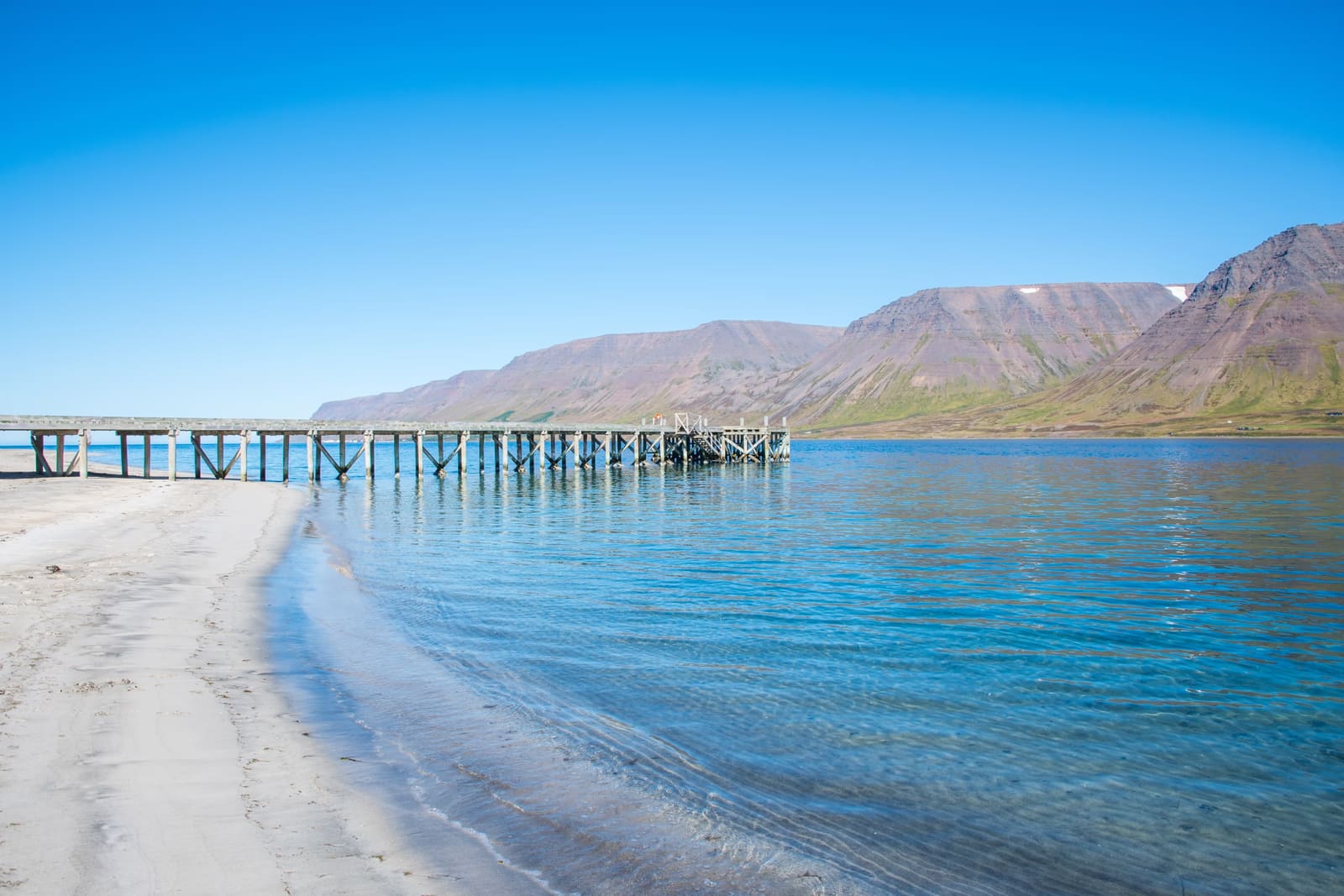
Önundarfjörður Pier is a wooden pier on Holtsfjara, useful for Westfjords travelers who want a quick beach, fjord, and mountain stop near Flateyri without turning it into a major detour.
Coast snapshot
Yes, when you are already moving through the northern Westfjords and want a quick fjord-beach pause. It is too small to justify a long detour by itself.
The pier, often tied to Holtsfjara, gives a simple but memorable view: weathered timber reaching across pale sand toward calm fjord water, with the steep sides of Önundarfjörður behind it. That combination is the reason to stop.
It belongs in a day that already includes Flateyri, Suðureyri, Ísafjörður, or a slow Westfjords Way segment. If the same day is trying to reach Dynjandi with little margin, protect the larger anchor first.
Photo guide
Close pier details work best as supporting visuals after the wider setting is clear.
Holtsfjara is already unusual in the Westfjords because the shore feels open and pale rather than dark and cliff-bound. The pier gives that landscape a clear foreground.
Without the pier, this could feel like another pretty fjord edge. With it, the stop has a subject for photos and a reason to leave the car for a few minutes. The best visit is slow but brief: walk enough to read the beach, look down the fjord, and then decide whether Flateyri deserves the longer pause.
Most travelers only need 20 to 45 minutes at the pier itself. Add more time only if you are combining it with Flateyri, Holtsfjara, or a broader fjord pause.
| Visit style | Time | Best when |
|---|---|---|
| Photo pause | 20 to 30 minutes | You want the pier, beach, and fjord view before continuing. |
| Unhurried beach stop | 30 to 45 minutes | Wind and visibility make the shoreline pleasant enough to linger. |
| Fjord-and-village pause | 1 to 2 hours | You also want Flateyri, Holtsfjara, or nearby village context. |
This is where the pier differs from broader Dýrafjörður or town pages. The value is precise and visual. Give it enough time to feel the setting, but do not let a small stop crowd out the route decisions that make the Westfjords work.
The pier is stronger when it sits beside Flateyri rather than floating alone on the itinerary. The village adds human scale, food-or-service possibilities to verify, and a cultural reason to slow down.
That secondary context matters. Flateyri has a village-and-bookshop identity, while the pier gives the same fjord stop a more open beach view. Together they create a fuller pause than either one does alone, especially on a slower day based around Ísafjörður or nearby fjord villages.
Still, the pairing should stay realistic. If the day is mostly a transfer, choose one clear pause. If the weather is settled and the route has room, combine the pier with Flateyri before moving on toward Suðureyri, Ísafjörður, or the next fjord.
The pier itself is simple. The surrounding Westfjords travel day is the part that needs judgment, especially when wind, visibility, snow, or road surface could change the value of a small stop.
Use official road, weather, and safety information before committing to condition-sensitive Westfjords drives. A beach that feels calm and photogenic in settled weather can become a poor use of time when visibility drops or the onward route needs more margin.
Use for fjord, Holtsfjara, and nearby visitor context.
Check before condition-sensitive Westfjords drives.
Check wind, visibility, and precipitation before exposed fjord stops.
Use for travel-condition and safety guidance.
By ThorPublished Updated
Map
Use nearby places and useful bases before opening directions.
Interactive planning map for Önundarfjörður Pier
Interactive map
Place context and external map links remain available without loading it.
Planning context
Open the region or practical guide that resolves the next planning decision.
Next step
Use the next page that helps turn this stop into a practical route decision.