Reykholt is a small historic village in West Iceland, worth visiting when Snorri Sturluson, Snorrastofa, Snorralaug, and Silver Circle routing matter more than a big scenic payoff nearby.
Town snapshot
Type
Historic village, medieval culture site, Snorrastofa, Snorralaug, and church stop
Region
West Iceland, in Reykholtsdalur within the Borgarfjörður area
Route fit
Best as a Silver Circle or Borgarfjörður cultural stop between stronger natural anchors
Time to allow
20-45 minutes for the outside sites; longer if you visit Snorrastofa or slow down for history
Effort
Low physical effort around the village, with weather and surface conditions still affecting comfort
In this guide
Is Reykholt worth visiting on a West Iceland route?
Yes, Reykholt is worth visiting if you want a compact, meaningful history stop tied to Snorri Sturluson and medieval Iceland. Skip it as a stand-alone detour if your day needs big scenery first.
The useful way to judge Reykholt is by rhythm. It is not a waterfall, crater, or wide viewpoint; it is a small village where the value sits in Snorrastofa, Snorralaug, the churches, and the story of a place that mattered far beyond its size.
Add Reykholt to a Borgarfjörður day when the route already includes Deildartunguhver, Hraunfossar, Barnafoss, or Húsafell. Skip it when the traveler has no interest in sagas, needs a simple photo stop, or is already short on daylight.
Use Reykholt when the stop has a clear job in the day.
Choice
Use it when
Be careful if
History-first pause
Snorri Sturluson, Snorrastofa, and medieval Iceland would make the route more memorable.
You mainly want dramatic scenery or a quick viewpoint.
Silver Circle pairing
Reykholt sits naturally between geothermal, waterfall, and Húsafell-area stops.
The day is already packed with long drives and slow scenic stops.
Short outside visit
You only need the churches, Snorralaug, and village context.
Your plan depends on services, guided interpretation, or interior access without checking official details.
Photo guide
Reykholt in photos
1 / 4
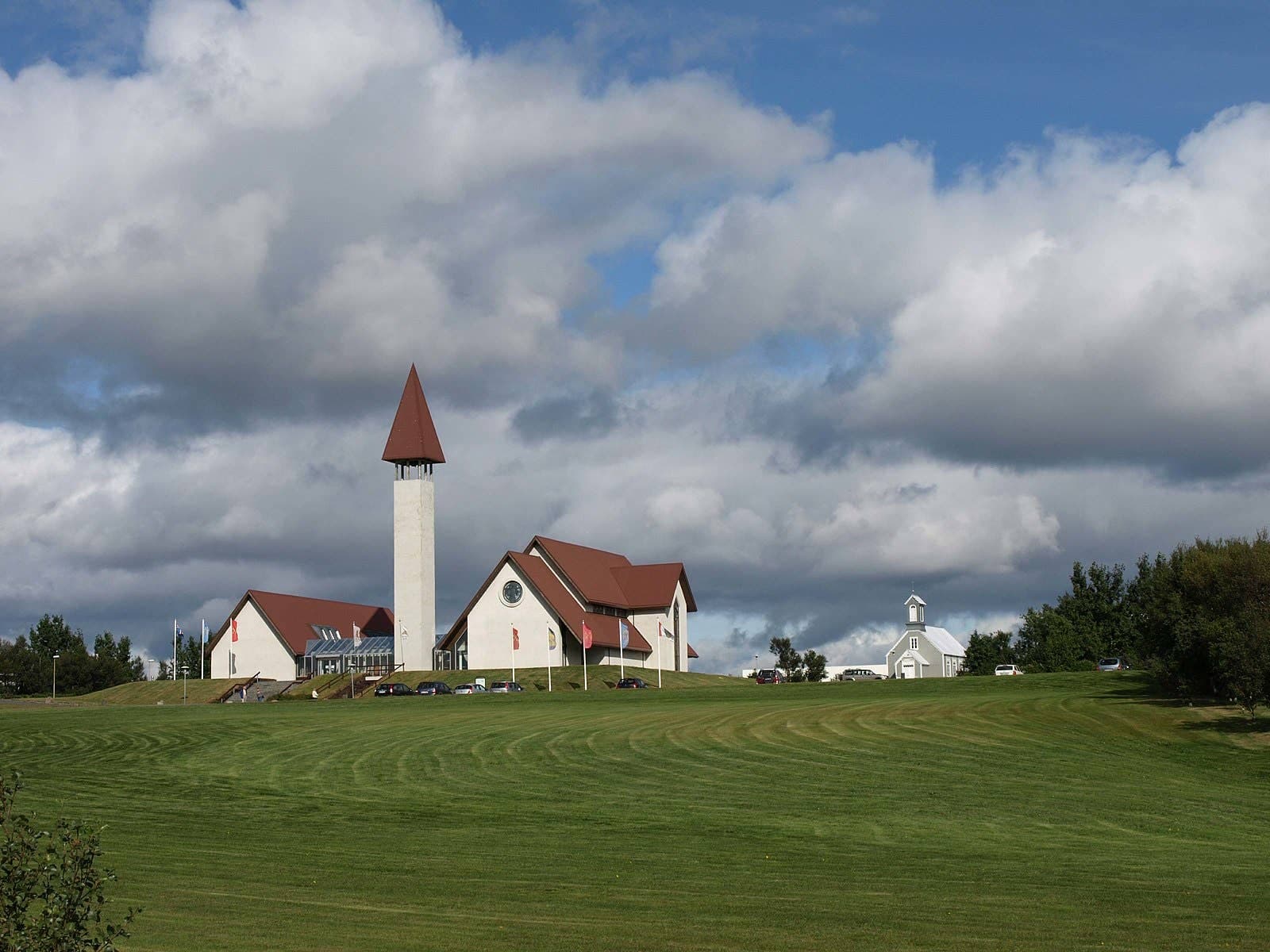
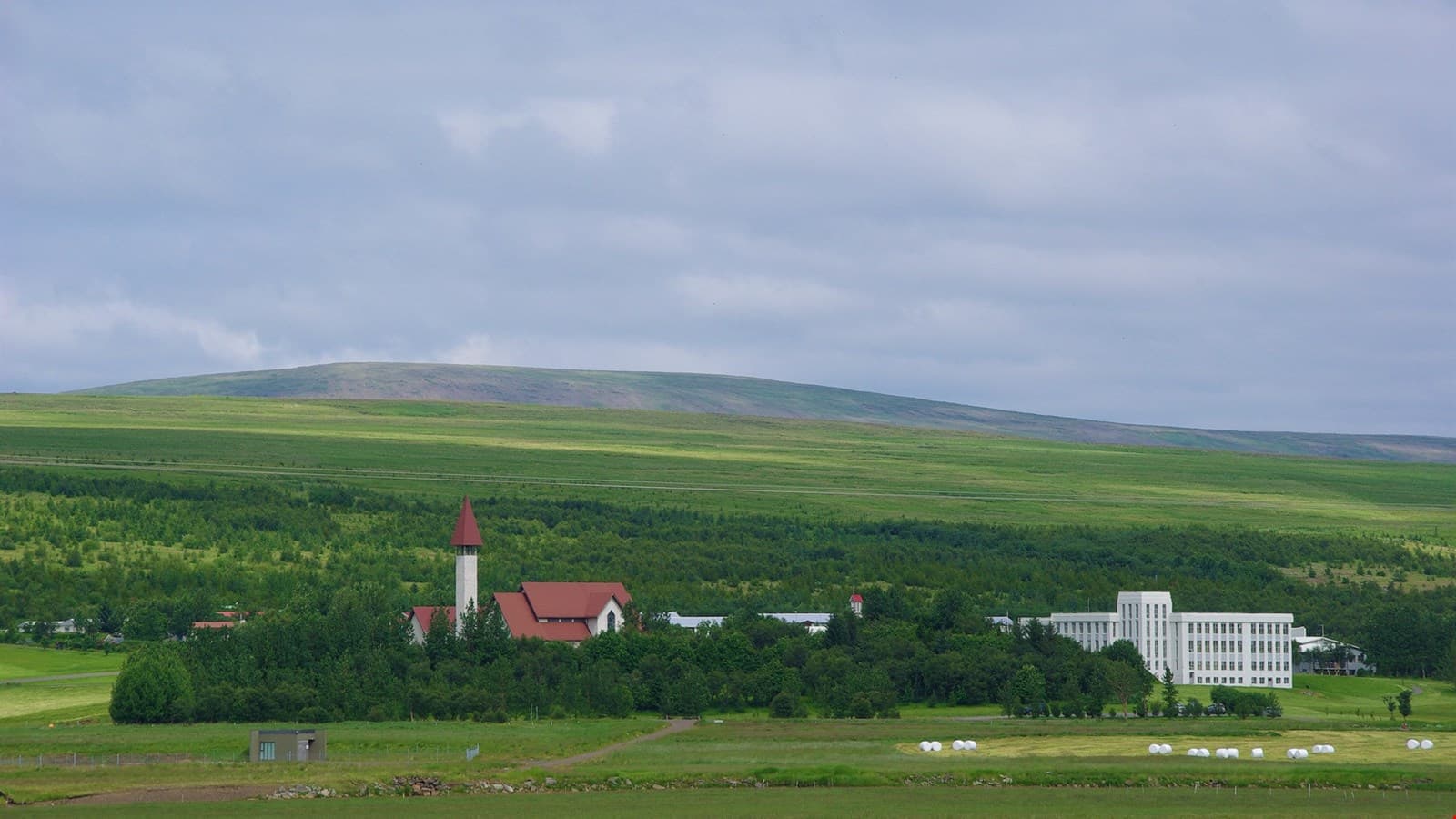
Reykholt remains a compact cultural stop even when the weather makes the village feel quiet and enclosed.
Reykholt: the visible stop is compact: the Snorrastofa area
The visible stop is compact: the Snorrastofa area, the modern church, the older wooden church, Snorralaug, a protected hot-water bath, and a quiet village setting below low West Iceland hills.
Snorrastofa gives the place its clearest visitor focus. It connects Reykholt with Snorri Sturluson, medieval studies, exhibitions, lectures, and traveler information, so the stop works best when you want the story explained rather than only photographed.
Snorrastofa gives Reykholt its visitor-depth layer when the stop needs more than an outside look.
Outside, Snorralaug is the detail most visitors remember. The Cultural Heritage Agency of Iceland describes the bath, its stone construction, the passage associated with Snorri's farm, and the hot water supplied from Skrifla. Treat it as a heritage site, not a pool.
Snorralaug is the clearest reminder that Reykholt is a protected heritage stop, not a bathing experience.
How long should you allow for Reykholt?
Most travelers should allow 20-45 minutes for an outside-focused stop, then extend the visit only if Snorrastofa's exhibition, visitor reception, or guided interpretation fits the day.
Reykholt is strongest when it adds texture between larger anchors. If you are moving from Borgarnes toward Hraunfossar, Húsafell, or Víðgelmir, it can make the drive feel less like a checklist and more like a West Iceland story.
Close-up church and turf details keep the stop grounded in the actual Reykholt site.
Keep it short if your day is built around waterfalls, caves, or geothermal stops.
Slow down if Snorri Sturluson, medieval literature, churches, or cultural heritage are part of why you came west.
Check official visitor information before making Snorrastofa the timed center of the day.
Leave weather and road margin if this is part of a longer self-drive route.
Reykholt pairs best with the Silver Circle-style cluster around Deildartunguhver
Reykholt pairs best with the Silver Circle-style cluster around Deildartunguhver, Hraunfossar, Barnafoss, Húsafell, and Víðgelmir, because those stops add the natural drama Reykholt deliberately does not provide.
Use Deildartunguhver before or after Reykholt if you want geothermal energy in the same day. Use Hraunfossar and Barnafoss when the route needs a scenic payoff after the village history.
Húsafell and Víðgelmir make the day feel larger, but they also ask for more planning. Reykholt works well as the lower-effort cultural pause between those stronger route anchors.
Best route planning
Short cultural add-on
Borgarnes, Reykholt, Deildartunguhver, and Hraunfossar
Slower West Iceland day
Reykholt, Húsafell, Barnafoss, Hraunfossar, and Víðgelmir
When to cut it
Remove Reykholt first if the day needs fewer stops and stronger landscape time
Check official visitor information for Snorrastofa, local signs around Snorralaug, road conditions, and weather before using Reykholt as a fixed point in a tight day
Check official visitor information for Snorrastofa, local signs around Snorralaug, road conditions, and weather before using Reykholt as a fixed point in a tight day.
This is a durable cultural stop, but details around services, guided interpretation, events, and access can change. Build the stop with enough flexibility that a shorter outside visit still makes sense.
Use for wind, visibility, precipitation, and travel-weather checks.
Reykholt FAQ
These are the decisions that usually matter before adding Reykholt to a West Iceland day.
Is Reykholt mainly a museum stop?
No. Reykholt is a small historic village where Snorrastofa gives the visit its museum and interpretation layer, while Snorralaug and the churches give the outside stop its place-specific context.
Can you bathe in Snorralaug?
No. Snorralaug is protected heritage, not a bathing pool, and the water can be extremely hot. Treat it as an archaeological and cultural site.
Is Reykholt worth a special detour from Reykjavík?
Usually not by itself. It is much stronger when paired with Deildartunguhver, Hraunfossar, Barnafoss, Húsafell, Borgarnes, or a wider West Iceland route.
How much time does Reykholt need?
Plan a short stop if you only want the outside sites, and allow more time when Snorrastofa's exhibition or guided interpretation is the reason you are stopping.