Culture snapshot
- Type
- Former-home stone collection
- Region
- Stodvarfjordur, East Iceland
- Best for
- Minerals, gardens, personal stories
- Time
- About 45 to 90 minutes
- Access
- Easy town stop; confirm details
Petra's Stone and Mineral Collection helps Eastfjords travelers decide whether a personal stone-filled home and garden is worth time between bigger fjord drives, especially if minerals, local stories, and slower village stops appeal.
Culture snapshot
Petra's Stone and Mineral Collection is worth adding when your Eastfjords day has room for a personal, close-up stop rather than another wide landscape pullout.
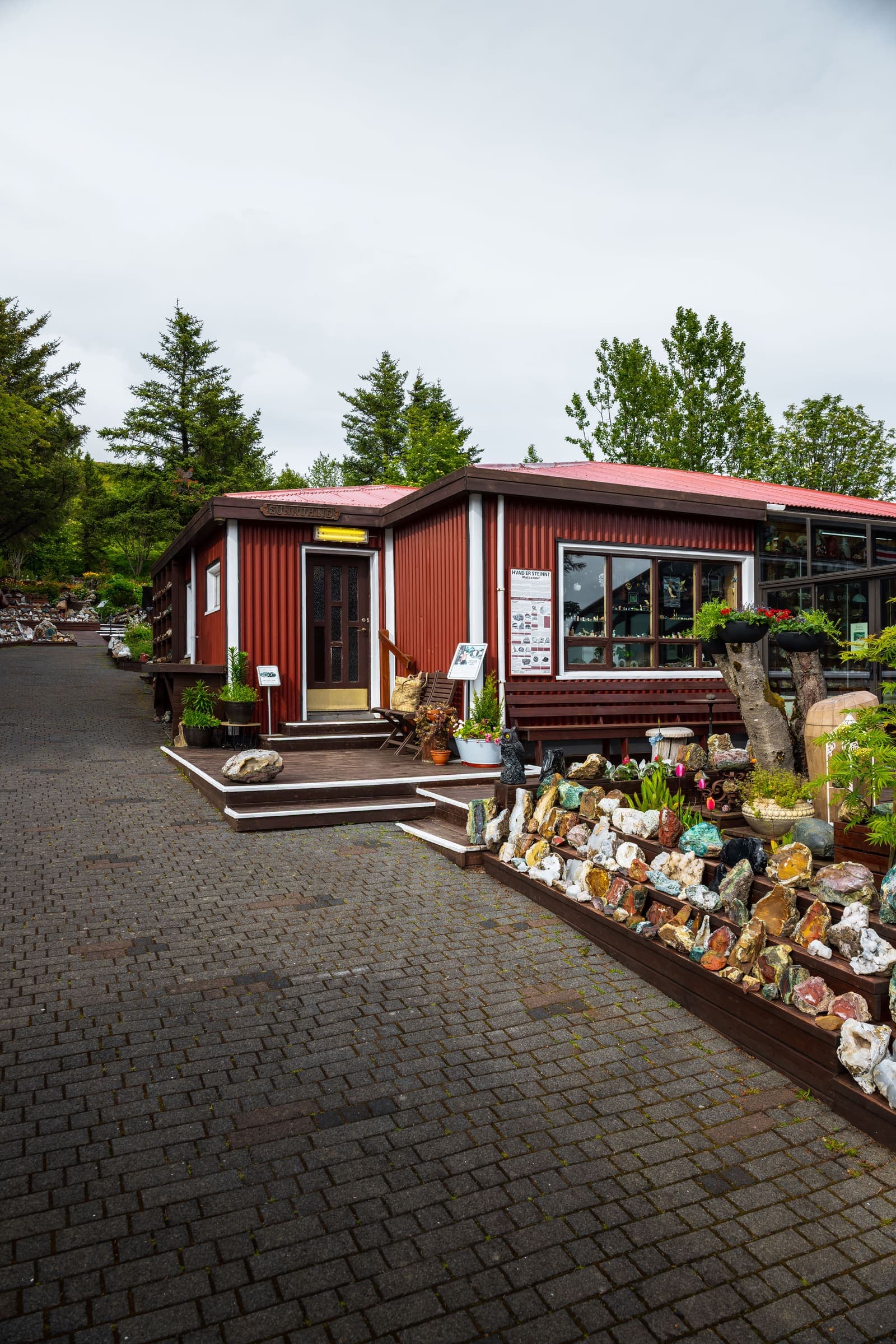
The collection sits in Stöðvarfjörður, where Petra Sveinsdottir turned her former home and garden into a dense display of stones gathered through decades of curiosity. It is not a large formal museum, and that is the point: the appeal is the feeling of walking through one person's lifelong attention to color, shape, and the geology around East Iceland.
Plan it when you like tactile collections, small museums, gardens, or the quieter cultural side of the Eastfjords. It is less persuasive if the day is already squeezed between long drives, weather checks, and major outdoor stops.
The visit works because the collection still feels domestic: cabinets, shelves, rooms, garden beds, terraces, and outdoor stone arrangements all share the same story.
Inside the house, stones are arranged in cabinets and display shelves, with polished pieces, opened stones, crystal forms, and natural shapes close enough to study. Outside, the garden gives the collection more scale, with stones set into walls, beds, paths, and sheltered corners.
That mix matters for planning. A quick look can satisfy casual visitors, but the stop rewards people who slow down, compare pieces, read labels, and notice how Petra's personal home became the frame for the collection.
Petra's collection is more useful when you understand it as an East Iceland stop, not just a room full of rocks.
Visit Austurland's stone-collection guide connects the region's mineral interest to East Iceland's old volcanic layers, fjords, and mineral-filled cavities. Petra collected heavily around Stodvarfjordur and East Iceland, so the displays turn regional geology into something visible at table, shelf, and garden scale.
This is the secondary reason to pause even if you are not a collector. The page helps you see why nearby geology stops such as Teigarhorn and smaller Eastfjords cultural stops belong in the same mental category: they slow the route down and make the landscape feel less anonymous.
The collection is strongest as part of a compact Eastfjords cluster, not as a standalone detour from far away.
If you are already moving through the eastern fjords, Petra's pairs naturally with Breiddalsvik, Faskrudsfjordur, the French Museum in Faskrudsfjordur, Meleyri Beach, or Teigarhorn. Pick one cultural stop and one outdoor stop rather than trying to collect every possible card.
For broader routing, this is the kind of pause that belongs on a slower East Iceland day. If you are still deciding whether to drive the full loop, compare the commitment in Ring Road or South Coast? before adding small stops that only make sense with enough margin.
Travelers continuing north or east can use Seydisfjordur as a larger town-and-fjord contrast, while Stodvarfjordur itself remains the immediate setting for Petra's home and garden.
Because this is a small visitor attraction with seasonal and practical details, confirm the basics before making it a fixed anchor.
Use the official museum information for visitor details, and check Eastfjords driving conditions when the route day matters. Facilities, staffing, and access details can vary with season, weather, maintenance, and local operations.
The safest planning approach is flexible: give the collection a time window, pair it with nearby stops that still work if the day changes, and avoid building a tight schedule around exact museum logistics.
Use for official visitor information and the museum's own background.
The museum’s own account of Petra, her former home, and the stone displays.
Useful for the village setting and nearby cultural stops.
These questions matter because the stop is personal and route-dependent rather than a universal must-see.
Most travelers should think in the range of about 45 to 90 minutes, depending on how much time they want for the house, garden, labels, and detail photography.
It can still be worthwhile if you like personal museums, gardens, and local stories. If you only want major landscapes, use the time for an outdoor Eastfjords stop instead.
By ThorPublished Updated
Map
Use nearby places and useful bases before opening directions.
Interactive planning map for Petra's Stone and Mineral Collection
Interactive map
Place context and external map links remain available without loading it.
Planning context
Open the region or practical guide that resolves the next planning decision.