Culture snapshot
- Type
- Historic turf-roof farmstead
- Region
- Skötufjörður in the Westfjords
- Best for
- Short cultural pause
- Time
- About 20 to 60 minutes
- Access
- Road-based Westfjords stop
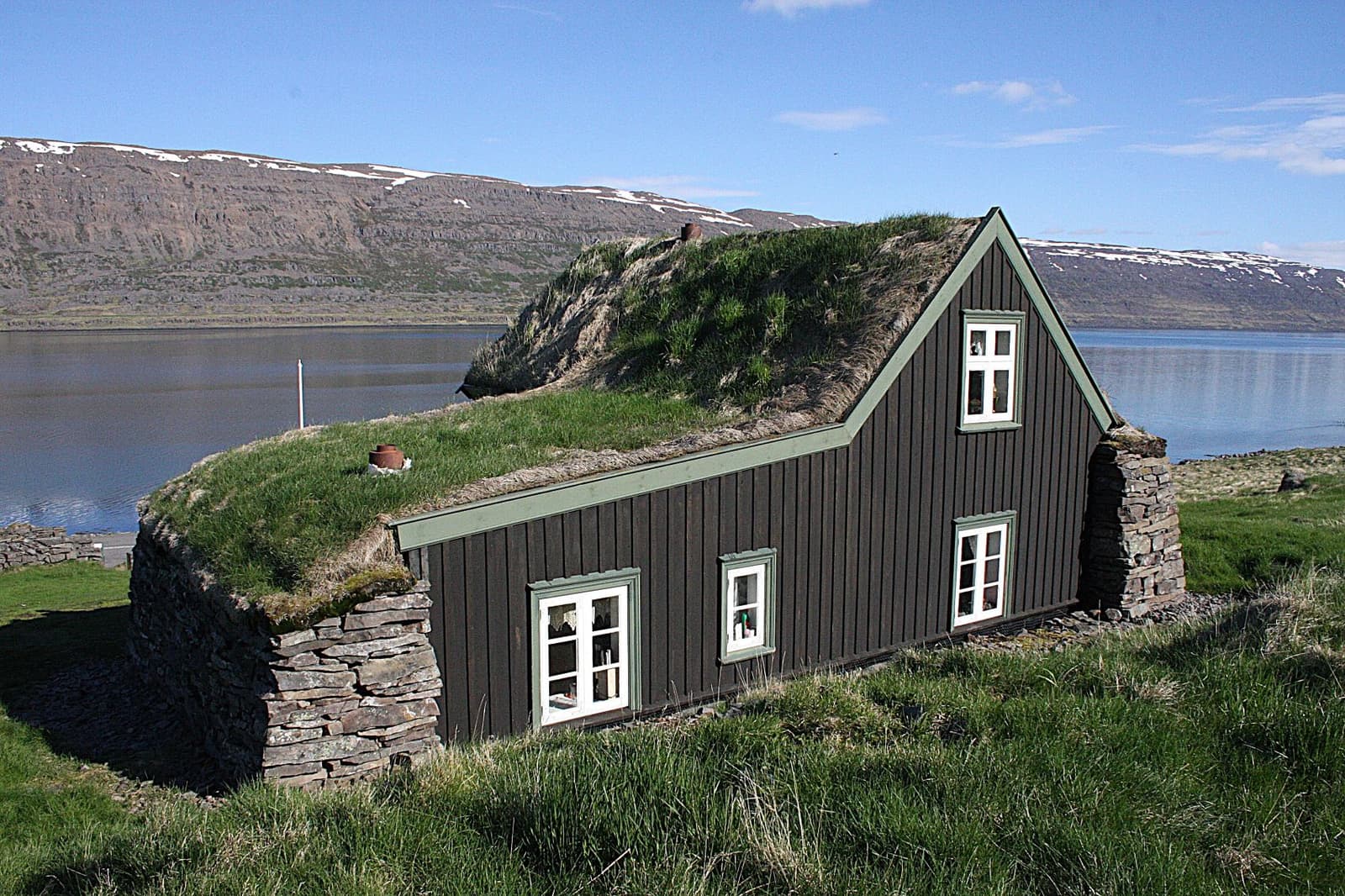
Litlibær is a tiny turf-roof farmstead in Skötufjörður, best for Westfjords travelers who want a short cultural pause, fjord views, and a gentler stop between larger Ísafjarðardjúp sights.
Culture snapshot
Yes, when your Westfjords route already brings you along Ísafjarðardjúp and you want a compact stop with more character than another roadside pull-off.
Litlibær is not a large museum complex or a headline natural wonder. Its appeal is the small exact place: a black timber farmstead with stone side walls, a grass roof, and a fjord setting that makes the building feel both fragile and stubborn.
It fits best as a pause between Ísafjörður, Vigur, and the wider Ísafjarðardjúp drive. If your day is only about reaching Dynjandi or another major Westfjords anchor before dark, keep this stop flexible.
The house matters because its scale tells the story before you read much background.
National Museum material identifies Litlibær as an 1895 farmstead built for two families, divided down the middle, and made from timber with stone side walls and a grass-covered roof. The building was tiny, yet source material describes around 20 people living there at one point.
That is the useful visitor lens. Do not treat Litlibær only as a cute photo stop or a café name. The value is in noticing how little space, local stonework, fishing, livestock, and shoreline life belonged to one household economy.
Litlibær feels more complete when you look past the building and into Skötufjörður.
Official Litlibær material describes families who lived from both land and sea. That matters on site because the farm is not isolated from the water; the fjord, stone walls, pasture, and road are all part of the same small survival story.
The same stretch of coastline also gives the stop a wildlife angle. Visit Westfjords highlights seal viewing around Skötufjörður and Hvítanes, while also making clear that wildlife depends on tide, weather, and animal behavior. Treat seals as a good pairing, not a guarantee.
Most travelers should plan it as a short stop, then expand only if the day and official visitor details make that sensible.
| Visit style | Time | Use it when |
|---|---|---|
| Photo and context pause | 20-30 minutes | You mainly want the turf house, fjord view, and a leg stretch. |
| Slower cultural stop | 45-60 minutes | You want to read the history, linger outside, and check visitor details. |
| Route pairing | Half-day area | You are combining Litlibær with Hvítanes, Ísafjarðardjúp, or Ísafjörður. |
The stop is easy to over-plan. Keep the timing loose, especially when Westfjords roads, wind, or long fjord distances are already shaping the day. For route-level decisions, start with the Westfjords region guide before adding small stops.
The durable advice is simple: verify visitor details and road conditions before building a tight Westfjords day around Litlibær.
Café service, visitor access, and small-site details can vary by season, staffing, weather, or maintenance. Check the official Litlibær or National Museum visitor information before promising your group a specific indoor stop.
For driving, use official road and weather information before committing to exposed Westfjords stretches. This matters even more outside settled summer conditions or when you are linking Litlibær with Bolungarvík, Hólmavík, or longer fjord drives.
Use for historic-house context and official visitor details.
Use for farmstead background and direct visitor information.
Use before exposed Westfjords driving days.
Use before treating the drive as routine.
By ThorPublished Updated
Map
Use nearby places and useful bases before opening directions.
Interactive planning map for Litlibær
Interactive map
Place context and external map links remain available without loading it.
Planning context
Open the region or practical guide that resolves the next planning decision.