Culture snapshot
- Type
- Folk, aviation, and coastal-history museum
- Region
- Örlygshöfn, southern Westfjords
- Best for
- Látrabjarg-route cultural context
- Time
- About 45 to 90 minutes
- Nearby
- Patreksfjörður, Látrabjarg, Örlygshöfn Beach
Hnjótur Museum is a southern Westfjords folk and aviation museum for travelers already reaching Örlygshöfn, Látrabjarg, or Patreksfjörður who want local history to balance cliffs, beaches, and long coastal driving.
Culture snapshot
Yes, when your southern Westfjords day has room for one cultural pause before or after the cliffs, beaches, and long rural roads.
Hnjótur Museum is most useful when you are already committed to the far side of Patreksfjörður. It gives the day a human layer before the route turns back toward Látrabjarg, Breiðavík, or the longer beach decision at Rauðasandur.
Treat it as a purposeful supporting stop, not as the single reason to drive into the southwest corner of the Westfjords. If time is tight, keep it behind the main landscape anchors. If the route already passes Örlygshöfn, the museum can make the area feel less like a photo-stop chain and more like a lived coastal district.
The collection is strongest when you read it as local life: fishing, farming, household objects, boats, and practical survival on a remote coast.
Visit Westfjords describes Hnjótur as a museum of old objects from the southern Westfjords, with fishing, farming, and everyday life at the center. That matters because the surrounding route can otherwise feel dominated by cliffs, beaches, and empty-road scenery.
Inside, the best reason to slow down is not one famous object. It is the accumulation of work tools, boats, farm material, and domestic detail that helps explain how this coast functioned before it became a scenic side route for travelers.
The museum becomes more memorable when the local collection meets aviation and rescue history tied to the nearby cliffs.
The most useful secondary angle is the exhibition about the British trawler Dhoon, which stranded at Látrabjarg in 1947. That story links the museum directly to the coast many travelers are driving toward, instead of leaving it as a detached indoor stop.
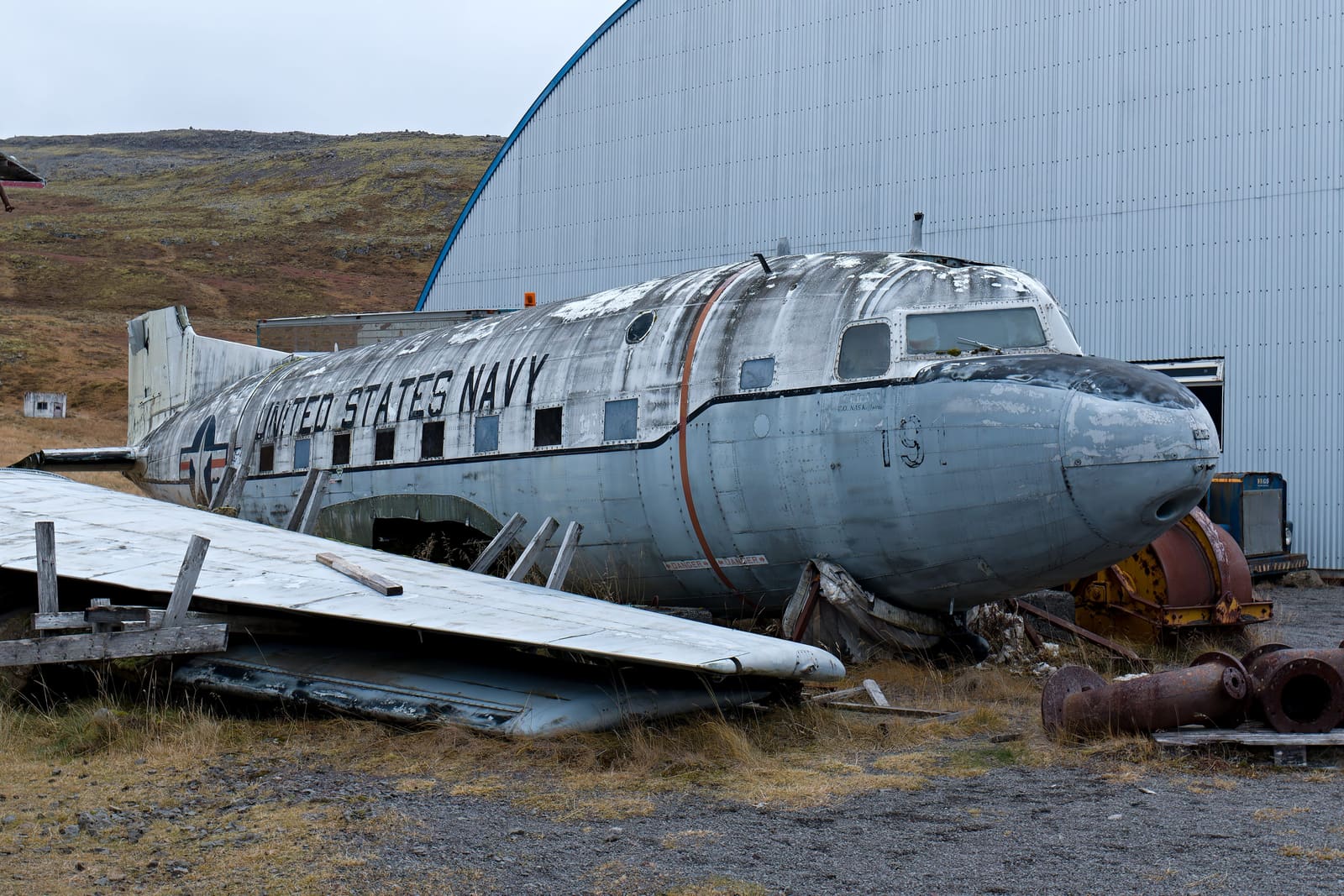
Hnjótur Travel also points to aviation objects at the farm, including an Antonov AN-2 and Douglas C-117D. For travelers who like unusual museums, that mix of aircraft, sea rescue, and rural life is the reason Hnjótur feels more distinctive than a simple local-history room.
The museum works best as part of a small coast-and-culture cluster, not as a one-stop checklist item.
If you are already stopping at Örlygshöfn Beach, Hnjótur gives that shoreline pause more substance. The beach brings the open fjord setting; the museum adds the boats, aircraft, and local stories that make the area feel inhabited rather than only scenic.
From a planning point of view, Hnjótur belongs with a slower southern Westfjords day based around Patreksfjörður, nearby beaches, and the drive toward Látrabjarg. It is less convincing on a day that is already trying to link too many distant anchors, especially if Dynjandi is competing for daylight and driving energy.
The attraction is remote enough that timing, weather, and visitor details deserve a check before you build a tight day around it.
Use the official museum or regional listing for visitor details, then check Westfjords road and weather sources before committing to a tight sequence. Facilities and access details can vary by season, staffing, weather, or maintenance, so keep the day flexible if the route continues toward exposed coastal stops.
Use for museum location, contact links, visitor-detail checks, and regional context.
Use for direct local context around the farm, guesthouse area, and museum.
Use before driving remote southern Westfjords roads.
Use for wind, visibility, and warnings before exposed coastal plans.
By ThorPublished Updated
Map
Use nearby places and useful bases before opening directions.
Interactive planning map for Hnjótur Museum
Interactive map
Place context and external map links remain available without loading it.
Planning context
Open the region or practical guide that resolves the next planning decision.
Wider route
Use broader place relationships for route comparison; they are not presented as immediate nearby stops.