Waterfall facts
- Type
- Small waterfall inside Gjáin
- Region
- Þjórsárdalur, South Iceland
- Best for
- Slower Gjáin gorge visits
- Time
- About 30 to 60 minutes
- Access
- Uneven paths; check conditions
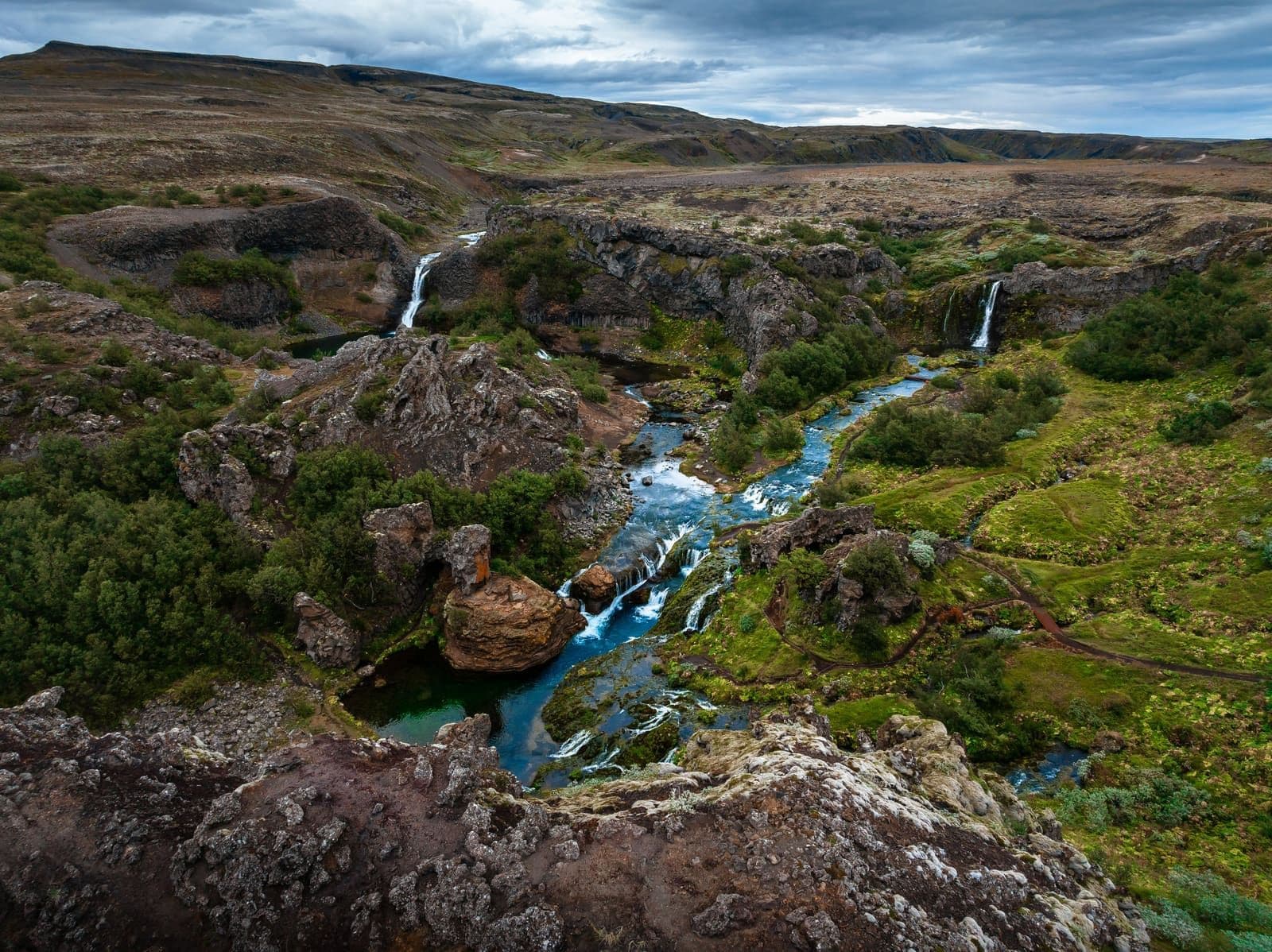
Gjarfoss is the waterfall to notice inside Gjáin, useful for travelers deciding whether the gorge deserves a slower Þjórsárdalur stop or only a quick look while pairing nearby sights.
Waterfall facts
Gjarfoss is worth your attention when Gjáin is already the chosen stop. It is too narrow to carry a long inland detour by itself.
The useful way to think about Gjarfoss is as the waterfall that gives Gjáin Valley its clearest focal point. You come for the sheltered gorge, water, basalt, pools, and green edges together, then let the waterfall become the moment that slows the visit down.
If your day is already stretched between Gullfoss, Geysir, and a long return drive, keep Gjarfoss for another plan. If Þjórsárdalur is the point of the day, the waterfall helps the valley feel more specific than a scenic pin on a map.
Gjarfoss gives Gjáin a center of gravity: falling water, dark rock, clear pools, and a tighter sense of enclosure than the surrounding valley.
The scale is small, but that is not a flaw when the visit is planned correctly. The waterfall works because the landscape is close together: water drops, lava textures, mossy edges, and short sightlines all sit within a compact walking area.
That makes the stop better for travelers who enjoy detail rather than height alone. For a single large waterfall payoff, Háifoss is the stronger scenic target nearby.
Plan Gjarfoss as part of a short but unhurried Gjáin visit, not as a roadside photo stop.
The main risk is overloading a simple stop. Gjarfoss is best when it helps you enjoy Gjáin at walking pace, then make a clean decision about the rest of Þjórsárdalur.
The waterfall becomes more useful when it is part of a small valley sequence rather than a separate destination target.
The most natural pairing is Þjóðveldisbærinn at Stöng, then Gjáin and Gjarfoss as the landscape contrast nearby. Hjálparfoss adds an easier waterfall stop, while Háifoss asks for more margin and stronger conditions.
For most travelers, this means choosing a valley shape before choosing every stop. Gjarfoss belongs in the slower version of Þjórsárdalur, especially when the day can absorb short walks and changing conditions.
Use official condition sources before locking in Gjarfoss, because the stop depends on the same inland-road and path realities as Gjáin.
Check road conditions, weather, SafeTravel guidance, protected-area information, and on-site signs before committing to the detour. Wet ground, wind, low visibility, or a late schedule can make a small gorge stop less useful than it looked during planning.
If the inland drive is the uncertain part of the plan, read winter driving in Iceland before treating any Þjórsárdalur side road as fixed.
By ThorPublished
Waterfall identity and broad Gjáin visitor context.
Regional place description and route context.
Protected-area context for Gjáin and nearby natural features.
Check inland driving conditions before committing.
Map
Use nearby places and useful bases before opening directions.
Interactive planning map for Gjarfoss Waterfall
Interactive map
Place context and external map links remain available without loading it.
Planning context
Open the region or practical guide that resolves the next planning decision.