Short stop snapshot
- Type
- Orange coastal lighthouse
- Region
- Brimnes, north of Seyðisfjörður
- Best for
- Quiet lighthouse and history walks
- Time
- Allow a flexible half day
- Access
- Drive partway, then walk
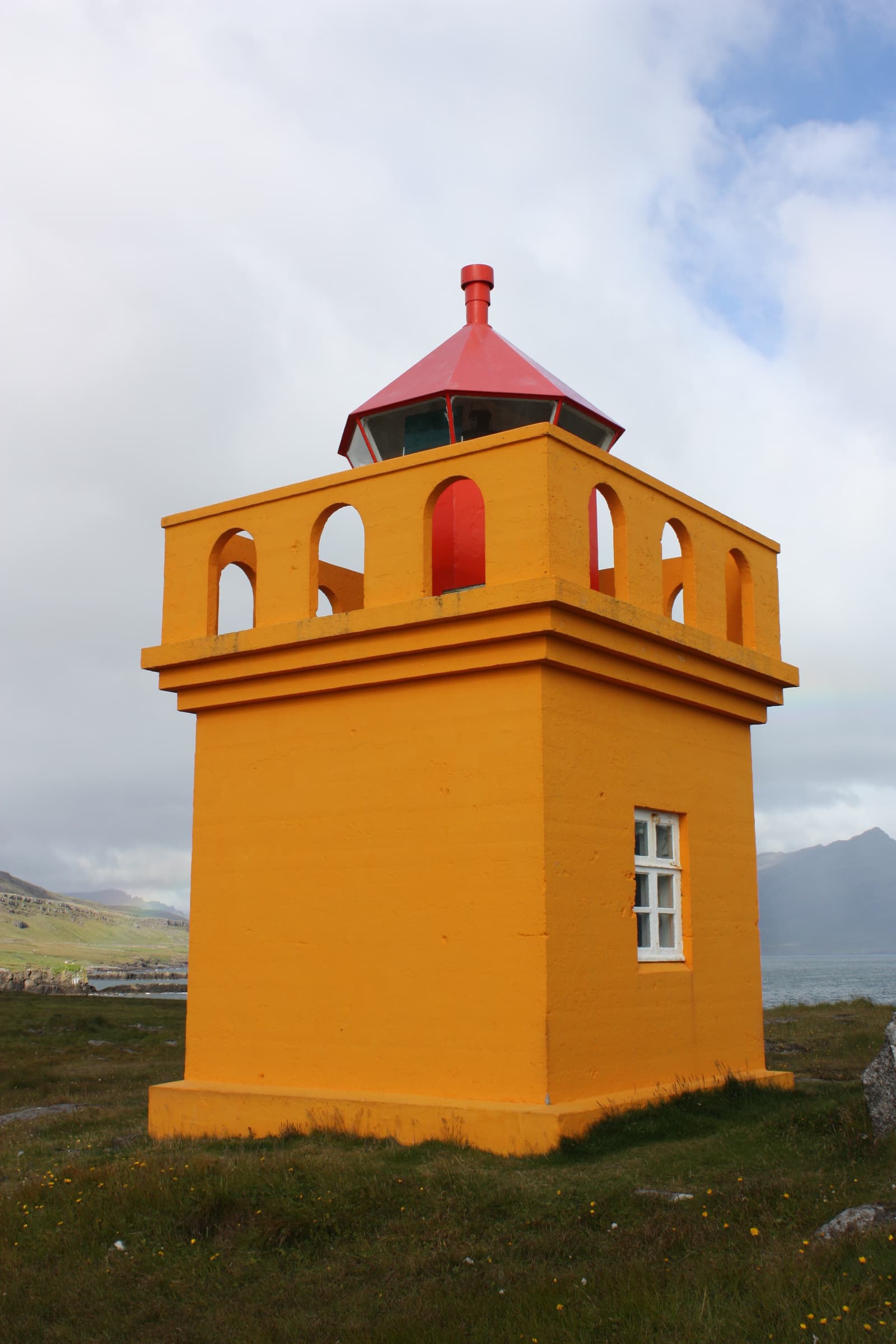
Brimnesviti Lighthouse is a small orange beacon on Brimnes peninsula, best for travelers who want a weather-dependent Seyðisfjörður side walk with fjord views, coastal history, and a quieter Eastfjords edge.
Short stop snapshot
Brimnesviti is worth considering when Seyðisfjörður already has room in the day and you want a quieter coastal walk beyond the town center. The orange lighthouse is photogenic, but the stronger reason to go is the combination of fjord edge, exposed weather, and Brimnes settlement history.
This is not the easiest Eastfjords tick-box. For most travelers, Brimnesviti works best after deciding that Seyðisfjörður deserves more than Rainbow Street and a quick harbor look. If your day is already tight between Egilsstaðir, mountain-road weather, and a longer Ring Road push, the lighthouse is the first thing to drop.
Choose it when the weather is settled enough for an exposed edge-of-fjord walk and when old coastal places interest you. The payoff is a small, vivid lighthouse in a broad setting rather than a dramatic standalone landmark.
The visit starts as a route decision. From Seyðisfjörður, travelers drive partway toward Selsstaðir and continue on foot toward Brimnes, where the coast feels more exposed and less serviced than the town.
That change in feel matters. The lighthouse itself is compact, so the experience depends on the walk, the light over the fjord, and whether wind and visibility make the shoreline enjoyable. In good conditions it gives the day a remote edge; in poor conditions it can become effort without much reward.
The lighthouse becomes more interesting when it is read with Brimnes, the abandoned farm and former fishing settlement around it. Visit Austurland describes Brimnes as a once-important coastal place where fishing, farming, and sea access shaped life on this side of the fjord.
For visitors, that history changes the stop from a single orange tower into a short landscape walk with traces of earlier use. Remains of old buildings can still be part of the appeal, but the public visit should stay modest: come for atmosphere and context, not for a preserved museum-style site.
The cleanest pairing is Seyðisfjörður itself. Use Brimnesviti when the town visit is already deliberate, then decide whether the day should stay fjord-focused or move outward toward Skálanes, Vestdalsfossar, or a bigger East Iceland plan.
If you want a more nature-led outer-fjord day, Skálanes Nature and Heritage Center is the stronger anchor. If you want an easier waterfall-and-town rhythm, Vestdalsfossar and central Seyðisfjörður may be the better use of time. Brimnesviti belongs between those options: more remote than a town walk, less substantial than a dedicated nature-center visit.
Do the practical checks before treating Brimnesviti as fixed. This is a coastal walk with remote-feeling edges, not an attraction where facilities or conditions should be assumed.
Best concise source for lighthouse location and access context.
Useful background on the abandoned farm and fishing-settlement history.
Check before remote-feeling Eastfjords side drives.
Use for general outdoor safety and travel-condition planning.
By ThorPublished Updated
Map
Use nearby places and useful bases before opening directions.
Interactive planning map for Brimnesviti Lighthouse
Interactive map
Place context and external map links remain available without loading it.
Planning context
Open the region or practical guide that resolves the next planning decision.
Wider route
Use broader place relationships for route comparison; they are not presented as immediate nearby stops.
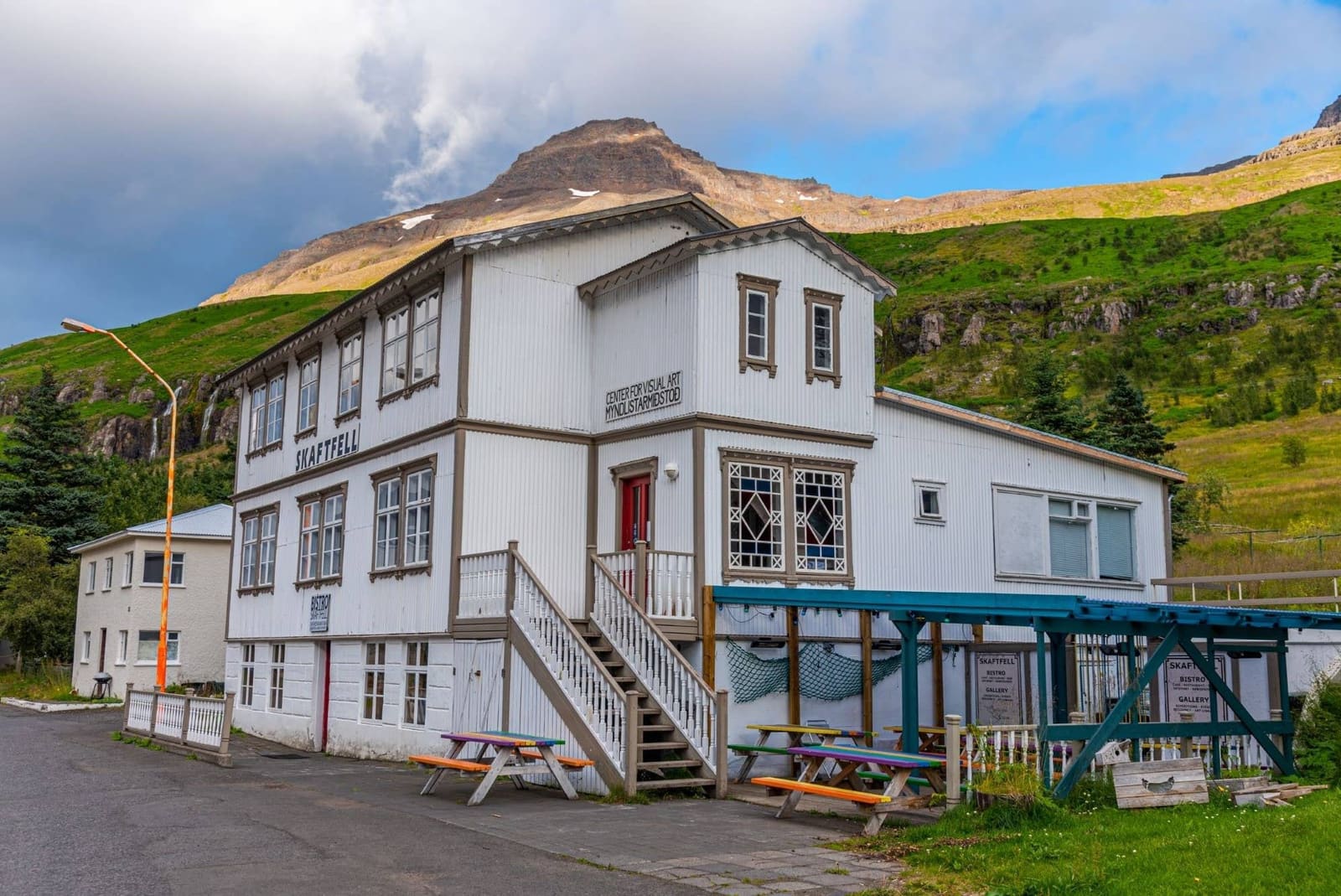
Skaftfell Art Center is a contemporary art stop in Seyðisfjörður, best for travelers who want the Eastfjords day to include exhibitions, local creative culture, and a slower town pause.
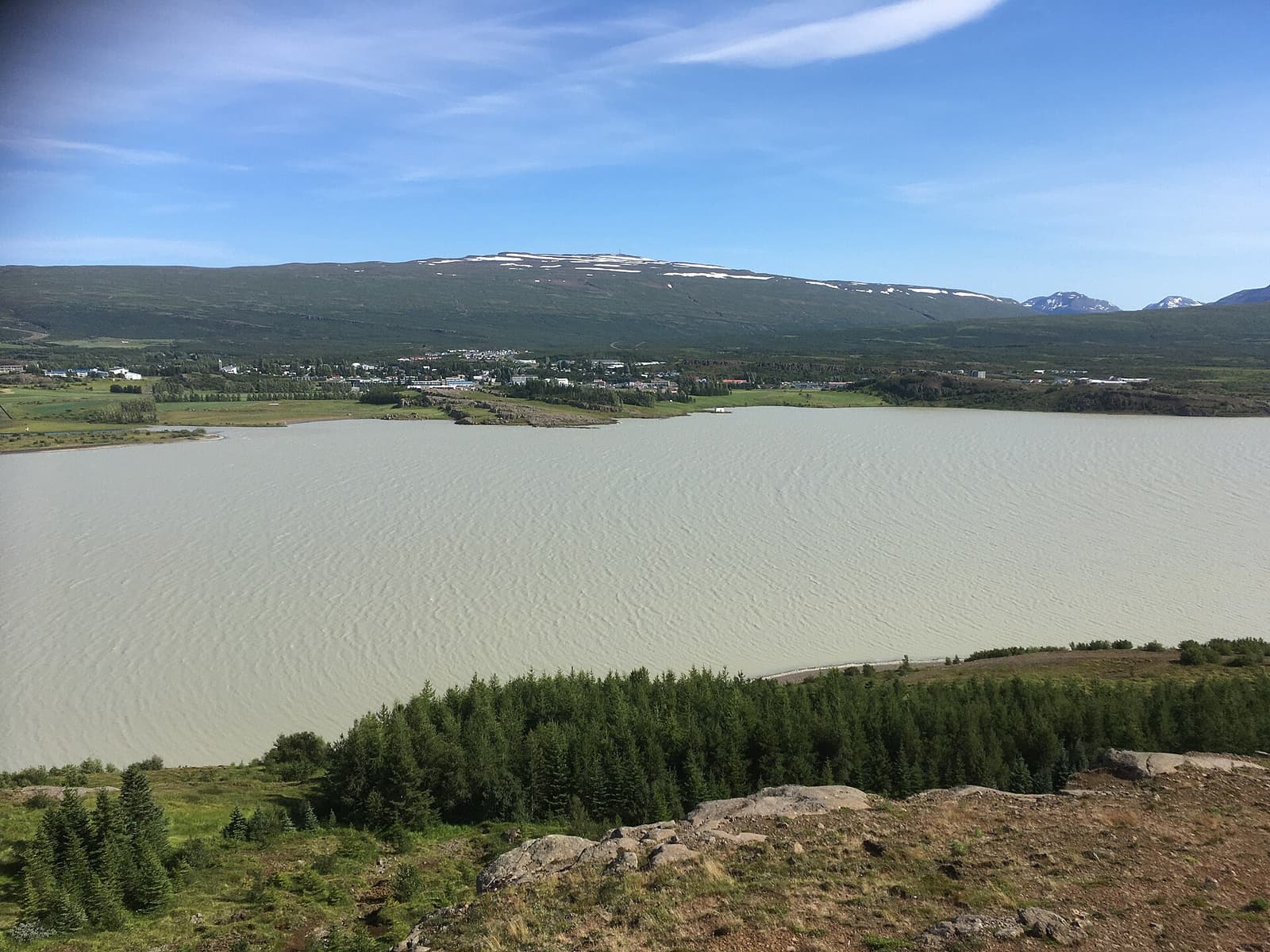
Egilsstaðir is East Iceland’s practical inland town beside Lagarfljót, useful as a Ring Road pause, flight gateway, or base for nearby fjords, forests, waterfalls, lake country, and highland-edge drives.
Make the detour useful
Move from the lighthouse into the town or region page that decides whether this extra walk earns the time.