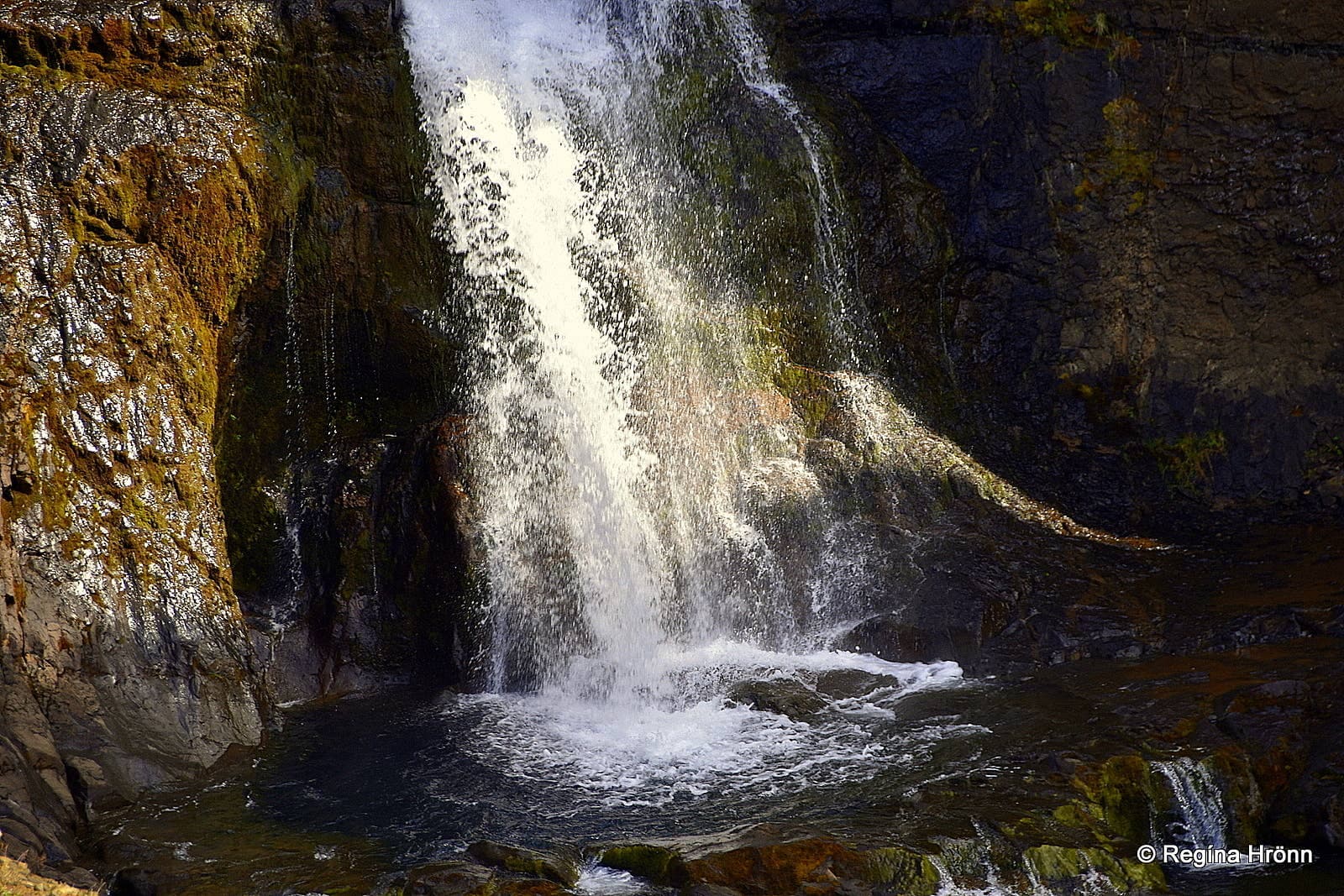
Helgufoss on Kaldakvísl

Helgufoss is not a giant. Its value is the quiet setting: a 12-meter fall, dark rock, and a short walk through Mosfellsdalur.

The waterfall sits on the Kaldakvísl river in Mosfellsdalur, close enough to Reykjavík for a short nature break but far enough from the city center to feel local. The fall drops over old dark lava rock into shallow water, with green slopes giving it a softer valley feel.

Use Helgufoss for what it is: a calm capital-area waterfall, not a substitute for Gullfoss, Skógafoss, or a full South Coast day. It works best when your plan already includes Mosfellsdalur or a slower Reykjavík-area countryside loop.

That scale is useful for travelers. Helgufoss gives you a real waterfall, a real stream, and a real valley setting without asking for a long drive, but it should still stay in proportion to the rest of the trip.

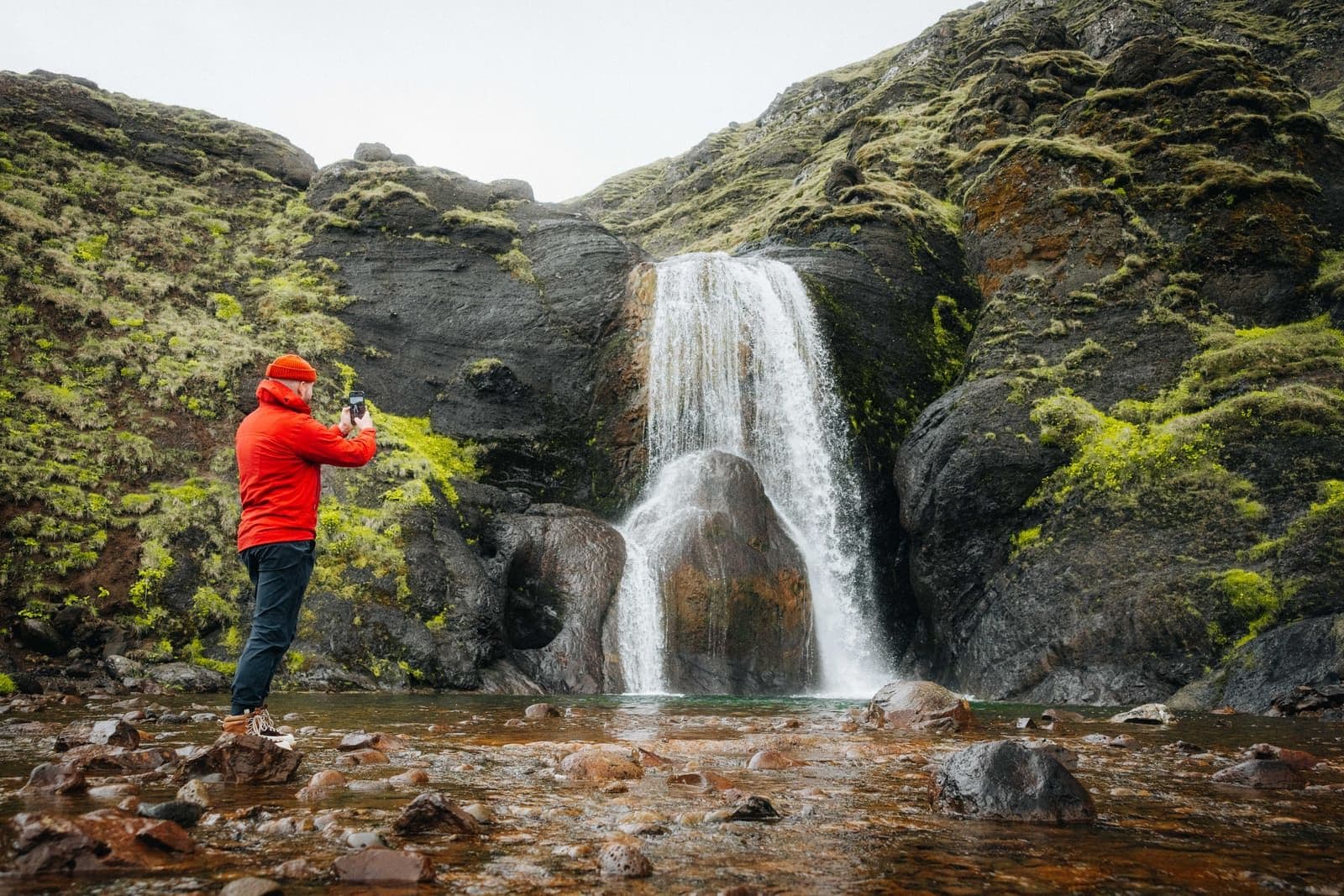
Dark rock at Helgufoss

The memorable part is texture more than power: stepped water, black rock, moss, and a ravine that makes the small fall feel enclosed.

The dark rock and close ravine are the main visual reason to walk in.
Helgufoss dropping over dark volcanic rock into a pool in Mosfellsdalur.

The dark rock and close ravine are the main visual reason to walk in.

Look for the water stepping down the rock face rather than one clean curtain. Visit Reykjavík describes the cascade as multi-tiered, and that is the right way to read it. In summer the green slopes make the waterfall feel tucked into the valley; after rain, the same setting can mean muddy footing.

Because the waterfall is modest, the best visit is unhurried. Give yourself enough time to stand near the pool, look back down the valley, and leave before the stop starts pretending to be bigger than it is.

The Helgufoss walk and footing

The walk is usually the easy part, but this is still an outdoor path, not a paved attraction loop.

Official visitor information frames Helgufoss as a short hike from the parking area, with the path following Kaldakvísl. For most casual walkers, the distance is not the issue. The real decision is whether the ground is dry enough and the group is comfortable on an unpaved trail.

The approach belongs to the valley as much as to the waterfall.
Helgufoss and the Kaldakvísl stream in the open Mosfellsdalur valley.

The approach belongs to the valley as much as to the waterfall.

  • Wear footwear that can handle mud or wet grass.
  • Use extra caution after rain and in winter conditions.
  • Do not treat the lack of distance as a guarantee of easy footing.
  • Turn it into a short pause, not a schedule-critical stop.

Mosfellsdalur gives Helgufoss context

Helgufoss improves when it is part of the valley rather than a single map pin.

Gljúfrasteinn, the former home of writer Halldór Laxness, is the strongest cultural pairing. Its official museum information also points to a walking path by Kaldakvísl toward Helgufoss, so the two stops share more than proximity.

Hafravatn is the cleaner nature contrast if you want open water instead of another close waterfall stop. Mosfellsbær helps when you want the area to feel like a local town-and-valley pause rather than a detour from Reykjavík.

If your route is still unsettled, step back to the Reykjavík region guide before adding another small outdoor stop. Helgufoss is a good extra when the day already has breathing room.

Check the Helgufoss path before leaving

Visitor access, trail condition, and weather are the details most likely to change this short walk.

Use official visitor and weather sources before relying on the walk in winter, after rain, or with children. If the path looks less appealing than expected, it is easy to switch the day back toward Gljúfrasteinn, Mosfellsbær, or central Reykjavík.

Useful sources