Waterfall facts
- Type
- Ravine waterfall near the sea
- Region
- East Iceland, by Vopnafjörður
- Time
- About 20 to 45 minutes
- Access
- Road 917 and marked path
- Best for
- A quiet northeast coast pause
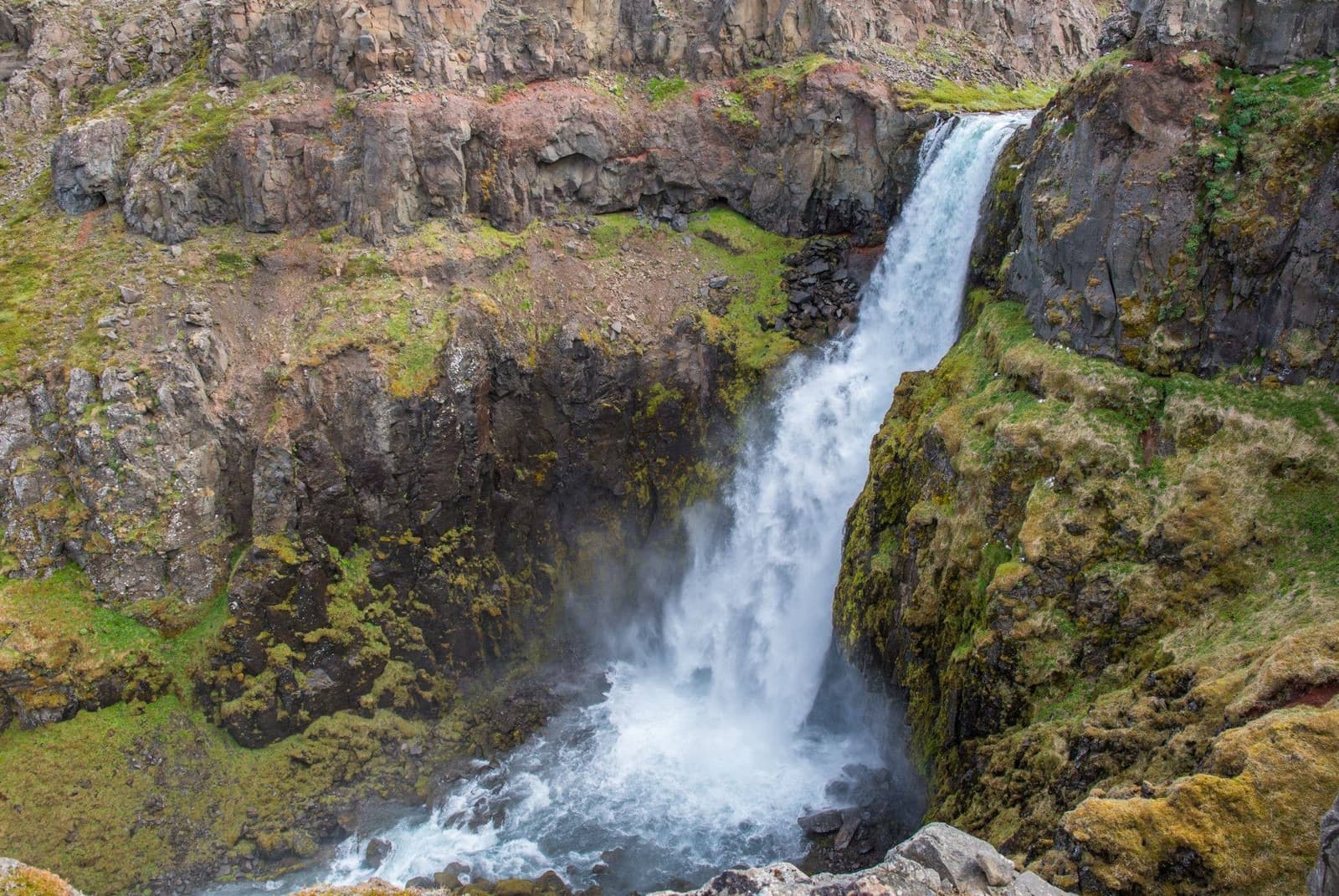
Gljúfursárfoss is a sea-edge ravine waterfall near Vopnafjörður, best for self-drive travelers already exploring northeast East Iceland who want a brief scenic pause with a little local history.
Waterfall facts
Yes, when the northeast coast is already part of your East Iceland route. It is less convincing as a stand-alone detour from the Ring Road.
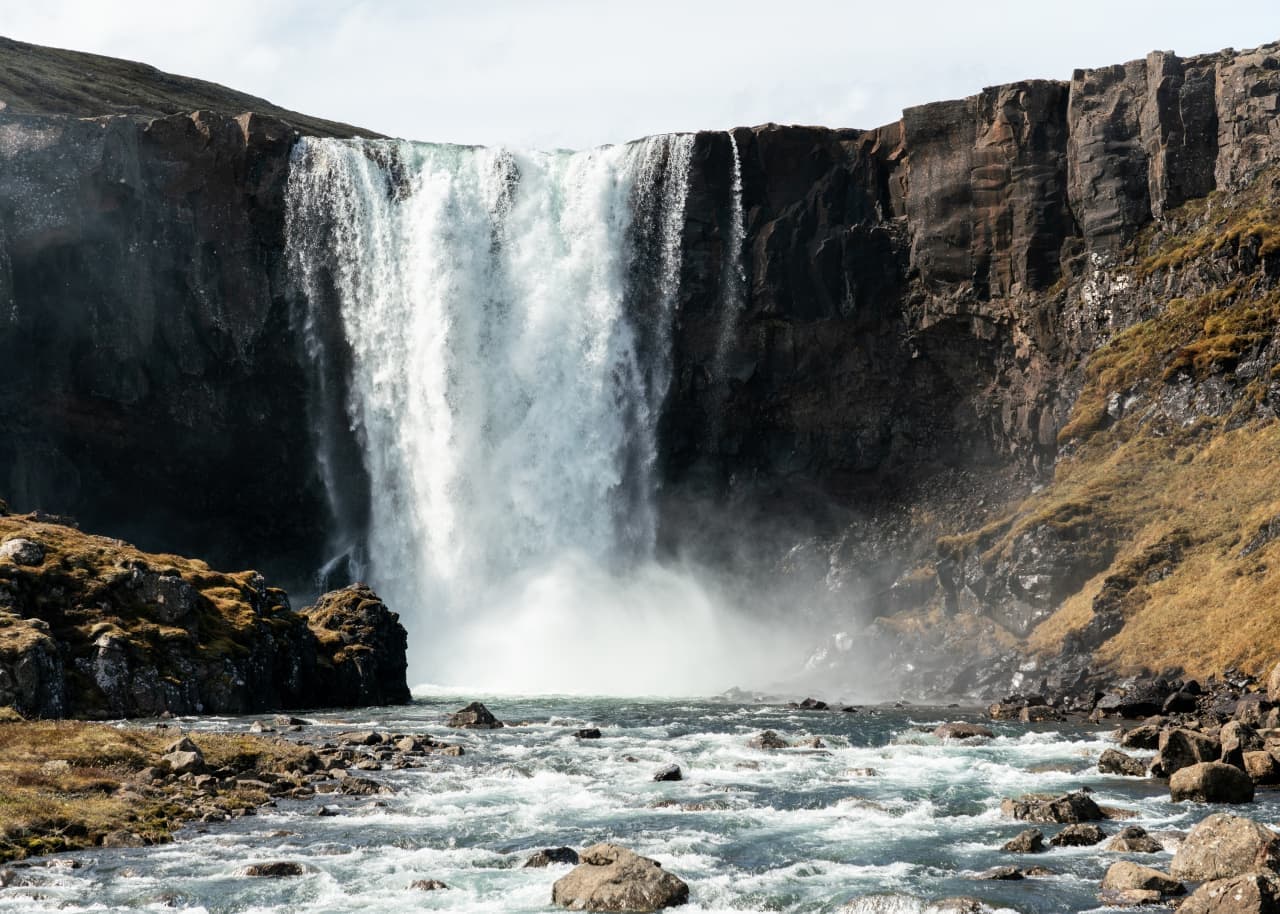
Gljúfursárfoss drops through a rocky ravine on the south side of Vopnafjörður, close enough to the coast that the visit feels different from many inland waterfall stops. The reason to come is not scale alone; it is the mix of waterfall, narrow river cut, sea-edge setting, and a quieter corner of East Iceland.
The stop works best when Vopnafjörður is already in the plan, or when you are linking small northeast places such as Selárdalslaug, Bakkafjörður, or Húsey. If the day is mostly a transfer between bigger Ring Road anchors, keep the plan simpler.
The strongest impression is the contrast: green slopes, dark rock, white water, and the sense that the river is almost finished before it meets the sea.
From the closer views, Gljúfursárfoss is more about shape and setting than spectacle. The fall drops cleanly into a tight ravine, with boulders, moss, and broken rock giving the scene a rougher, less managed feel.
That roughness is part of the appeal, but it also keeps the stop weather-sensitive. Wind, spray, wet grass, and uneven ground can change how close you want to get, especially if the plan involves looking for more than the easiest viewpoint.
Gljúfursárfoss is not only a photo stop. The river also carries a small but useful story about movement around this coast.
Visit Austurland notes that Gljúfursá was once a difficult river for people moving east over Hellisheiði eystri. The old bridge over the river gives the stop a human layer: this was a practical crossing problem before it became a scenic pause for travelers.
Keep that context in proportion. The bridge story makes the walk more meaningful if you are already curious about the area, but it does not turn Gljúfursárfoss into a museum-style destination.
Gljúfursárfoss belongs in a slower northeast coast day, not in a checklist of Iceland's most famous waterfalls.
If you are building a Vopnafjörður-area loop, Gljúfursárfoss pairs naturally with the small-pool stop at Selárdalslaug or a broader northeast coast day toward Bakkafjörður. It also helps break up a quieter route when the goal is scenery without the density of South Iceland.
For travelers choosing between East Iceland waterfalls, it is not the same kind of commitment as Hengifoss, Rjúkandi Waterfall, or Gufufoss near Seyðisfjörður. Gljúfursárfoss is smaller in trip role, but more specific to Vopnafjörður and the coastal ravine.
The practical question is simple: whether wind and footing make a small stop feel easy enough to enjoy.
This is a short nature stop, but short does not mean conditions are irrelevant. The waterfall sits in a ravine near the coast, where wet grass, spray, and gusts can make a quick look feel more exposed than expected.
If the day is clear and the ground feels reasonable, the visit can be quick and rewarding. If rain, wind, low visibility, or group confidence makes the ravine edge feel awkward, keep the stop brief or save the time for a more comfortable East Iceland target such as Stórurð, Húsey, or Egilsstaðir.
Use external condition sources when the drive, weather, or footing could change the value of the stop.
Check road conditions before committing to the area, then use weather and safety guidance to judge the exposed parts of the walk. Keep the plan flexible if the northeast coast is only a side trip.
Use the regional page for place context and path notes.
Check road conditions before relying on the drive.
Check forecasts and warnings for exposed coastal weather.
Use safety guidance when weather or footing feels uncertain.
By ThorPublished Updated
Map
Use nearby places and useful bases before opening directions.
Interactive planning map for Gljúfursárfoss Waterfall
Interactive map
Place context and external map links remain available without loading it.
Planning context
Open the region or practical guide that resolves the next planning decision.
Wider route
Use broader place relationships for route comparison; they are not presented as immediate nearby stops.
Next step
Use the next page that helps turn this stop into a practical route decision.