Bathing details
- Type
- Shoreline geothermal hot pots
- Region
- Strandir, eastern Westfjords
- Best for
- Flexible Westfjords road trips
- Time
- About 30 to 75 minutes
- Access
- Roadside in Drangsnes village
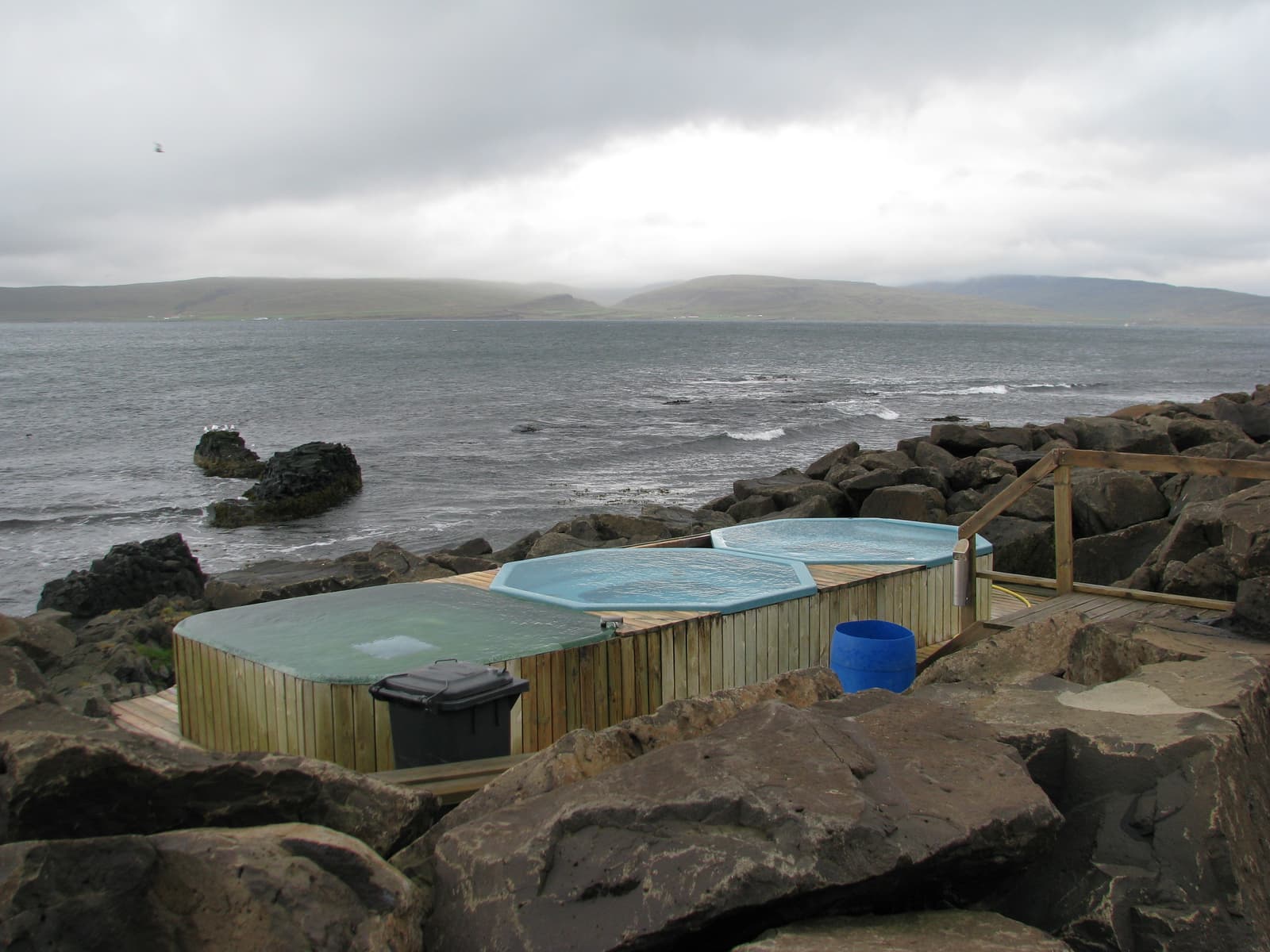
Drangsnes Hot Tubs are three shoreline geothermal pots in the Westfjords, useful for travelers already passing through Strandir who want a simple soak, sea views, and a clear decision on whether the detour earns its time.
Bathing details
Yes, when Drangsnes already fits your Westfjords day. The tubs are less convincing as a long standalone detour from a route that is already short on time.
The appeal is direct: three small geothermal pots sit between road, rocks, and sea in the middle of Drangsnes. You are not choosing architecture, spa polish, or a complex bathing ritual. You are choosing a simple shoreline soak that makes a Strandir day feel more local.
That narrow focus is also the limit. If your trip is still trying to fit Dynjandi, Látrabjarg, Ísafjörður, and long Westfjords driving into too few days, the hot tubs should wait. They work best when the day has space to slow down around Steingrímsfjörður.
Photo guide
Kerling is a nearby shoreline marker that gives Drangsnes a local folklore layer.
The setting is exposed, small, and memorable: tubs on the rocks, fjord water in front, village buildings behind, and weather close enough to matter.
The tubs are easy to spot from the road, but the experience feels more elemental than roadside convenience suggests. The sea is part of the visit, and so are the rocks, the wind, the changing light, and the practical walk between changing area and water.
Treat the stop as a compact experience rather than a full pool day. A quick look may be enough if the weather feels harsh; a slower soak makes more sense when the group has towels, warm layers, and no urgent drive immediately afterward.
Most travelers can decide quickly: this is either a short shoreline pause or a relaxed soak that takes part of the hour.
If you are only checking the location, taking photos, and deciding whether conditions feel right, allow a short stop. If you plan to bathe, build in time to change, test the water, warm up afterward, and keep the rest of the Westfjords drive unhurried.
| Plan | Use it when | What to avoid |
|---|---|---|
| Quick look | Weather, timing, or group interest is uncertain. | Forcing a soak just because the tubs are famous locally. |
| Short soak | Drangsnes is already in the route and everyone is prepared. | Leaving wet and cold before a long drive. |
| Longer pause | The day is built around Strandir rather than transit. | Letting one small stop crowd out safer road margins. |
The cleanest plan keeps the geography tight. Use the hot tubs as a Drangsnes highlight, then connect them to nearby Strandir stops only if the day has room.
The natural pairing is Hólmavík and Drangsnes, with Bjarnarfjörður in Strandir or Gvendarlaug added only when the route is already moving north. That keeps the day coherent: culture and services in Hólmavík, village and shoreline bathing in Drangsnes, then rural Strandir if the pace still feels comfortable.
Do not compare the tubs directly with every famous Westfjords sight. They are not a substitute for a waterfall day or cliff-and-birdlife plan. They are the kind of stop that improves a slower eastern-Westfjords route because it gives the drive a human-scale pause.
The tubs are the reason most travelers pause, but the nearby island and shoreline folklore help Drangsnes feel like more than a bathing pin on a map.
Grímsey sits just offshore in Steingrímsfjörður, giving the hot-tub view a clear nature angle even if you do not build the day around a boat trip. Kerling cliff adds the local folklore thread that ties village, shoreline, and island together.
Keep that secondary angle in proportion. The hot tubs are still the practical visitor decision on this page. Grímsey and Kerling matter because they help you decide whether Drangsnes deserves a little more time before you leave the village.
The details that matter most are practical: road comfort, weather, local bathing guidance, and whether your group is prepared for a simple coastal setup.
Check road and weather sources before treating any eastern-Westfjords stop as fixed. Strandir driving can feel slower than it looks on a map, and exposed coastal wind can turn a pleasant soak into a quick look.
For the tubs themselves, confirm local visitor guidance before relying on bathing. Bring bathing basics, keep the site respectful for residents, and avoid building the whole day around details that can vary with maintenance, weather, or local management.
Use for place location, local context, and visitor-detail links.
Use before self-driving deeper into Strandir or the wider Westfjords.
Use for road-condition checks before the drive.
Use for travel-safety guidance before condition-sensitive plans.
These are the decisions that usually determine whether the tubs belong in the day.
They can be, if you are already traveling through the eastern Westfjords and want a simple sea-view soak. They are not strong enough to justify a rushed detour from a compressed first-trip route.
Choose Drangsnes for an easier village-based hot-pot pause. Choose Krossneslaug only when your route can handle a much deeper northern Strandir drive.
Pair them with Drangsnes village and Hólmavík first. Add Bjarnarfjörður, Gvendarlaug, or northern Strandir only when the day has enough road margin.
By ThorPublished Updated
Map
Use nearby places and useful bases before opening directions.
Interactive planning map for Drangsnes Hot Tubs
Interactive map
Place context and external map links remain available without loading it.
Planning context
Open the region or practical guide that resolves the next planning decision.
Next step
Use the next page that helps turn this stop into a practical route decision.